
Team Fitness Challenge App: Enterprise Platforms vs Free Apps for Small Teams (2026)
Team fitness challenge apps compared by team size: enterprise wellness platforms with real pricing vs free phone-only apps for small and remote teams, plus t...
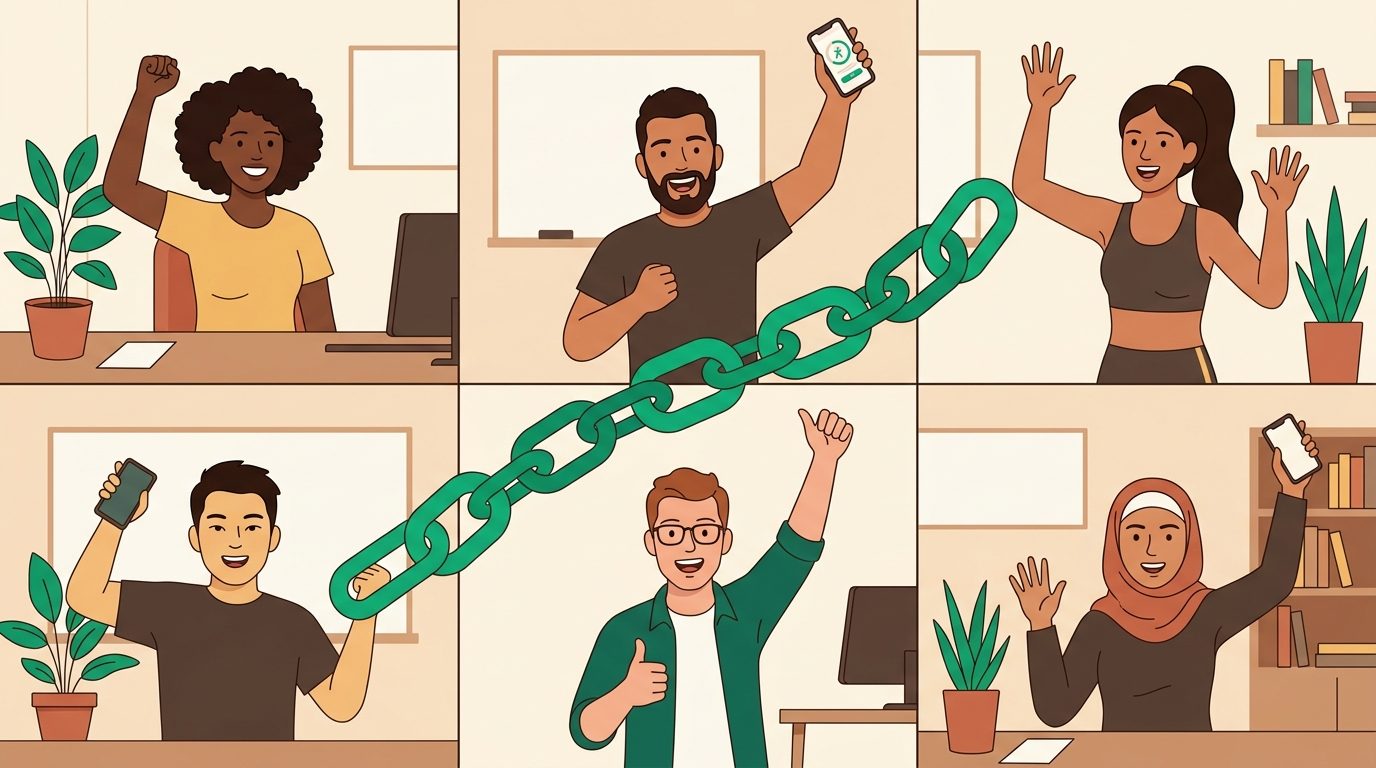
📺 Related Video: How to Plan a Group Fitness Challenge | Do THIS First
Video by: ABC Trainerize · Watch on YouTube
The right team fitness challenge app depends on one question most roundups skip: is your "team" a company of 400 people with an HR budget, or eight friends and coworkers in a group chat? Enterprise wellness platforms and friend-group apps solve different problems at prices that differ by a factor of a thousand, and picking from the wrong shelf is how a challenge dies in week two.
Quick version: a workplace with a budget and a wearables policy should look at Stridekick Unlimited, YuMuuv, or Wellable. A small team, a remote team, or a friend group that wants daily accountability without buying anyone a Fitbit should look at a free habit-based app like Habit Huddle, MoveTogether, or Exercise Challenge. The rest of this guide explains how to tell which you are, compares the options honestly, and ends with the setup that keeps a team moving after the challenge ends.
Two kinds of team, two kinds of app

Team fitness challenge apps split cleanly into enterprise wellness platforms and small-group accountability apps. The enterprise tier sells to HR: wearable sync, admin dashboards, compliance paperwork, reward catalogs, and pricing per employee or per challenge. The small-group tier sells to whoever started the group chat: free or nearly free, phone-only, and built around a leaderboard or a daily checkin.
Three questions sort you:
- Who is paying? If the answer is "the company, from a wellness budget," you are shopping the enterprise tier. If the answer is "nobody" or "me," you are not.
- Does everyone have a wearable? Step challenges assume a tracker or at least a phone in a pocket all day. A team that includes desk workers, nurses, and a warehouse crew will have wildly different step counts for reasons that have nothing to do with effort.
- What happens on day 31? A one-month step race ends with a winner and 90 percent of the team going back to normal. A habit-based challenge is built to continue, which matters more than any feature.
If you are running a formal workplace program, the deeper platform comparison lives in our fitness challenge software guide. This article focuses on the app choice itself.
Enterprise platforms: what you get for the money
Enterprise wellness platforms cost real money, and the vendors do not hide it. Vantage Fit's own comparison lists its pricing from $2,000 per challenge for 250 employees, Wellable at $1 to $2 or more per user per month with a $625 monthly minimum, and YuMuuv at roughly $1 to $3 per active user per month with a 20-user minimum. Personify Health, GoJoe, Woliba, and Terryberry's Walker Tracker quote custom.
What that buys:
- Wearable integrations across Fitbit, Garmin, Apple Watch, Google Fit, and more, with activity converters so a swim or a bike ride counts against a step goal.
- Admin dashboards with participation rates, team standings, and end-of-challenge reports you can show leadership.
- Turnkey challenge themes (virtual races across a map, collective step targets, department versus department).
- Reward catalogs, HIPAA and GDPR paperwork, and a support contact.
What it does not buy is participation. Every one of these platforms reports the same headache in their own reviews: the first week is busy, the last week is the same fifteen people, and the wellness coordinator spends the middle chasing everyone else. A platform fixes logistics. It does not fix the reason a 45-person team stops caring about steps.
Stridekick sits between the tiers and deserves a mention: the core app is free for friend and family groups, connects any wearable or just a phone, runs ten challenge formats from team leaderboards to group fundraisers, and a paid Unlimited level covers corporate challenges. For a company that wants steps and nothing else, it is the cheapest serious option.
Small-group apps: free, phone-only, built around showing up
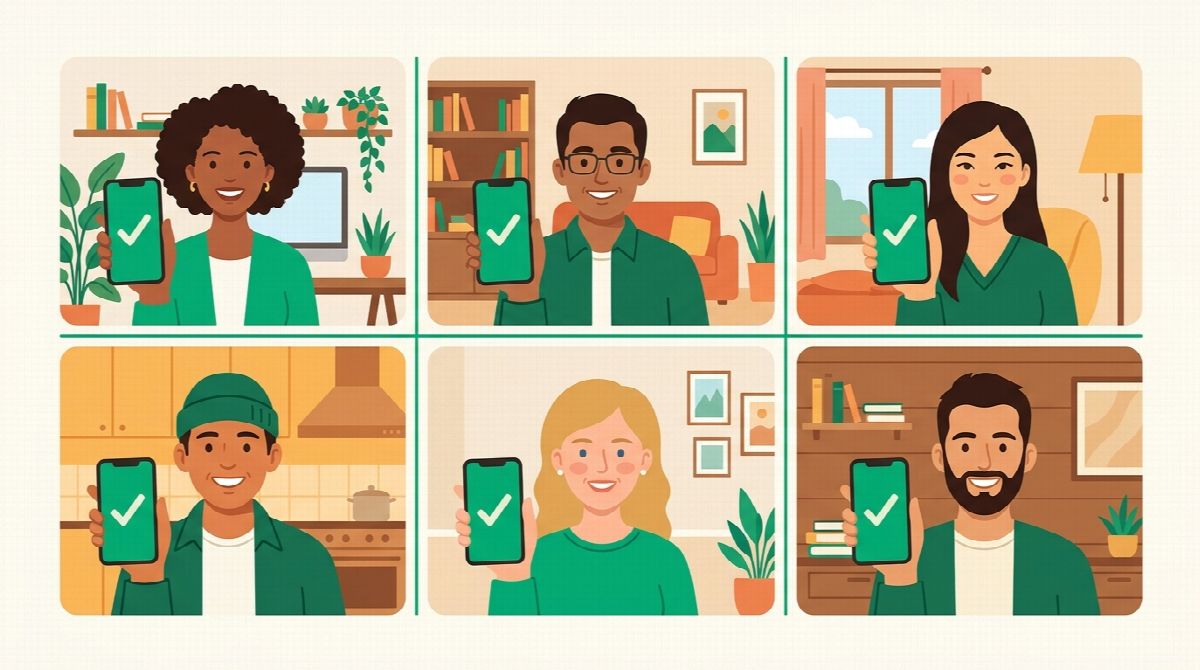
Small-group team fitness apps win by lowering the bar to entry: no wearable, no budget, no admin setup, and a reason to open the app every day. The trade-off is that they assume the group already exists and someone in it cares enough to invite everyone.
The best ones differ mainly in what they count. MoveTogether counts activity from whatever device each person already wears and scores it as a percentage of each person's own goal, which keeps mixed-device groups fair. Exercise Challenge counts logged workouts across 150-plus exercise types and sorts teams into promotion and relegation leagues, with a tone aimed squarely at groups of mates who enjoy trash talk. Habit Huddle counts checkins: did you do the thing you said you would do today, yes or no, and did your team see it.
That last model is the one built for day 31. A step race has a finish line. A daily habit with a team watching does not.
Habit Huddle: daily checkins for small and remote teams
Full disclosure: this is our app, so judge the reasoning rather than the ranking. Habit Huddle is built around huddles, small groups where each person keeps their own habit and checks in daily. A team fitness challenge becomes a huddle with a workout habit: everyone sets a Floor, the smallest version they will do on a bad day, and a Ceiling, the version they are aiming for. You step on the floor, and some days you burst through the ceiling.
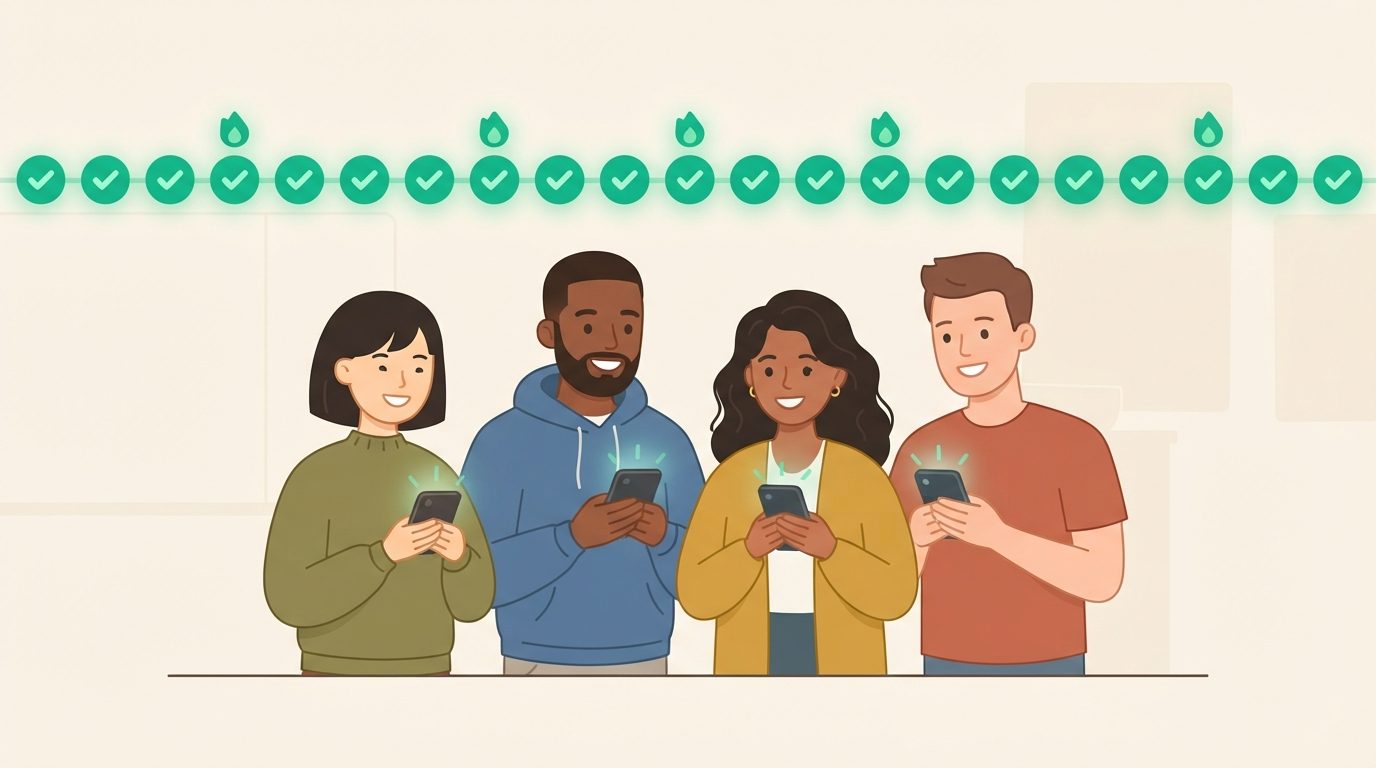
Every checkin is visible to the team and can be cheered. Each member keeps a personal streak in days, and the team builds a Checkin Chain that grows by one link for every member who checks in that day, so the whole team has a number to protect together. Leaderboards and seasons keep a competitive edge without anyone's step count being the measure.
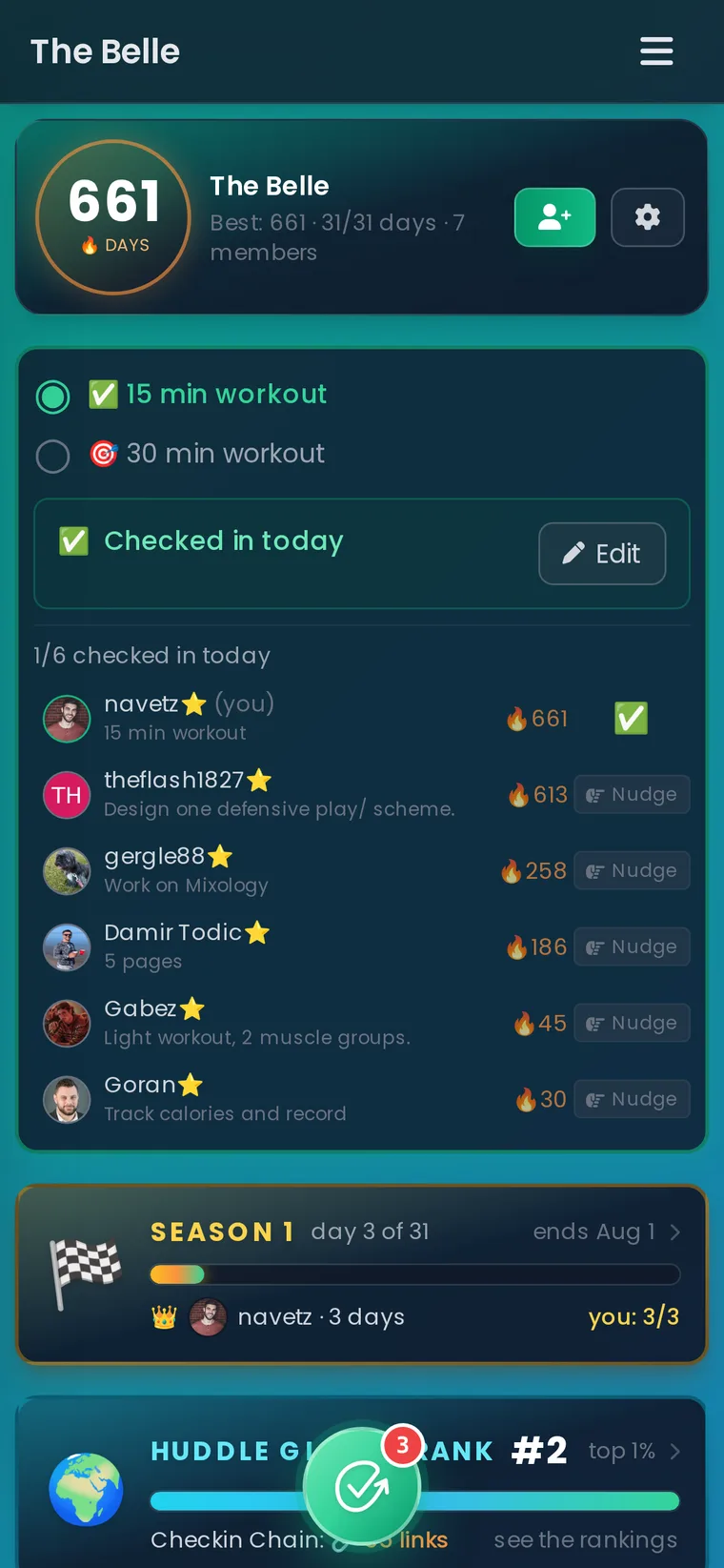
It runs on web, iOS, Android, and inside Discord, which matters for remote teams that already live in a server: a checkin is one command in the channel everyone already reads. The free plan covers one active habit per person, which is exactly what a team challenge needs.
Trade-offs: it does not sync wearables or count steps, so a team that wants activity data pairs it with Strava or each person's watch app. There is no HR dashboard, no reward catalog, and no compliance paperwork, so it is the wrong pick for a 500-person corporate program. Paid tiers exist (Habit Huddle Champion and, for a bigger community, Habit Huddle Patron with a seat pool) but a team of ten can run a full challenge on the free plan.
MoveTogether: one leaderboard for mixed devices
MoveTogether is the answer when half the team wears Apple Watch and the other half wears Garmin or nothing. Everything lands on one live leaderboard, scoring is relative to each person's own goal, and weekly Move Leagues reset every Monday so a bad week does not bury anyone. It is on iOS with Android in public beta, which is the main caveat for a team with Android users.
Exercise Challenge: leagues for mates
Exercise Challenge runs team competitions with five league tiers and weekly promotion and relegation, logs any exercise, and is free. The copy is built for banter ("blame your teammates when you lose"), which is great for a group of friends and a risk for a workplace where not everyone wants to be relegated in public.
Stridekick: free step challenges that scale up
Already covered above, and it belongs in both tiers. For a team that just wants to count steps together, start free here.
Comparison table
| App | Built for | Counts | Wearable needed | Price | Watch out for |
|---|---|---|---|---|---|
| Habit Huddle | Small and remote teams, friend groups | Daily checkins on a habit | No | Free plan, paid extras | No step sync or HR dashboard |
| MoveTogether | Mixed-device friend groups | Activity vs personal goal | Helps, not required | Free tier | Android still in beta |
| Exercise Challenge | Groups of mates | Logged workouts, league points | No | Free | Public relegation is not for every workplace |
| Stridekick | Friends, families, companies | Steps and custom activities | Phone or wearable | Free; Unlimited for corporate | Steps-first |
| YuMuuv | Distributed workforces | Activity index across 15+ challenges | Yes | ~$1 to $3 per active user per month, 20-user minimum | Basic admin tools, no verification |
| Wellable | Companies wanting turnkey themes | Wellness points | Yes | $1 to $2+ per user per month, $625 minimum | One-year minimum, setup fee |
| Vantage Fit | 100 to 10,000+ employees | Steps, multiple challenge types | Yes | From $2,000 per challenge (250 employees) | Needs active management |
Prices are the vendors' own published figures as of August 2026 and change often; confirm before committing a budget.
You already know you can change.
You just need to take the first step. Habit Huddle helps you build habits around your goals, alongside friends who keep you accountable.
Why team challenges fizzle, and the fix

Team fitness challenges fizzle because they measure the wrong thing for most of the team. A step leaderboard is a reliable motivator for the five people near the top and an argument for quitting for everyone else, and the people at the bottom are usually the ones the challenge was meant to help.
The research points at a better design. The Köhler effect, studied by Michigan State University's Deborah Feltz in health games, shows that people work harder when they believe a partner depends on their effort, and the effect is strongest when the weaker member feels indispensable rather than exposed. Apps that score relative to each person's own goal, or that count showing up rather than raw output, put everyone on the indispensable side.
Four settings that keep a team going:
- Count the checkin, not the output. A walk counts. A bad day with the minimum done counts. The team number should rise when people show up, whatever their step count.
- Make it visible daily. A leaderboard people look at once a week is a report. A checkin the team sees every morning is a ritual.
- Cheer, never police. Celebrate checkins loudly and say nothing about misses. Nobody needs a coworker noticing they skipped.
- Plan day 31 on day 1. Decide now whether the challenge rolls into a standing team habit. If the app cannot support that, you are renting motivation.
For challenge formats that work with any app, see our group fitness challenge ideas and the workplace wellness challenges guide.
Start a team challenge this week
If your team is small, remote, or simply not in the market for a wellness platform, start a huddle, invite the team, and let each person set a workout habit with a Floor they can hit on their worst day. Checkins take ten seconds, the Checkin Chain gives everyone one number to protect, and it keeps running after the first month ends. Start a team huddle free, or read how remote teams use Habit Huddle for wellness checkins.
Frequently asked questions
What is the best free team fitness challenge app?
For step challenges, Stridekick is free for friend and family groups and connects any wearable. For a daily accountability challenge without wearables, Habit Huddle's free plan covers one active habit per person, and Exercise Challenge is free for logged-workout leagues. Enterprise platforms like Vantage Fit and Wellable are paid and priced for companies.
Do team fitness challenge apps need a Fitbit or Apple Watch?
Not all of them. Step-based platforms count from a wearable or a phone's built-in pedometer. Checkin-based apps like Habit Huddle need no device at all, because they count whether you did your workout, not how many steps it produced. Apple's built-in Activity competitions need two Apple Watches and only pair two people at a time.
How long should a team fitness challenge last?
Four weeks is the common length and long enough to form a routine, but the more important decision is what happens after. Challenges that roll into a standing daily checkin keep most of the gains; one-off races lose most participants the week they end.
How do you keep a team fitness challenge fair for different fitness levels?
Score against each person's own goal or count daily participation instead of raw output. Apps like MoveTogether use percentage-of-goal scoring, and habit-based apps count checkins, so a beginner's minimum counts the same as a marathoner's long run.
What is the difference between a team fitness challenge app and corporate wellness software?
Corporate wellness software is a paid platform for HR: wearable sync, admin reporting, rewards, and compliance, priced per employee. A team fitness challenge app is usually free or cheap, phone-based, and aimed at a group of friends or coworkers organizing themselves.
Ready to Build Habits With Friends?
Stop failing alone. Join thousands using the #1 habit tracker with friends for real accountability and lasting results.
Prefer mobile? App Store · Google Play
Related Guides
More Habit Huddle articles on building habits with accountability.

HabitShare Alternatives: 6 Apps for Tracking Habits With Friends (2026)
Looking for a HabitShare alternative? Six social habit trackers compared by model, price, platforms, and what happens on a missed day, plus how to switch wit...
What to Do When You Miss a Workout Day: The 5-Step Comeback Plan
Missed a workout day? What one miss does to your body and habit, according to research, plus a five-step plan for the next 24 hours, when to make it up, and...
Habit Streak App With Friends: 7 Apps Compared (2026)
Seven habit streak apps with friends compared: Habit Huddle, HabitShare, Daily Pact, Habitica, Streaks, Habit Streak duels, HabitStreak.io. What friends see,...