
10 Group Fitness Challenge Ideas That Actually Work (With Templates and Scoring)
10 group fitness challenge ideas with setup templates, scoring rules, and the pitfall that ends each one. For friends, families, workplaces, teams, Discord,...
📺 Related Video: How to Plan a Group Fitness Challenge | Do THIS First
Video by: ABC Trainerize · Watch on YouTube
The best group fitness challenge ideas share three traits: one clear daily behavior, a floor low enough that busy people can still take part, and group momentum everyone can see. Get those three right and almost any format works. Get them wrong and the group chat goes quiet by day ten.
The ten ideas in this guide, in one line each: a 30-day fitness streak, a wellness competition scored on consistency rather than weight, a workplace challenge built around the workday, a family challenge with different habits per person, a couple's accountability challenge, a sports-team training consistency challenge, a Discord community challenge, a recovery and wellness challenge, a 90-day New Year's resolution cohort, and a coach-run client accountability program. Each one below comes as a ready-to-run playbook with setup, scoring, and the pitfall that usually ends it.
Most challenges fail on the third trait because they are built around intensity instead of repeatability. They reward the fittest person, punish the busiest person, and leave everyone else feeling behind. The fix is structural, not motivational.
The group format itself pulls real weight. In a 12-week study of 69 medical students published in the Journal of the American Osteopathic Association, group exercise participants improved 24.8% in physical health, 26% in emotional health, and 12.6% in mental health, and cut perceived stress by 26.2%. Participants who worked out alone, for twice as long, reported no significant change outside a modest mental health gain, per Wellable's summary of the study. Small sample, but the direction matches what most organizers see on the ground: people show up for each other before they show up for a plan. If you want the fuller evidence on that question, we went through it in is it better to work out alone or with friends.
Table of Contents
- 1. 30-Day Fitness Streak Challenge
- 2. Group Weight Loss & Wellness Competition
- 3. Workplace Fitness Challenge
- 4. Family Fitness Challenge
- 5. Couple's Accountability Challenge
- 6. Sports Team Training Consistency Challenge
- 7. Discord Community Challenge
- 8. Recovery & Wellness Challenge
- 9. New Year's Resolution Cohort
- 10. Trainer/Coach Client Accountability Program
- Comparison Table
- Launching Your Challenge
- FAQ
1. 30-Day Fitness Streak Challenge
A 30-day streak challenge is the cleanest starting point for most groups: pick one habit, make the checkin daily, and set the bar low enough that busy people can keep their streak alive. Daily visibility beats occasional intensity. If somebody needs a full hour to "count," they will miss days. If they need a realistic minimum, they stay in.
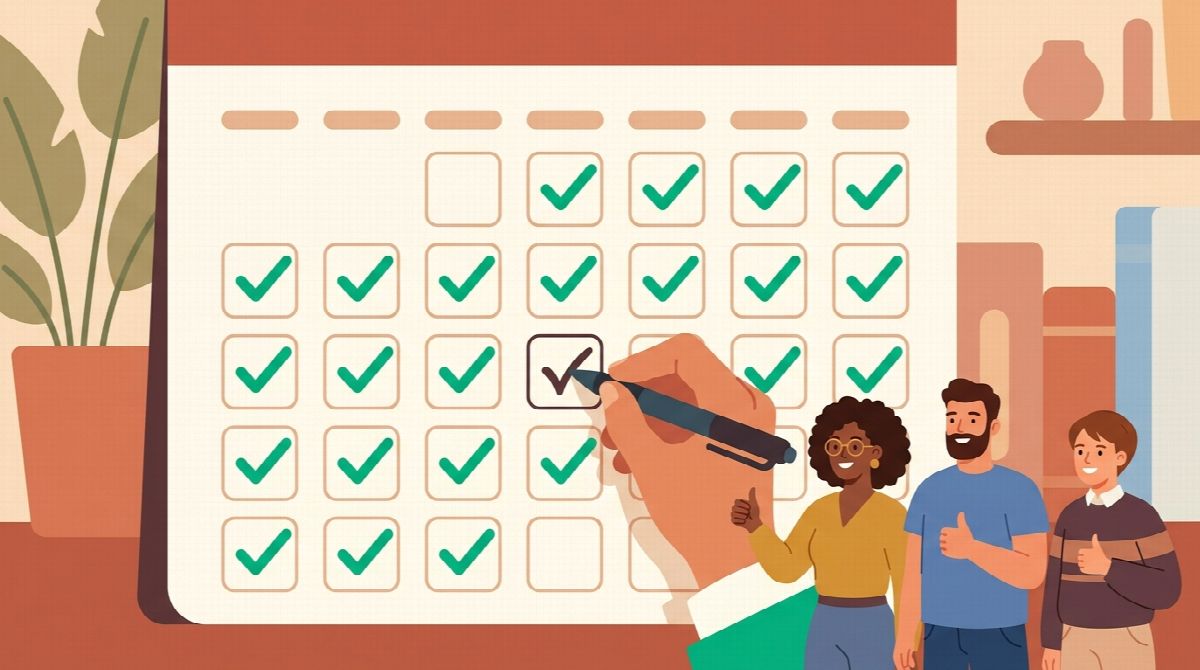
Setup template
Run one group per habit type if your crowd is broad. Running, lifting, yoga, and general movement do not belong in the same challenge unless everyone agrees on what counts.
Give every habit two tiers:
- Floor: the smallest version that still counts. A short walk, a quick mobility session, a brief bodyweight circuit.
- Ceiling: the stretch version for days with more time and energy.
Announce a grace-day policy before launch. People quit challenges when one bad day feels like it ruined the whole run, so make it explicit that a miss is survivable and the next day is what matters. If you need help setting that bar, this guide on staying consistent with goals goes deeper.
The simplest version of this format is a step count. If your group would rather count steps than workouts, the walking challenge app guide covers the scoring and the apps.
Scoring that doesn't kill momentum
Make group consistency the headline metric, not individual rank:
- Simple streak model: every Floor checkin keeps a personal streak going; Ceiling days earn bonus recognition.
- Team average model: score the group on average consistency, then spotlight strong runs.
- Weekend survival model: count weekends separately, because that is where challenges usually crack.
Practical rule: if your challenge depends on heroic effort, it won't survive normal life.
2. Group Weight Loss & Wellness Competition
Weight-focused challenges work only when the scoreboard rewards more than scale change. A scale-only scoreboard favors aggressive short-term behavior and punishes people making slower, healthier progress.
Run it as a wellness competition with weight as one optional metric among several. Break participants into small teams instead of one giant leaderboard, and score parallel tracks:
- Consistency track: daily or weekly checkins for planned workouts.
- Recovery track: sleep, hydration, or mobility.
- Outcome track: personal progress markers chosen privately, with only team totals shared.
Scoring options
Reward adherence, improvement, and support rather than starting-line advantages:
- Most Consistent: best completion rate across the challenge.
- Most Improved: best trend relative to starting point.
- Best Teammate: voted recognition for encouragement and reliability.
Teams stick with this longer when they know they can still win by showing up well, even if they are not the leanest or fastest person in the group. If your group wants a head-to-head format with a proper scoreboard, the fitness competition app roundup compares the tools built for it.
3. Workplace Fitness Challenge
Workplace challenges fail for cultural reasons before they fail for fitness reasons. If employees feel monitored, judged on body size, or dragged into forced fun, participation collapses. The version that works is voluntary, practical, and fits the workday people already have: walking meetings, lunch-break workouts, desk mobility, meditation.
Group formats are now the default expectation, not a novelty. In 2026, group fitness class attendance accounts for 34% of all US gym visits, and strength-based HIIT formats represent 47% of class bookings, according to ClubIntel data compiled by AMRA & Elma. People respond to visible structure and shared participation. At work, privacy and accessibility matter more than intensity.
A practical workplace template
Set up groups by department or mixed cross-functional pods, broad enough that remote, hybrid, and in-office staff can all join:
- Floor habit: one short movement or focus block during the workday.
- Ceiling habit: a fuller workout, longer walk, or deeper recovery habit.
- Shared scoreboard: group consistency only, never public body data.
- Recognition rhythm: weekly team shout-outs in Slack, email, or Discord.
Leadership should join, but not dominate. Employees need to see managers participating without feeling watched by them. If you are comparing platforms for a company-wide rollout, this breakdown of corporate fitness challenge apps covers the options, and the step challenge app for work guide covers the most common workplace format on its own.
4. Family Fitness Challenge
Family challenges break when adults pick one target and expect everyone to follow it. Kids, parents, and grandparents don't need the same workout. They need a shared rhythm: one calendar, different habits, visible encouragement.
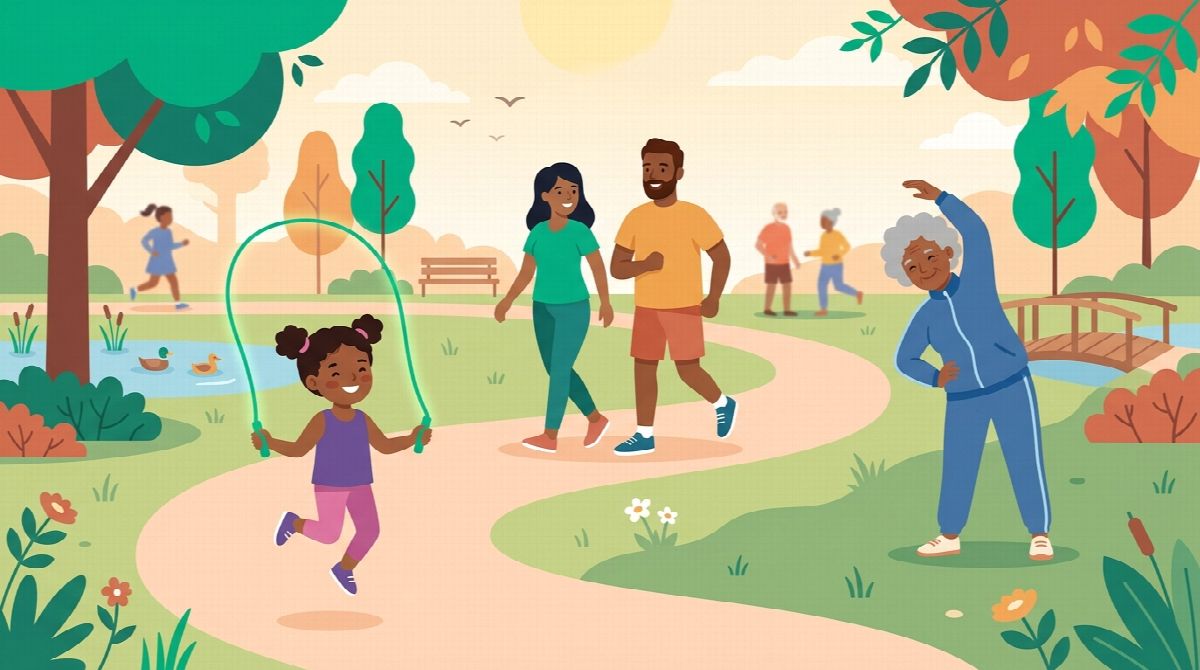
One challenge, different habit levels
Share the challenge, but let each person define their own floor and ceiling:
- Kids: movement play, dance time, outside activity.
- Parents: walks, workouts, meal prep, sleep routines.
- Older adults: gentle mobility, rehab work, daily walking.
One-size-fits-all design is the classic reason beginners drop out in week two. Tiered expectations solve more than motivational speeches do.
What to celebrate at home
Use rewards that reinforce time together rather than output: movie night, a picnic, choosing the weekend activity, cooking a meal together. The challenge isn't just exercise, it's shared routine. Habit Huddle's overview of the social benefits of fitness covers why that shared layer does so much of the work.
5. Couple's Accountability Challenge
A couple's challenge works best when it improves the relationship, not just the workout log. If one partner treats it as a performance contest and the other wants a shared ritual, friction shows up fast.
The strongest format is a two-person accountability system with one shared habit window. Start with the routine both people will actually repeat: evening walks beat a perfect but unrealistic 6 a.m. bootcamp.
Good pairings:
- Shared workouts on fixed days
- Joint walks after dinner
- One fitness habit plus one relationship habit, like date night or screen-free time
- Complementary habits, where one person lifts and the other does yoga, but both post a daily checkin
Score it on team consistency, with light milestone awards: seven straight days, best weekend follow-through, most supportive partner. Keep the language about protecting the shared rhythm, and celebrate the days you both showed up. If you want an app layer for this, the couples habit tracker guide covers two-person setups, and workout accountability apps for friends covers the wider field.
6. Sports Team Training Consistency Challenge
Coaches make one recurring mistake with challenge design: mixing talent, game performance, and training adherence into one scoreboard. That creates noise. Your most gifted athlete might be inconsistent; your most disciplined athlete might not be the star. If you want habits to improve, score the habits directly.
Separate compliance from talent
Build the challenge around attendance, recovery, and prescribed extras:
- Floor: mandatory sessions, rehab, film study, or mobility work.
- Ceiling: optional conditioning, skill reps, recovery add-ons.
- Shared reporting: publish unit or position-group consistency, never individual call-outs.
You already know you can change.
You just need to take the first step. Habit Huddle helps you build habits around your goals, alongside friends who keep you accountable.
Team scoring variations
Use pods, position groups, or class-year groups; smaller units keep each other engaged. Reward the best-performing group with useful privileges: first choice in drills, travel perks, team-selected music, leadership recognition. Public comparison should pull standards up, not single out the athlete who already needs support. For the tooling side, the team fitness challenge app guide compares the apps that score by squad.
7. Discord Community Challenge
Discord is ideal for group fitness challenges because the social layer is already there. The mistake most server owners make is stuffing every habit into one channel and hoping chaos turns into momentum.
A better setup runs one challenge per channel. A gaming server might run #daily-walk, #strength, #mobility, and #sleep. A creator community might mix fitness and productivity lanes so members choose what fits.
Structure the server before launch
Pin the rules per channel: checkin timing, and what counts as a floor versus a ceiling day. Then automate the obvious parts:
- Reminder timing: same window every day.
- Celebration rhythm: reactions, milestone posts, weekly recaps.
- Cross-channel visibility: let people see momentum across the server without flooding every channel.
A purpose-built Discord habit tracker bot handles reminders, checkins, and group momentum without hand-run spreadsheets. If you are timing the launch for January, the admin playbook for running a new year challenge in your Discord server has the week-by-week plan.
Formats that keep communities active
- Consistency channels: daily completion matters most.
- Theme months: mobility month, pull-up month, recovery month.
- Mixed cycles: fitness one month, sleep or reading the next.
- Server-wide consistency cup: best average follow-through, not biggest raw output.
Light tournaments between channels are fun; public pressure around body goals usually isn't. Check bot permissions and privacy messaging before launch.
8. Recovery & Wellness Challenge
A recovery challenge starts with a participant who is tired, sore, inconsistent, and wary of being judged. If the format feels like a contest, that person leaves. This is the one format where lower intensity produces better adherence.
Build around minimum viable care
Make it explicitly non-competitive: no leaderboard, no rankings, no public comparison of volume or pace. Use a simple daily checkin against a narrow habit menu:
- 5 to 10 minutes of mobility
- A consistent sleep routine
- Breathwork or meditation
- Easy walking
- Physical therapy exercises
A ready-to-run setup
A 21- to 42-day window is long enough to build rhythm, short enough to review and adjust:
- Floor: one recovery action, even five minutes counts.
- Ceiling: one primary habit plus one support habit, like mobility plus sleep prep.
- Weekly reflection: one short prompt, same day each week.
- Completion rule: count consistency, not intensity.
Use reflection prompts, not hype language: What felt easier today? What helped you show up? What is your smallest doable version tomorrow? This playbook fits people returning from injury, burned-out professionals, older adult wellness groups, and anyone rebuilding sleep and stress habits. The trade-off: it is less exciting to market than a transformation contest, and far more usable for people who need consistency before intensity.
9. New Year's Resolution Cohort
January 8 is where resolution challenges usually break. The group starts with ambitious goals and polished trackers; by week two, schedules tighten and the people who aimed too high stop checking in. A resolution cohort needs structure that expects the energy dip and catches it early.
The strongest version is a 90-day playbook built around small pods, clear floors, and planned resets:
- Cohort length: 90 days.
- Pod size: 4 to 8 participants, small enough that every checkin gets seen and cheered.
- Primary habit: one resolution-based daily action. "Exercise daily" is too loose; "move for 20 minutes" is usable.
- Floor: the smallest acceptable action on a hard day.
- Ceiling: the full planned behavior.
- Reset points: day 30 and day 60 reviews.
A 90-day scoring template
- 1 point: floor completed.
- 2 points: ceiling completed.
- Weekly bonus: one reflection submitted.
- Missed day rule: no shame, no reset to zero. Resume the next day.
That scoring serves both kinds of participants: high performers still have a standard to hit, and people rebuilding consistency still get credit for staying in motion.
A phased rollout
- Days 1 to 30: build the checkin habit and tighten the definition of success.
- Days 31 to 60: add one support behavior such as sleep cutoff or meal planning.
- Days 61 to 90: review patterns and write a maintenance plan for February and March.
A good resolution cohort does not reward a perfect first week. It builds a repeatable system people can still follow once January stops feeling special. If the cohort is a friend group rather than a program, the new year workout challenge with friends guide has the lighter-weight version, and January habit challenge ideas has a menu of habits sized for the month.
10. Trainer/Coach Client Accountability Program
For coaches, the hard part isn't writing better plans. It's knowing whether clients follow the plan between sessions. A polished PDF doesn't show adherence; a daily checkin does. Trainerize, TrainHeroic, and most remote coaching systems track adherence in some form because coaching decisions improve when the compliance picture is clear.
A lean client accountability template
Start with one group per client cohort:
- Floor: the smallest acceptable version of the prescribed habit.
- Ceiling: the full planned version.
- Coach view: weekly summaries and trend lines.
- Client experience: fast checkins, plain language, no app clutter.
Keep the vocabulary client-friendly: "walk after lunch" beats "zone two recovery implementation" every time. Group consistency helps here too. Clients don't just answer to the coach; they see a cohort moving with them, which usually beats private reminders alone.
Comparison Table
| Challenge | Complexity | Best for | Key advantage |
|---|---|---|---|
| 30-Day Fitness Streak | Low | Friend groups, first-time organizers | Easy onboarding, flexible floors |
| Weight Loss & Wellness Competition | Moderate | Small teams, weight-focused groups | Rewards consistency, not just scale change |
| Workplace Challenge | Moderate to high | Departments, wellness pilots | Opt-in structure, privacy guardrails |
| Family Challenge | Low | Multi-generational households | Everyone joins at their own level |
| Couple's Challenge | Low | Partners | Doubles as quality time |
| Sports Team Consistency | Moderate | Teams, academies | Objective adherence data |
| Discord Community Challenge | Moderate | Servers, creator communities | In-platform tracking, scales well |
| Recovery & Wellness | Low | Rehab, burnout, older adults | Pressure-free, inclusive |
| Resolution Cohort (90-day) | Moderate | January groups, paid cohorts | Survives the week-two dip |
| Coach Client Program | Moderate to high | Trainers, online coaches | Better coaching decisions, retention |
Launching Your Challenge
The strongest group fitness challenges don't feel complicated from the participant side. People know what to do today, they can record it in seconds, and they can see that others are showing up too. Everything else, prizes, branding, themed weeks, is secondary.
Keep the first version narrow: one group, one habit category, one checkin rhythm, one scoring method. Tiered checkins beat all-or-nothing standards. Group consistency beats winner-take-all competition. Small groups beat large anonymous pools. And formats last longer when they're designed around ordinary days, not ideal days.
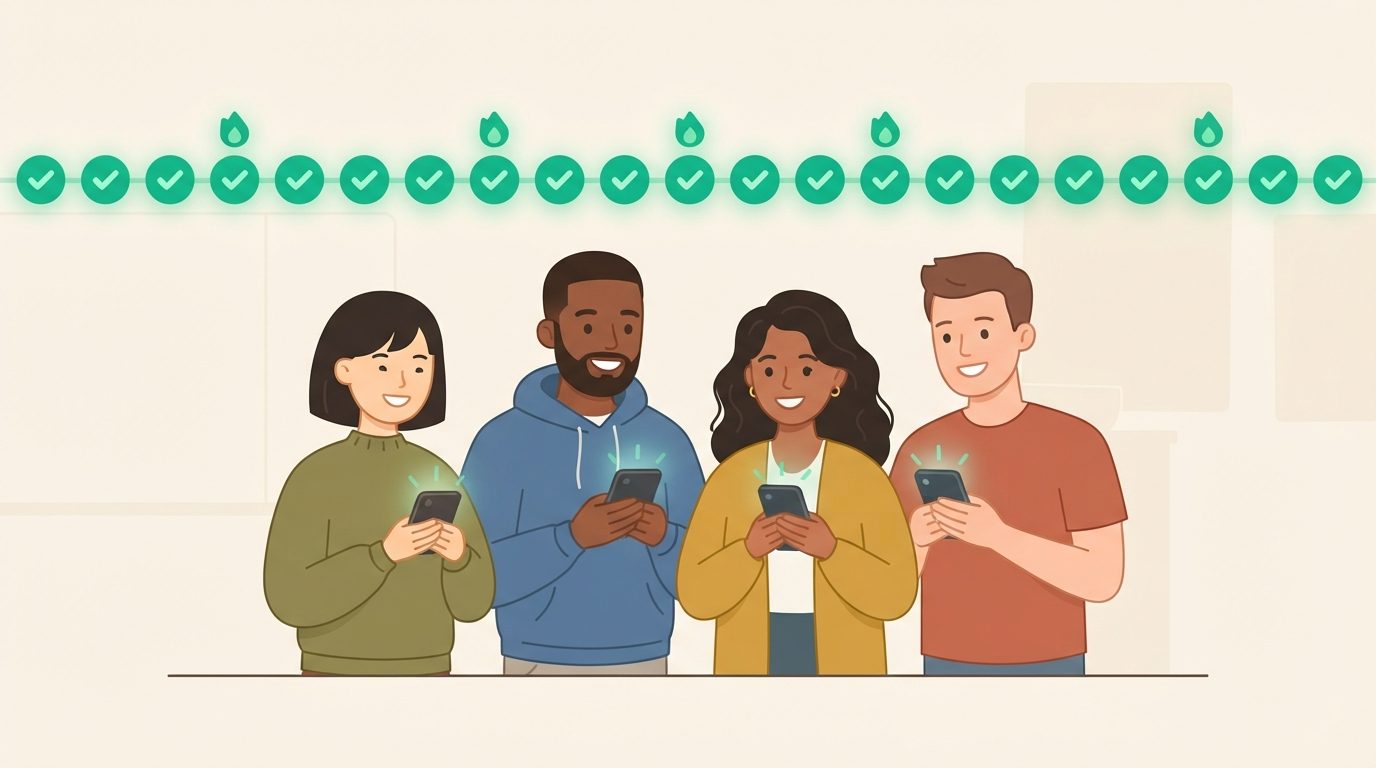
This is our app, so judge the reasoning: Habit Huddle is built around exactly this structure. Every habit gets a Floor (step on it to keep the day alive) and a Ceiling (burst through it on strong days), so someone can still post a checkin on a chaotic day and push for more on a good one. Each checkin adds a link to the group's Checkin Chain, the shared metric that makes momentum visible, and cheers make showing up feel noticed. The honest trade-off: checkins are manual by design. There's no wearable auto-sync, because typing the checkin is the accountability moment. If that fits how your group works, you can set up a huddle for your fitness group in a couple of minutes, set the Floor and Ceiling, and invite your people. If you want to compare it against the rest of the field first, the best group challenge apps roundup and the group fitness challenge app guide both do that honestly.
Whichever tool you use, don't wait for the perfect ruleset. Build the first version, set the floor low enough to be realistic, define the ceiling, and let the group rhythm do the heavy lifting.
FAQ
What is a good fitness challenge for a group? A 30-day consistency challenge is the best starting format for most groups: one daily habit with a small minimum version that counts, a daily checkin, and a group score based on average consistency rather than individual rank.
How long should a group fitness challenge last? 21 to 42 days for a first challenge. That window is long enough to build a rhythm and short enough to hold attention. Resolution-style cohorts do better at 90 days with reviews at day 30 and day 60.
How do you organize a group fitness challenge? Pick one clear behavior, define a floor (the smallest version that counts) and a ceiling (the stretch version), choose a daily checkin rhythm, and pick one simple scoring rule before launch. Announce the miss policy up front: no shame, no reset to zero, resume the next day.
Why do most group fitness challenges fail? All-or-nothing design. When only big workouts count, busy participants fall behind early and quit. Challenges that let a small minimum keep the day alive retain far more people through the full run.
What are some fitness challenge ideas for a group at work? A step challenge scored by team average, a daily desk-mobility floor with a lunch-walk ceiling, and a weekly "move together" block are the three that survive real workweeks. Keep participation voluntary, never share body data, and let managers join without running the scoreboard.
Ready to Build Habits With Friends?
Stop failing alone. Join thousands using the #1 habit tracker with friends for real accountability and lasting results.
Prefer mobile? App Store · Google Play
Related Guides
More Habit Huddle articles on building habits with accountability.

HabitShare Alternatives: 6 Apps for Tracking Habits With Friends (2026)
Looking for a HabitShare alternative? Six social habit trackers compared by model, price, platforms, and what happens on a missed day, plus how to switch wit...
What to Do When You Miss a Workout Day: The 5-Step Comeback Plan
Missed a workout day? What one miss does to your body and habit, according to research, plus a five-step plan for the next 24 hours, when to make it up, and...
Habit Streak App With Friends: 7 Apps Compared (2026)
Seven habit streak apps with friends compared: Habit Huddle, HabitShare, Daily Pact, Habitica, Streaks, Habit Streak duels, HabitStreak.io. What friends see,...