
New Year Habit Challenge 2027: How to Design One You Will Actually Finish
How to run a new year habit challenge in 2027: why most end by Quitter's Day on January 8, the four rules of a finishable challenge, the main formats compare...

📺 Related Video: How James Clear Turns New Year's Resolutions Into Lasting Habits
Video by: Daily Stoic · Watch on YouTube
A new year habit challenge is a fixed run of days, usually 30 to 75, where you do one small habit every day starting January 1. The format works because it converts a vague resolution like "get healthy" into a daily yes-or-no question, and 2027 is a good year for it: January 1 lands on a Friday, so you get a clean weekend to start before the first full week hits.
This guide covers why most January challenges die in the second week, the four rules that separate challenges people finish from challenges people restart, the main formats compared honestly, and how to run one with friends so every day you show up gets seen and cheered.
Why most new year challenges end by January 8
Most new year challenges do not fail in March. They fail in the second week of January. Strava analyzed over 800 million logged activities and found that resolution-driven exercise collapses by the second Friday of January, a date that has since been named Quitter's Day, with roughly 80 percent of resolutions abandoned not long after. In 2027, Quitter's Day falls on January 8.
The failure pattern is predictable enough to design against. Three mistakes account for most of it:
Too many habits at once. The January 1 version of you signs up for a new diet, a gym schedule, a reading habit, and a 6am alarm simultaneously. Each habit is plausible alone. Together they collapse the first time you have a bad night's sleep.
A bar set for your best day. "Run 5k every day" works right up until the Tuesday you get home late in the rain. If the daily requirement only fits good days, the challenge ends on the first normal one.
All-or-nothing scoring. If one miss ruins the challenge, then the first miss removes the reason to continue. That single design choice converts one bad Tuesday into an abandoned January.
None of these are discipline problems. They are design problems, and they have design fixes.
The four rules of a challenge you will actually finish
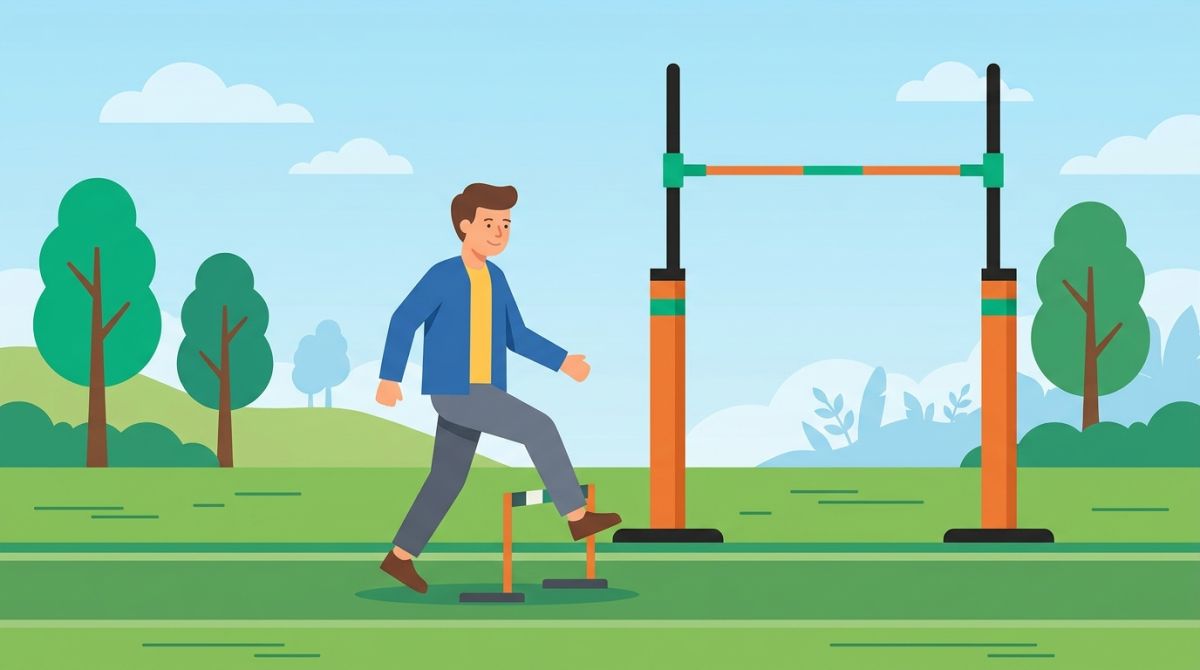
A finishable challenge follows four rules: one habit, a floor you can hit on your worst day, no reset for a single miss, and a checkin someone else can see.
1. Pick one habit. Not a lifestyle. One repeatable action: move for 20 minutes, write 100 words, read 10 pages, no alcohol today. If you genuinely want to change five things, run the challenge on the one that makes the others easier, which is usually sleep or exercise.
2. Set a floor, not a target. Decide the smallest version of the habit that still counts, and make it small enough to clear while sick, traveling, or parenting a toddler with an ear infection. Five minutes of movement is a floor. An hour at the gym is a ceiling you get to on good days. The floor is what keeps the chain alive; the ceiling is where progress comes from.
3. No reset for a single miss. In the most cited real-world study of habit formation, Lally and colleagues tracked 96 people building a daily habit and found automaticity took a median of 66 days, and that missing one opportunity made no measurable difference to the process. A missed day is noise. Rule in advance that a miss costs you that day and nothing else, and the challenge survives its first bad week.
4. Make your checkin visible. A daily checkin that another person sees changes the math on your worst days. Text a friend, post in a group chat, or use an app built for it. The point is not surveillance; it is that showing up earns a small moment of being seen, every single day, which is more motivation than a private checkbox ever generates.
The main challenge formats compared
The right format depends on how many times you have tried and quit before. First-time finishers should run 30 days. People who keep quitting harsh challenges should pick a format with a floor and a group.
| Format | Length | Daily requirement | Miss a day? | Best for |
|---|---|---|---|---|
| 30 day challenge | 30 days | One habit, one action | Your rule, set in advance | First-time finishers who need a win |
| 31 days of January | 31 days | One small habit, or one new micro-habit per day | Continue next day | People who want January itself as the container |
| 75 Hard | 75 days | Two workouts, diet, water, reading, photo | Restart at day 1 | People who thrive on severity |
| 75 Soft | 75 days | One workout, water, reading, moderate diet | No official reset | Structure without the extremes |
| 57 Chill | 57 days | A floor of about 6 minutes, ceiling optional | Floor keeps you going, no reset | People who quit challenges alone and want a group |
| 90 day quarter | 90 days | One habit tied to a quarterly goal | Continue next day | Experienced trackers with a specific target |
If 30 days is the right length for you, our 30 day habit challenge guide has the full day-by-day playbook.
Two notes on the extremes. 75 Hard produces genuine transformations for the minority who finish it, and its restart rule is exactly the all-or-nothing scoring that kills most January attempts; our 75 Hard alternatives guide covers the gentler variants in detail. And a 21 day challenge, despite the popular myth, is not backed by the habit research: the 21 day figure traces to a 1960s surgeon's observation about amputees adjusting to their new bodies, while the Lally study found 66 days was the median for a habit to feel automatic. Run at least 30.
Habit ideas sized for January
The best January habit is small, daily, and specific enough that "did I do it?" has an obvious answer. Ideas that fit that bar:
Movement: a 15 minute walk before checking your phone, 20 bodyweight squats, one flight of stairs instead of the elevator, stretching for 5 minutes before bed. If exercise is the goal, our guide to building an exercise habit covers the floor-and-ceiling approach in depth.
Food and drink: a glass of water before each coffee, a vegetable with dinner, no alcohol on weeknights, protein at breakfast.
Mind: read 10 pages, write three sentences in a journal, 10 minutes of a language app, one item off tomorrow's list planned tonight.
Digital: phone out of the bedroom, no screens for the first 30 minutes of the day, one social app deleted for the month.
Pick one. The list of good daily habits to track is there when February arrives and you want to add a second.
Run it with friends and the odds change

A habit challenge run with friends outlasts a solo one for a simple reason: on the day motivation dies, the group is still there. Your checkin gets a cheer instead of disappearing into a notes app, and seeing a friend show up on a gray January Tuesday is often the nudge that gets you to show up too.
The group does not need to share your habit. One friend can be doing no-alcohol January while another does daily walks; what you share is the daily act of checking in. A group chat works. A shared spreadsheet works. The failure mode of both is that by week three the thread goes quiet and nobody restarts it.
This is the exact problem Habit Huddle was built for, so full disclosure, this is our app, and the reasoning matters more than the plug. You create a huddle for your challenge, everyone picks their habit with its own floor and ceiling, and each day every member's checkin adds a link to the group's Checkin Chain. The chain makes showing up feel like a team sport: cheers for every checkin, a visible chain the group builds together, and no drama when someone has an off day. The challenge, the huddle, and the habit tracking are free, and it runs on the web, iOS, Android, and Discord. If your circle lives in a group chat today, a habit tracker built for friends is the upgrade that keeps the thread alive past week three.
However you run it, put the group in place before January 1. Recruiting accountability on day 9, after the wobble has started, almost never happens.
A week-by-week map of January 2027
Knowing what each week of a January challenge feels like is half the defense against it. The stages are predictable:
Week 1 (Jan 1 to 7). Novelty carries you. The risk is overreaching: doing triple your floor every day and quietly resetting your own expectations to that level. Bank easy wins instead. Clear the floor, touch the ceiling when it is genuinely there, and stop.
Week 2 (Jan 8 to 14). Quitter's Day week. Novelty is gone, results have not arrived, and the first schedule collision happens. This is the week the floor exists for. A six minute version of your habit on Thursday keeps a chain alive that a skipped "real" workout would have ended.
Weeks 3 and 4 (Jan 15 to 28). Boredom, not difficulty, is now the opponent. The habit works but the dopamine is gone. Groups earn their keep here; a chain the whole group has built for 20 days is worth protecting in a way a private checkbox is not.
Day 31 and after. The challenge ends; the habit should not. Decide on day 31 what the February version looks like, usually the same habit with a slightly higher floor, or the same floor with a second habit added. The research says you are around halfway to automatic at this point. A 57 or 75 day format handles this for you by simply not stopping at the month boundary.
You already know you can change.
You just need to take the first step. Habit Huddle helps you build habits around your goals, alongside friends who keep you accountable.
Frequently asked questions
When should I start a new year habit challenge?
January 1 is the natural start and 2027's is a Friday, which gives you a weekend to settle in before the first full work week. But the start date matters far less than the design. If you are reading this on January 6, start January 6. A challenge started mid-month with a sane floor beats a perfect challenge deferred to February.
How long should a habit challenge be?
Thirty days minimum. Research from University College London found new habits took a median of 66 days to feel automatic, so a 57, 66, or 75 day format finishes the job a 30 day challenge starts. If you have never finished a challenge before, win at 30 days first.
What happens if I miss a day?
You lose that day and nothing else, provided you decided that rule in advance. The habit formation research found a single missed day made no measurable difference to the process. Check in again the next day; the challenge continues.
Can I do a new year challenge with friends online?
Yes, and it is the single highest-leverage change you can make to your odds. A shared group where everyone checks in daily, whether that is a group chat, a spreadsheet, or a huddle in a habit tracking app, means your daily effort is seen and cheered instead of private and skippable.
Is the 21 day habit challenge enough?
No. The 21 day figure is a myth traced to a 1960s plastic surgeon's observations, not habit research. The actual median in the most cited study was 66 days, with a range from 18 to 254 depending on the person and the habit. A 21 day challenge is a fine warm-up; just do not expect the habit to run itself on day 22.
Ready to Build Habits With Friends?
Stop failing alone. Join thousands using the #1 habit tracker with friends for real accountability and lasting results.
Prefer mobile? App Store · Google Play
Related Guides
More Habit Huddle articles on building habits with accountability.

HabitShare Alternatives: 6 Apps for Tracking Habits With Friends (2026)
Looking for a HabitShare alternative? Six social habit trackers compared by model, price, platforms, and what happens on a missed day, plus how to switch wit...
What to Do When You Miss a Workout Day: The 5-Step Comeback Plan
Missed a workout day? What one miss does to your body and habit, according to research, plus a five-step plan for the next 24 hours, when to make it up, and...

Habit Streak App With Friends: 7 Apps Compared (2026)
Seven habit streak apps with friends compared: Habit Huddle, HabitShare, Daily Pact, Habitica, Streaks, Habit Streak duels, HabitStreak.io. What friends see,...