
10 Good Daily Habits to Track for a Better 2026
Looking for good daily habits to track? Discover 10 powerful habits for health, productivity, and wellness. Get practical tips and metrics to start today.
Beyond the streak: that's the part most habit advice gets wrong.
You've been told success comes from never missing a day, protecting a perfect chain, and grinding through with discipline. That sounds motivating until real life shows up. You get sick, work runs late, your kid wakes up at 2 a.m., or your motivation vanishes for one day and then five. For many, the streak wasn't the solution. It was the trap.
The better approach is flexible consistency. A habit should survive bad days, not only reward ideal ones. That's why the best tracking system isn't all-or-nothing. It gives you a floor and a ceiling. In Habit Huddle, that means a Minimum that keeps the habit alive when life gets messy, and a Daily Goal that gives you something to stretch toward when you've got the time and energy. Add a small group watching the same scoreboard, and the habit stops living only in your head.
This isn't just another list of good daily habits to track. It's a practical system for tracking them in a way that lasts. Each habit below includes a simple way to set your Minimum, a stronger Daily Goal, and a social accountability angle that works better in groups than solo willpower ever does.
Table of Contents
- 1. Water Intake & Hydration
- 2. Physical Exercise & Movement
- 3. Reading & Learning
- 4. Sleep Quality & Duration
- 5. Meditation & Mindfulness
- 6. Writing & Journaling
- 7. Nutrition & Healthy Eating
- 8. Mental Health Check-ins & Self-Care
- 9. Gratitude & Positivity Practice
- 10. Learning a New Skill & Practice
- Top 10 Daily Habits Comparison
- How to Build Your Habit Stack Without Burning Out
1. Water Intake & Hydration
Hydration is one of the easiest wins to track because the action is clear and the feedback is fast. A solid baseline is drinking 8 glasses of water daily, which aligns with standard hydration guidance of about 2 liters per day for general physiological function. The reason it matters isn't cosmetic. Even mild dehydration of 1 to 2% body water loss can impair attention and mood, and a 2012 Journal of Nutrition study found that adequate water before and during tasks improved focus and reduced fatigue.
In a group setting, hydration works best when the target is simple enough that nobody needs a spreadsheet. For most Huddles, set the Minimum as “drink meaningfully throughout the day” and the Daily Goal as the full 8-glass target. That gives people a way to check in sincerely on chaotic days without turning one missed bottle refill into a lost week.
How to track hydration without overthinking it
A measured bottle does most of the work. Mark servings on the bottle, or use the old-school trick of putting rubber bands on it and removing one after each serving. If you want a digital version, pair the habit with a dedicated hydration tracking app guide and use Habit Huddle for the daily accountability layer.
- Minimum: Finish your first bottle, or hit your personal baseline before dinner.
- Daily Goal: Reach the full 8-glass target.
- Group tip: Run hydration Huddles around shared contexts like a sports team, office challenge, or morning routine group.
Practical rule: Don't make hydration competitive. Make it visible. People stick with what they can see and check off quickly.
2. Physical Exercise & Movement
Exercise is where people most often sabotage themselves. They set the habit as “work out hard every day,” then miss one session and vanish. Daily movement is better tracked as consistency first, intensity second.
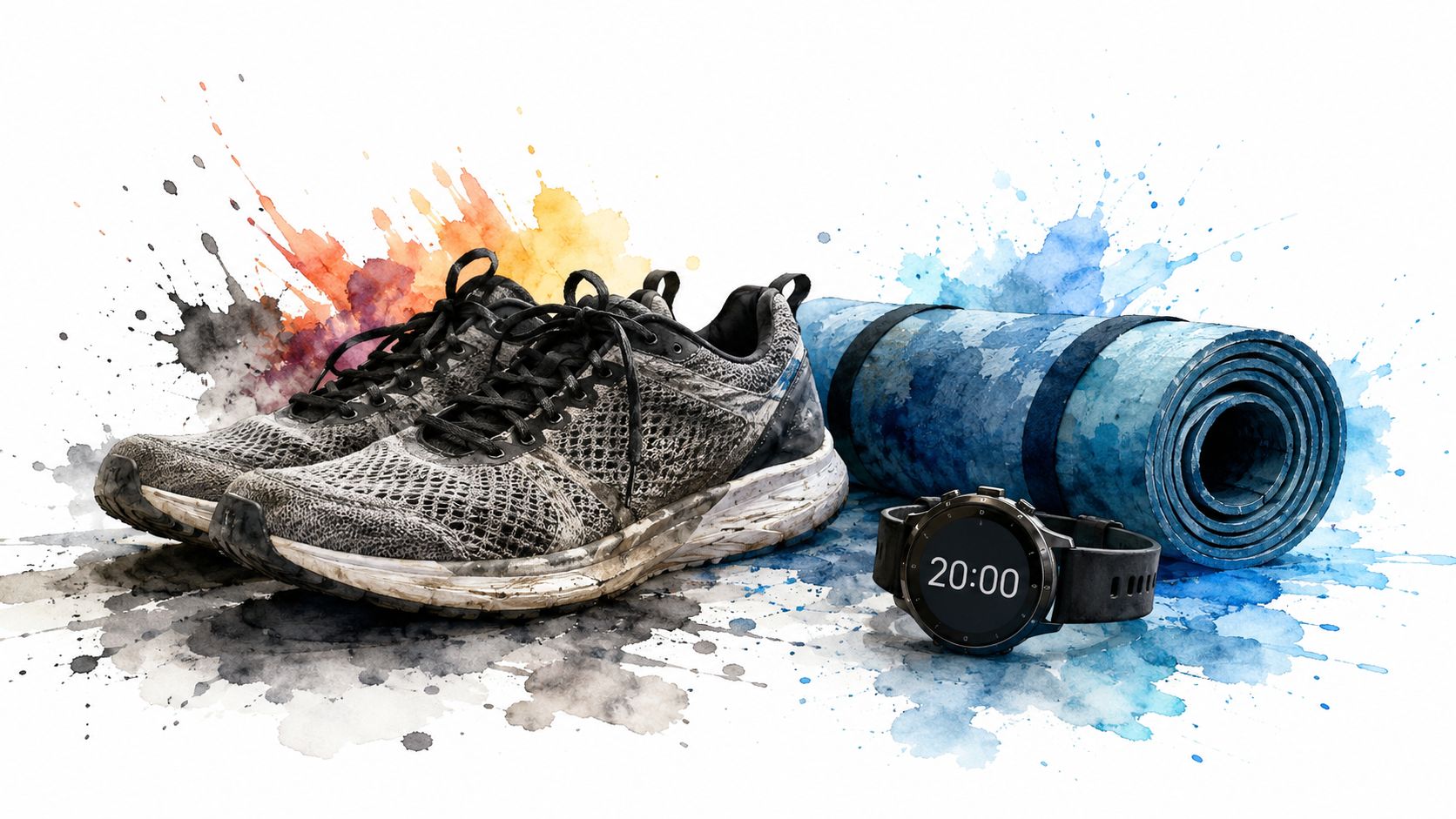
What works in Habit Huddle is one movement habit per Huddle. Running club. Lifting crew. Yoga group. Walking challenge. The narrower the habit, the easier it is for the group to understand what counts and encourage each other without debates.
Minimum beats heroic workouts
Set a Minimum you can do when your day falls apart. That might be a short walk, mobility work, or a brief bodyweight session. Then set a Daily Goal that matches the kind of training you want to build. This is also a habit that pairs naturally with hydration, especially if your group already shares fitness goals. If you want a practical companion read, this guide on water for weight loss science fits well alongside exercise tracking.
- Minimum: Show up for a short session or a meaningful block of movement.
- Daily Goal: Complete your planned workout.
- Group tip: Use Group Consistency Rating to celebrate attendance and follow-through, not just hard sessions.
Habit Huddle users tend to do better when they log the session immediately after finishing it. Delay the check-in, and people start negotiating with themselves.
If you need a simple framework for staying on track, this how to work out consistently article is a good practical reference.
A short demo helps people see how low-friction exercise tracking should feel:
3. Reading & Learning
Reading is one of the best daily habits to track because it compounds. The mistake is making the target too ambitious. “Read a book a week” sounds good. “Read every day at a repeatable level” is what truly survives work, travel, and low-energy evenings.
Book clubs, students, and professional learning groups all benefit from the same structure. Track time or pages, then add a tiny social layer. In Habit Huddle, that usually means sharing one sentence about what you read. That turns private consumption into group accountability without asking people to write mini essays.
Track input, then share one takeaway
The strongest Minimum is small enough to remove resistance. For a busy professional, that may be a short reading block. For a student during exam prep, it may be one assigned section. The Daily Goal can be more ambitious, but the Minimum keeps the identity intact.
- Minimum: Read a small, non-intimidating amount at the same time each day.
- Daily Goal: Finish your planned chapter, article set, or study block.
- Group tip: Ask each member to post one insight, quote, or question. That makes the Huddle more engaging than a simple checkbox.
If you're trying to choose a realistic pace, this reading pace breakdown on how many pages a day to read helps people avoid setting goals they won't maintain.
A reading habit usually fails from ambition, not lack of interest.
4. Sleep Quality & Duration
Sleep is different from most habits on this list because you don't “do” it with effort. You create conditions for it and then track the outcome. That's why many people get sleep tracking backward. They obsess over gadgets and ignore the bedtime routine that produces the result.
Tracking 7 to 9 hours of sleep matters because sufficient rest is strongly tied to cognitive function, emotional stability, and long-term health. The National Sleep Foundation states that adults who consistently achieve 7 to 9 hours have a 30% lower risk of chronic conditions such as diabetes, obesity, and cardiovascular disease than those sleeping less than 6 hours. The CDC also calls sleep deprivation a public health epidemic, with over 35% of U.S. adults reporting insufficient sleep.

Morning logging works better than guessing at night
Log last night's sleep in the morning. It's cleaner and more honest. In Habit Huddle, a sleep Huddle works well for students, shift workers, athletes, and couples because the group normalizes rest instead of treating it like laziness.
A 2018 study in Sleep and Health reported that people who maintained regular sleep schedules for 12 weeks showed a 25% improvement in memory retention and a 20% reduction in anxiety symptoms. That's why consistency matters as much as total hours.
- Minimum: Hit your personal sleep floor, often around 7 hours.
- Daily Goal: Land in your ideal range with a consistent bedtime.
- Group tip: Track the supporting routine too, such as screens off, lights down, or in-bed on time.
5. Meditation & Mindfulness
Long meditation sessions are overrated for habit building. What sticks is a practice you can repeat under normal conditions, with noise, time pressure, and an unfocused mind.
That makes mindfulness a strong group habit to track. The win is not a perfect state of calm. The win is showing up, logging the rep, and letting consistency do the work.

Set a minimum that survives bad days
Meditation fails when the target is vague or oversized. "Be more mindful" is hard to track. "Sit for 3 minutes after coffee" is easy to verify, repeat, and discuss with a group.
Habit Huddle fits this habit well because the two-tier setup separates maintenance from ambition. Your Minimum keeps the streak alive on a chaotic day. Your Daily Goal gives you room for a fuller session when time and energy are there. That trade-off matters. If the minimum is too high, people skip. If the daily goal is too small, the habit stops growing.
- Minimum: 2 to 3 minutes of breathing, a short guided meditation, or one mindful check-in tied to a fixed cue.
- Daily Goal: 10 to 15 minutes of meditation, a body scan, or a longer mindfulness session.
- Group tip: Ask members to log both completion and context. "3 minutes before work" or "10 minutes after lunch" gives the group enough detail to spot patterns without turning check-ins into essays.
Timing matters, but perfection does not. Morning works well for many people because fewer decisions compete for attention. Midday can work better for stressed teams, parents, or students who need a reset instead of another morning task. Evening is useful if the group wants a wind-down habit, but completion rates usually drop when the routine depends on leftover willpower.
For accountability, keep the social standard simple. In a mindfulness Huddle, members should never feel pressure to report a profound experience. A one-word note such as "scattered," "steady," or "tense" is enough. That keeps the habit honest and makes the group useful on days when meditation feels harder, which is often when it helps most.
You already know you can change.
You just need to take the first step. Habit Huddle helps you build habits around your goals, alongside friends who keep you accountable.
6. Writing & Journaling
Writing habits collapse when people confuse output quality with habit completion. Journaling doesn't need to be insightful. Creative writing doesn't need to be good. The habit is to sit down and produce something.
That distinction matters in groups. Writers, students, creators, and professionals all benefit when the Huddle standard is “did you write?” instead of “was it impressive?” A messy paragraph, rough draft, or scattered journal entry still counts because it preserves the rhythm.
Track the session, not the brilliance
Writing is easiest to sustain when the cue is fixed. Same desk. Same notebook. Same time. Morning often works well for journaling because the mind is less cluttered, but late-night reflection works for some people if the setup is frictionless.
- Minimum: A short writing session or a tiny word target.
- Daily Goal: Your fuller draft, journal entry, or assignment block.
- Group tip: Share intent, not necessarily content. “Drafted intro” or “journaled after lunch” is enough to keep accountability alive.
The worst writing target is one that makes you wait for inspiration.
A useful pairing is reading plus writing in separate Huddles. Reading feeds ideas. Writing turns them into output.
7. Nutrition & Healthy Eating
Nutrition tracking often fails because people start with rules they can't live with. If the method depends on perfect calorie logging, total food control, and zero social meals, individuals won't maintain it for long.
A better daily habit is behavioral nutrition. Did you eat intentionally today? Did you follow your plan most of the way? Did you hit the basics your body responds well to? That framework is more sustainable for groups because people can share meals, meal prep ideas, and routines without policing one another.
Behavior-first nutrition tracking
This habit works well for couples, fitness clients, workplace groups, and meal-prep communities. In Habit Huddle, a nutrition Huddle should define what “counts” in plain language before day one. Otherwise people drift into guesswork.
- Minimum: Follow your core nutrition behavior, such as planned meals or balanced eating.
- Daily Goal: Hit the full version of your plan, such as meal prep, protein target, or intentional meal timing.
- Group tip: Share photos, recipes, or prep wins. Don't turn the Huddle into a guilt log after off-plan meals.
The trade-off is simple. Rigid tracking gives more detail. Flexible tracking gets more adherence. For many individuals trying to improve daily life, adherence wins.
8. Mental Health Check-ins & Self-Care
This one needs care. Mental health tracking should support awareness, not become another pressure source. If the habit feels like one more thing you're failing at, it's built wrong.
A useful check-in is brief and concrete. Mood. Stress. Energy. One sentence about what's going on. One action that might help. In a supportive Huddle, that creates a pattern of noticing before things pile up. It also gives group members permission to be honest without oversharing.
Build a check-in you can actually answer
The best Minimum here can be tiny. “Did I check in with myself today?” is enough. The Daily Goal can include journaling, a walk, a therapist-recommended exercise, time outside, or another deliberate self-care action.
- Minimum: Pause and record a simple self-check.
- Daily Goal: Follow through on one supportive action.
- Group tip: Keep the Huddle private and set expectations around respect, confidentiality, and nonjudgment.
This is one of the strongest examples of why social accountability works better than solo tracking. People are often more willing to show up for a group norm than for a private app they can ignore.
9. Gratitude & Positivity Practice
Gratitude is easy to dismiss because it sounds soft. In practice, it's useful because it changes what people pay attention to. The catch is that vague gratitude gets stale fast.
“Grateful for my life” doesn't ask much of your attention. “Grateful my coworker covered a call when I was overloaded” forces specificity. That's the version worth tracking because it sharpens observation and makes the habit feel real.
Make gratitude specific or it goes flat
This is one of the quickest habits to complete, which makes it ideal for a low-friction Huddle. Families, recovery groups, friend circles, and wellness teams often do well when members optionally share one gratitude publicly and keep the rest private.
- Minimum: Note a few specific gratitudes.
- Daily Goal: Reflect on them for a few minutes or write a fuller entry.
- Group tip: Rotate themes. Personal one day, relational the next, work-related after that.
A gratitude Huddle can also improve the tone of a larger group. When people regularly post what went right, it becomes easier for others to keep showing up after a rough day.
10. Learning a New Skill & Practice
Skill growth does not come from long sessions when motivation happens to show up. It comes from repeated reps against the part you are still bad at.
That is why this habit is often tracked poorly. Logging “30 minutes practiced” sounds productive, but it hides the difference between targeted work and comfortable repetition. Real progress usually feels less fun in the moment. A guitarist slows down a weak chord change. A language learner drills the cases they keep missing. A developer spends the session fixing one stubborn bug instead of watching another tutorial.
Track deliberate practice, not time alone
Group accountability works especially well here because skill-focused Huddles can measure quality without becoming complicated. In Habit Huddle, set the habit up with a low Minimum that protects the streak, then a Daily Goal that reflects serious practice. That gives members a way to stay consistent on busy days without pretending a five-minute check-in equals a full session.
- Minimum: Complete one short, structured practice block on a defined sub-skill.
- Daily Goal: Finish your full session and report the exact weakness you worked on.
- Group tip: Require check-ins to name the focus area. “Practiced verb endings,” “worked on left-hand accuracy,” or “debugged session state” gives the group something concrete to respond to.
This format helps groups call out a common problem. Coasting looks like effort from the outside. Specific check-ins make it easier to spot whether someone is stretching or just repeating what already feels easy.
For language learners, this flexible daily Irish practice plan shows a practical structure that translates well to almost any skill habit.
Patience matters here too. As noted earlier, habit formation usually takes longer than people expect, and self-chosen habits tend to last longer. Pick a skill you actually want to keep using, give it a realistic runway, and let your Huddle keep the standard clear when motivation drops.
Top 10 Daily Habits Comparison
| Habit | 🔄 Implementation Complexity | ⚡ Resources & Time | ⭐ Expected Outcomes | 📊 Key Advantages / Impact | 💡 Ideal Use Cases / Tips |
|---|---|---|---|---|---|
| Water Intake & Hydration | Low, simple binary logging | Minimal, water bottle, minutes/day | Improves energy, focus, skin (quick wins) | Fast measurable benefits, high adherence, great for groups | Link to meals, use marked bottle, set reminders |
| Physical Exercise & Movement | Medium, planning, variety, consistency | Moderate, time daily (15–60+ min), optional gear | Significant physical & mental health gains | Visible fitness improvements, strong streak motivation | Start with realistic minimums, log immediately, join fitness Huddles |
| Reading & Learning | Low–Medium, choose material, schedule | Low, 15–30 min/day, book/app | Builds knowledge, focus, and stress reduction over time | Compound intellectual gains, easy social sharing | Set minutes/pages goal, read same time daily, join book clubs |
| Sleep Quality & Duration | Medium, routine changes, consistency | Low cost, time-bound (7–9 hrs/night), trackers optional | Major cognitive and mood improvements | Foundation habit that boosts other habits, measurable metrics | Log sleep each morning, set realistic bedtimes, pair with evening routine |
| Meditation & Mindfulness | Low–Medium, habit formation challenge | Minimal, 5–20 min/day, app optional | Reduces stress, improves focus within weeks | Quick mental health returns, scalable duration | Start 5–10 min, use guided apps, practice same time daily |
| Writing & Journaling | Medium, creativity + time commitment | Low, 10–30 min/day, pen or app | Improves clarity, emotional processing, output over time | Tangible creative output, combats perfectionism | Set small word/time targets, morning pages, share goals (not drafts) |
| Nutrition & Healthy Eating | Medium, planning, behavior change | Moderate, meal prep, mindful choices | Sustainable diet improvements, better fitness outcomes | Long-term health impact, pairs with exercise | Focus on behaviors not calories, set realistic meal goals, share recipes |
| Mental Health Check-ins & Self-Care | Low, brief daily reflections | Minimal, 5 min/day, private or group | Increased self-awareness, early problem detection | Normalizes mental health, reduces stigma, prompts intervention | Keep check-ins simple, create safe Huddles, pair with journaling/therapy |
| Gratitude & Positivity Practice | Low, quick daily practice | Minimal, 5–10 min/day, journal optional | Immediate mood lift, reduced anxiety risk | High ROI for little time, builds positive group culture | Be specific (3 items), rotate perspectives, pair with meditation |
| Learning a New Skill & Practice | Medium–High, deliberate practice required | Moderate, 15–60 min/day, tools/apps as needed | Long-term mastery and capability gains | Compound progress, visible milestones motivate continuation | Use deliberate practice, integrate skill apps, start with 15–20 min daily |
How to Build Your Habit Stack Without Burning Out
Seeing ten options at once can create the exact problem you're trying to solve. Too many habits. Too much enthusiasm. Not enough repeatability. The answer isn't to start stronger. It's to start narrower.
Pick one habit. Not the easiest one. The one that would make the biggest positive difference if you stayed consistent with it. For one person that's sleep. For another it's movement. For someone else it's reading, hydration, or a daily mental health check-in. Choose the habit that changes the rest of your day when it's going well.
Then make the Minimum almost impossible to miss. That's the part often resisted because it feels too small. But small is what survives real life. A short walk keeps the movement identity alive. A brief meditation preserves the routine. A minimal writing session prevents the restart spiral. Your Daily Goal is still there for the good days, but the Minimum is what protects consistency on the hard ones.
Use a small group. That matters more than expected. Private intentions are easy to renegotiate. Shared expectations are harder to dodge. A good Huddle doesn't need to be large. It just needs people who understand the same habit, check in daily, and notice when someone disappears. That's enough to create traction.
There's another important trade-off. Tracking is useful at the beginning, but it shouldn't become the whole habit forever. Research highlighted by Ness Labs on habit trackers points to an underserved issue: tracking can become a dependency if the checklist replaces internal automaticity. The goal is for the behavior to start from cues in your environment and routine, not only from a tracker. In other words, the best habit tracker is often one you eventually need less.
That matters because habit formation is usually slower than people assume. The old “21 days” idea is catchy, but the stronger benchmark is longer. Build for enough time to make the action feel normal. Review the habit weekly. Ask whether it feels easier to start, whether the cue is clearer, and whether you'd still do it without the app.
If you want a practical setup for this, Habit Huddle gives you a simple structure: a Huddle for your habit, a Minimum and Daily Goal, daily checkins, visible streaks, and a group consistency view. Used well, that creates accountability without forcing perfection.
Start with one. Keep it alive on bad days. Let the group carry some weight when your motivation drops. That's how good daily habits to track turn into habits you no longer have to fight to keep.
If you want a simple way to put this into practice, try Habit Huddle. Create one small Huddle, choose one habit, set a Minimum and Daily Goal, and check in every day with people who are working on the same thing.
Ready to Build Habits With Friends?
Stop failing alone. Join thousands using the #1 habit tracker with friends for real accountability and lasting results.
Prefer mobile? App Store · Google Play
Related Guides
More Habit Huddle articles on building habits with accountability.

HabitShare Alternatives: 6 Apps for Tracking Habits With Friends (2026)
Looking for a HabitShare alternative? Six social habit trackers compared by model, price, platforms, and what happens on a missed day, plus how to switch wit...
What to Do When You Miss a Workout Day: The 5-Step Comeback Plan
Missed a workout day? What one miss does to your body and habit, according to research, plus a five-step plan for the next 24 hours, when to make it up, and...

Habit Streak App With Friends: 7 Apps Compared (2026)
Seven habit streak apps with friends compared: Habit Huddle, HabitShare, Daily Pact, Habitica, Streaks, Habit Streak duels, HabitStreak.io. What friends see,...