
Habit Building App: What Actually Works in 2026
What separates a habit building app from a simple tracker: the five features with real evidence behind them, and the best apps in 2026 for every situation.
📺 Related Video: The Science of Making & Breaking Habits | Huberman Lab Essentials
Video by: Andrew Huberman · Watch on YouTube
A habit building app does more than record checkmarks. A tracker tells you what you did; a habit building app is designed to change what you do next, through reminders anchored to your routine, minimum versions for hard days, streaks that survive a miss, and people who notice when you show up. That difference is why two apps with identical calendars can produce completely different results.
This guide covers what separates building from tracking, the five app features with actual evidence behind them, the best habit building apps in 2026 by situation, and the setup work no app can do for you.
Tracking a habit is not the same as building one
Recording a behavior helps, but recording is the floor, not the mechanism. Research on habit formation shows what actually builds automaticity: repeating a behavior in a consistent context until the cue triggers it without deliberation. A University College London study led by Phillippa Lally tracked people forming everyday habits and found automaticity took 66 days on average, ranging from 18 to 254 depending on the person and the habit.
Two findings from that study should shape which app you pick. First, consistency of context beat intensity of effort, which is why anchoring features matter more than motivational quotes. Second, missing a single day made no measurable difference to habit formation, which is why an app's response to a broken streak matters more than the streak itself.
So evaluate any habit building app against one question: does it make tomorrow's repetition more likely, especially after a bad day? Everything else is decoration.
Five features that actually build habits
A daily minimum that still counts. The biggest predictor of a habit surviving is what happens on your worst days. Apps that let you define a floor, the two-minute version that still earns the checkmark, keep tired days from becoming quit days. BJ Fogg's Tiny Habits research made this case years ago: start smaller than feels useful, then grow.
Anchored reminders. "After my morning coffee" beats "8:00 am" because it ties the habit to a cue that already exists in your day. The best apps let you phrase and schedule reminders around routines, not just clock times.
Streaks that forgive. A streak is motivating right up until it breaks, and then the app's design decides whether you restart or quit. Look for apps that treat a miss as a day, not a verdict: flexible schedules (5 days a week counts), skip days, or streaks that measure consistency instead of perfection.
Frictionless checkins. Logging must take seconds. Every extra tap gets paid on all 66 days.
Other people. Social reinforcement is the feature most habit apps skip entirely, and the evidence for it is strong: a Dominican University study found people who committed to a friend and sent progress updates achieved significantly more of their goals than those who kept goals private. An app your friends are in makes showing up feel like something.
The best habit building apps in 2026
| App | Best for | Standout building feature | Platforms | Price |
|---|---|---|---|---|
| Streaks | iPhone users | Auto-completion via Apple Health | iOS, watchOS, Mac | About $6 one-time |
| HabitNow | Android users | Generous free plan, flexible schedules | Android | Free (7 habits), one-time upgrade |
| Habitify | Multi-device routines | Real web app plus mobile | iOS, Android, web | Free (3 habits), subscription |
| Loop | Privacy and zero cost | Open source, strength-based streaks | Android | Free |
| Habitica | Gamification fans | RPG stakes with a party | iOS, Android, web | Freemium |
| Habit Huddle | Building habits with friends | Cheered checkins, Floor and Ceiling | Web, iOS, Android, Discord | Free (1 active habit) |
Streaks
Streaks is the pick for iPhone users. Checkins are two taps, habits can auto-complete from Apple Health data like steps or workouts, and schedules flex to days-per-week targets so a rest day never reads as a failure. It is a one-time purchase of about $6 with no subscription.
The trade-offs: Apple only, and there is no social layer of any kind.
HabitNow
HabitNow is the Android counterpart: fast, flexible scheduling, and a free plan that covers seven habits, which is more than most people should attempt at once. The full unlock is a single one-time payment rather than a subscription.
The trade-offs: Android only, and its built-in task features are thin compared to a real to-do app.
Habitify
Habitify's differentiator is true cross-platform coverage with a real web app, so desk workers can check in from a browser instead of reaching for a phone. The free tier covers three habits, enough to start honestly.
The trade-offs: the full feature set is subscription-priced, and the social features are minimal.
Loop Habit Tracker
Loop is free, open source, and stores everything on your device. Its habit strength score is quietly one of the best designs in the category: instead of a binary streak, it shows a strength that rises with repetition and dips, rather than dies, with a miss. That is closer to how habits actually form than any unbroken-chain display.
The trade-offs: Android only, no reminders beyond the basics, no sync, and nobody to see your progress.
Habitica
Habitica wraps habit building in an RPG: checkins earn experience and gold, and a party of friends shares quest stakes. For people who bounce off plain trackers, the game is a genuine reason to come back daily.
The trade-offs: missed dailies damage your avatar and can hurt your party, which turns rough weeks into guilt, and the game itself needs upkeep. Our Habitica alternatives guide exists because both failure modes are common.
You already know you can change.
You just need to take the first step. Habit Huddle helps you build habits around your goals, alongside friends who keep you accountable.
Habit Huddle
Full disclosure: Habit Huddle is our app, so judge the reasoning rather than the ranking. It is built around the two findings above: floors for bad days and people for all days.
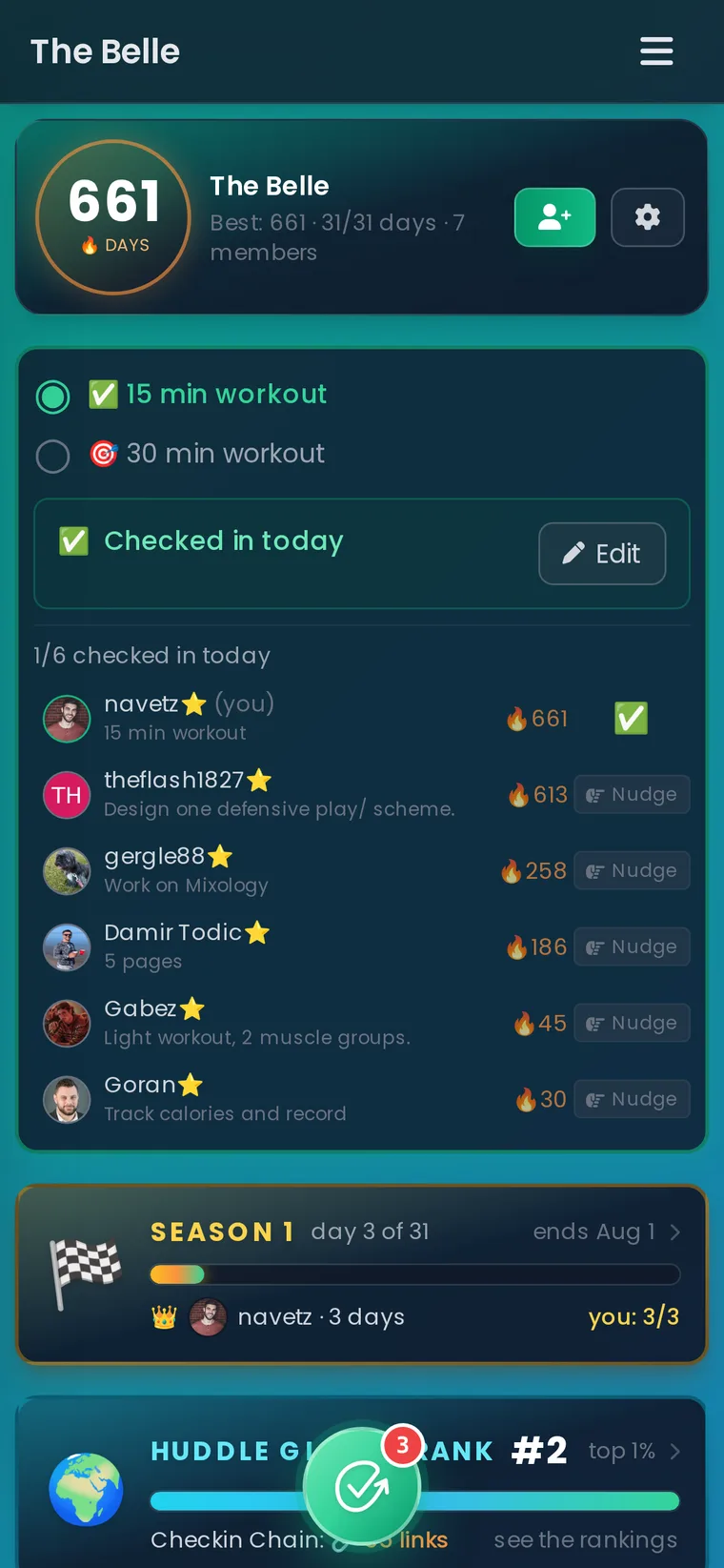
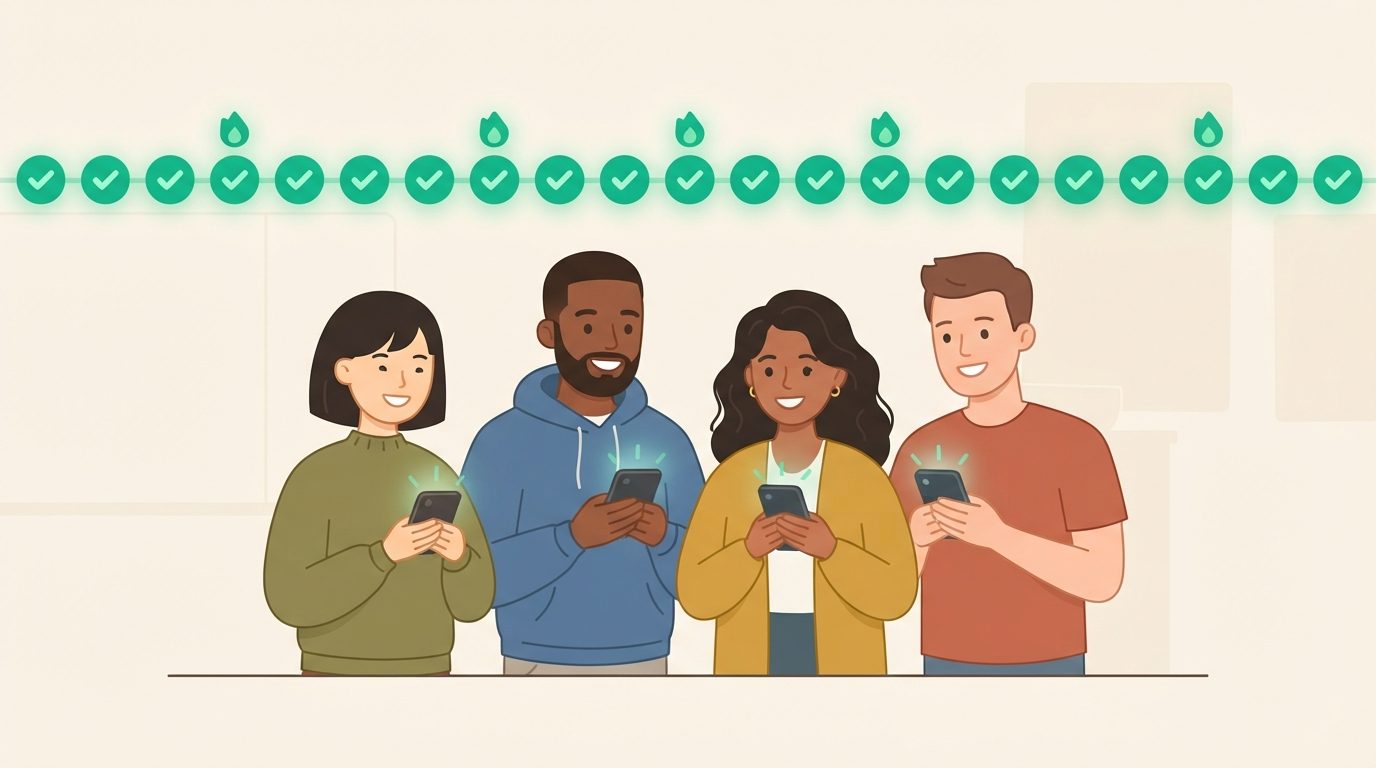
Every habit you track is a huddle. Solo or with friends. Each habit carries a Floor and a Ceiling, the smallest version that still counts and the stretch version worth bursting through, so the app has a built-in answer to the worst-day problem. Invite friends into a huddle and their checkins appear for you to cheer, while the group grows a shared Checkin Chain, one link per member who shows up each day. Misses are invisible to the group; friends see the days you show up and nothing else.
The trade-offs: the free plan includes one active habit, so tracking a whole routine requires a paid plan, and if you want a purely private tracker the social design is beside the point. If the friend angle is what you are missing, you can start a huddle free, or see how it compares in our best habit tracker app rundown.
How to choose in 60 seconds
Pick by your actual failure mode, not by feature lists.
If you quit when a streak breaks, choose Loop or a flexible-schedule setup in Streaks or HabitNow. If you quit when nobody notices, choose Habit Huddle or Habitica. If you quit because checkins feel like a chore, choose the fastest native app for your platform: Streaks on iOS, HabitNow on Android. If you mostly work at a desk, Habitify's web app removes your main friction.
And if you are not sure, start with whatever is free on your phone today. The Lally research is clear that the repetitions build the habit, not the software.
The setup work no app does for you
An app amplifies a good setup and cannot rescue a bad one. Before you install anything, make three decisions.
Pick one habit. Not five. Each added habit multiplies the daily willpower cost, and one collapse tends to take the others with it. Our 30 day habit challenge guide shows the single-habit format done right.
Define the floor. Decide the smallest version that counts before your first hard day arrives: one page, five minutes, one glass. Ambition is for good days; the floor is for day 19.
Anchor it. Attach the habit to something already fixed in your day, and log the checkin immediately after. Context consistency is what the automaticity research keeps finding at the center of habit formation. For the full timeline of what to expect, see how long it takes to form a habit, and if consistency itself is your struggle, how to stay consistent with goals digs into the mechanics.

Frequently asked questions
What is the best free habit building app?
Loop Habit Tracker is completely free and open source on Android. On iPhone, Streaks costs about $6 once, which is the closest thing to free in a quality iOS tracker. HabitNow's free plan covers seven habits on Android, Habitify's covers three across platforms, and Habit Huddle is free for one active habit with friends included. Free is enough to build a real habit in every case.
How long does it take to build a habit with an app?
Plan for about ten weeks. The University College London study found automaticity took 66 days on average, with a range from 18 to 254 days depending on the habit's difficulty. An app compresses nothing about that timeline; what it does is raise the odds you keep repeating until the behavior becomes automatic.
Do habit building apps actually work?
They work as amplifiers. The evidence supports what the good ones implement: consistent cues, minimum viable versions, forgiveness for single misses, and social commitment. An app that delivers those raises your completion odds; an app that only draws calendars mostly documents whatever was going to happen anyway.
Should I use a habit app with friends or alone?
If you have two or three friends willing to join, the friend version has the stronger evidence, since committing to another person measurably raises follow-through. Keep the group small, let everyone pick their own habit, and cheer checkins rather than policing gaps. If your friends are not in, a solo app with a floor and flexible streaks is entirely enough.
Ready to Build Habits With Friends?
Stop failing alone. Join thousands using the #1 habit tracker with friends for real accountability and lasting results.
Prefer mobile? App Store · Google Play
Related Guides
More Habit Huddle articles on building habits with accountability.
What to Do When You Miss a Workout Day: The 5-Step Comeback Plan
Missed a workout day? What one miss does to your body and habit, according to research, plus a five-step plan for the next 24 hours, when to make it up, and...
Habit Streak App With Friends: 7 Apps Compared (2026)
Seven habit streak apps with friends compared: Habit Huddle, HabitShare, Daily Pact, Habitica, Streaks, Habit Streak duels, HabitStreak.io. What friends see,...

Reading Challenge App With Friends: 8 Apps Compared (2026)
Eight reading challenge apps for friends compared: Goodreads, StoryGraph, Fable, Bookclubs, ReadRats, Reading Rivals, BookBuds, Habit Huddle. What friends se...