
Uncover How Long to Form Habit: Science-Backed Truths
Curious how long to form habit? Discover the actual science-backed timeline (not 21 days!) & strategies to make habits stick.
It takes 66 days on average to form a habit, not 21, and the range can stretch from 18 days to 254 days. So if you're asking how long to form habit, the better answer is this: stop chasing a magic number and build a system you can keep using whether your habit clicks quickly or takes much longer.
The most popular advice on habits sounds simple, but it sets people up to feel behind. You miss a few days, the streak breaks, motivation dips, and suddenly the habit feels like proof that you're inconsistent. In practice, the problem usually isn't lack of discipline. It's that people were given a deadline when they needed a structure.
That shift matters. Habits don't become automatic because you wanted them badly for three weeks. They become automatic because you repeat them in a stable context long enough for the behavior to feel less like a decision and more like part of the day. Once you understand that, the question changes from “How fast can I finish this?” to “How do I make showing up easier?”
Table of Contents
- The 21-Day Habit Myth vs The 66-Day Reality
- The Real Science of Automatic Habit Formation
- 6 Factors That Change Your Habit Timeline
- Why You Should Ignore Common Habit Advice
- A Smarter System for Building Habits That Stick
- Stop Counting Days and Make Your Days Count
The 21-Day Habit Myth vs The 66-Day Reality
Three weeks is a tidy story. Habit change rarely works that way.
The 21-day claim stuck because it gives people a finish line they can picture. Stay disciplined for a short stretch, cross the line, and expect the behavior to run on autopilot. That promise sounds reassuring. It also sets people up for the exact frustration that makes them quit.
Research on habit formation points to a much wider timeline, with one often-cited average of 66 days and a spread from 18 to 254 days. The part that matters most is the spread. A habit can click quickly for one person and take months for another, even when both are doing a reasonable job.
That changes the question.
Instead of asking for the right number of days, ask whether your setup makes the behavior repeatable under normal life conditions. Busy mornings. Low motivation. Travel. Stress. A habit system that survives those conditions matters more than any countdown.
Why the myth keeps tripping people up
I see the same pattern over and over. Someone picks a habit, pushes hard for a few weeks, then panics because it still feels effortful. They assume the problem is personal when the problem is usually structural.
The 21-day myth creates a false standard, and false standards create bad decisions:
- They judge progress too early: A behavior can be getting stronger before it feels easy.
- They blame willpower: They assume other people are more disciplined instead of noticing weak cues, bad timing, or too much friction.
- They keep restarting: They switch plans before repetition has had time to do its job.
That last one is expensive. Restarting feels productive because it gives a burst of hope, but it breaks the consistency that habits need.
A better distinction helps here. Repetition is not the same as automatic behavior. If you need that clarified, this guide on the difference between a habit and a routine lays it out well.
Here is the practical rule. If a habit still takes effort after a few weeks, nothing has gone wrong. The useful question is whether you can keep showing up with a version small enough to do on hard days.
That is why the right number is the wrong target. People do not need a magic day. They need a system they can repeat long enough for the behavior to stick, whether it takes a few weeks or much longer.
The Real Science of Automatic Habit Formation
Automaticity is the real target
The word that matters is automaticity. That's the shift from doing something with active effort to doing it with less internal debate.
Think about learning to drive. At first, every action is conscious. Mirrors, pedals, timing, turns, speed. Later, much of that happens with far less mental strain. Habit formation works the same way. Early repetitions feel clunky because your brain is still linking a cue, a behavior, and an expected result.
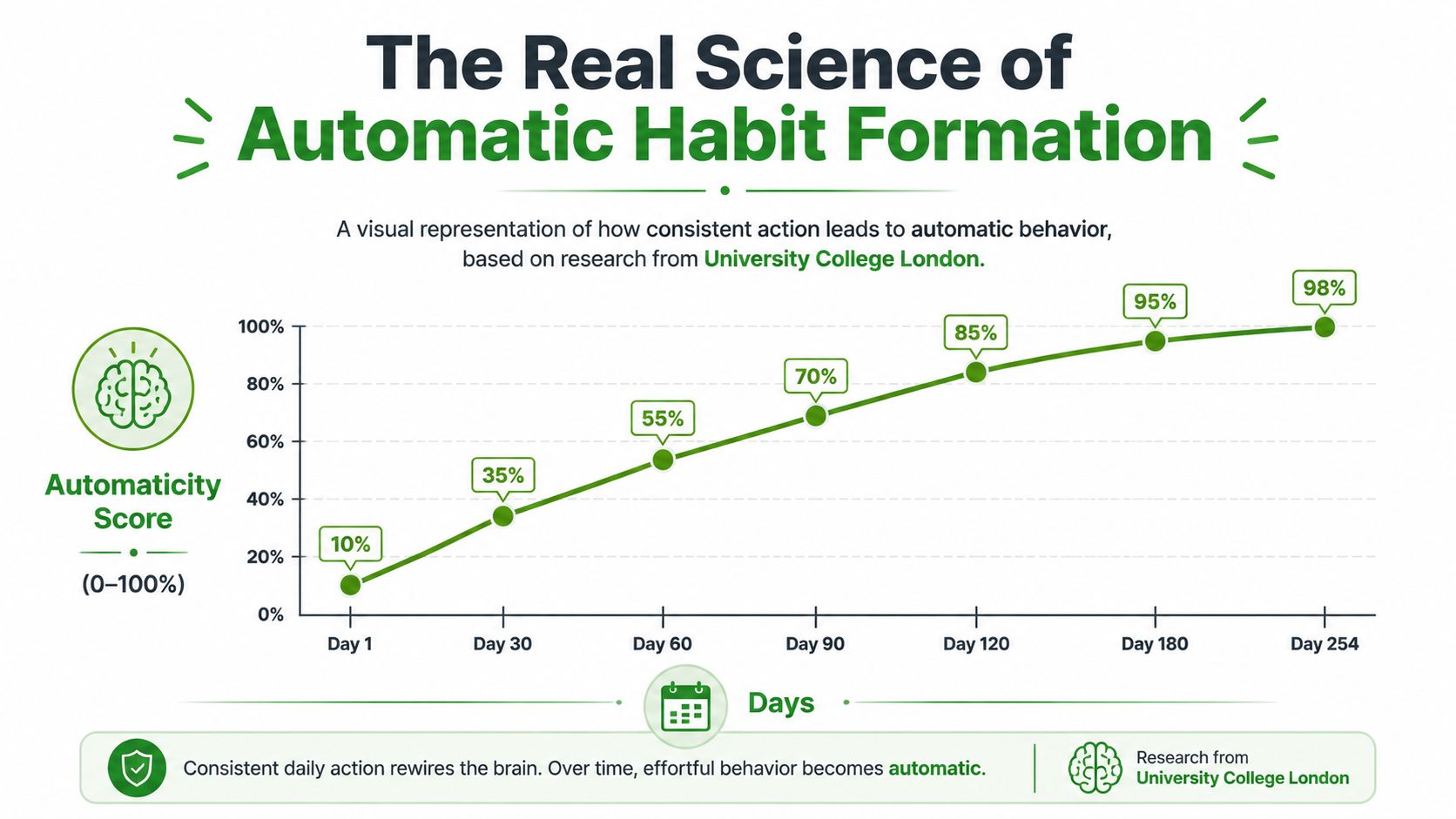
The 2009 UCL research didn't show a straight line upward. It found that automaticity rose quickly at first, then slowed and plateaued as the habit strengthened, as described in the UCL summary of the study. That pattern explains why the first stretch often feels exciting, while the later stretch feels strangely uneventful.
A lot of people confuse a habit with a routine. They aren't identical. A routine is something you do repeatedly. A habit is something that starts to run with less friction and less negotiation. This distinction matters when you're trying to make sense of slow progress. If you want a useful breakdown, this guide on habit vs routine is worth reading.
Why the middle feels slow
The middle phase is where people drop off. The novelty is gone, but the behavior still isn't automatic.
That's frustrating because it can feel like you're working without obvious progress. In coaching, a common reaction I see is overcorrection. They increase the goal, change the app, buy gear, or add rules. Usually they don't need a bigger system. They need fewer moving parts and more repetitions.
A simple mental model helps:
| Phase | What it feels like | What usually helps |
|---|---|---|
| Early | Fresh, motivating, noticeable | Make the habit small and easy to start |
| Middle | Repetitive, slower payoff, easy to doubt | Keep the cue stable and protect consistency |
| Later | Less resistance, less debate, more automatic | Maintain the context that made it work |
The habit isn't “broken” because progress feels flat. Flat often means you're in the part where repetition is doing the heavy lifting.
6 Factors That Change Your Habit Timeline
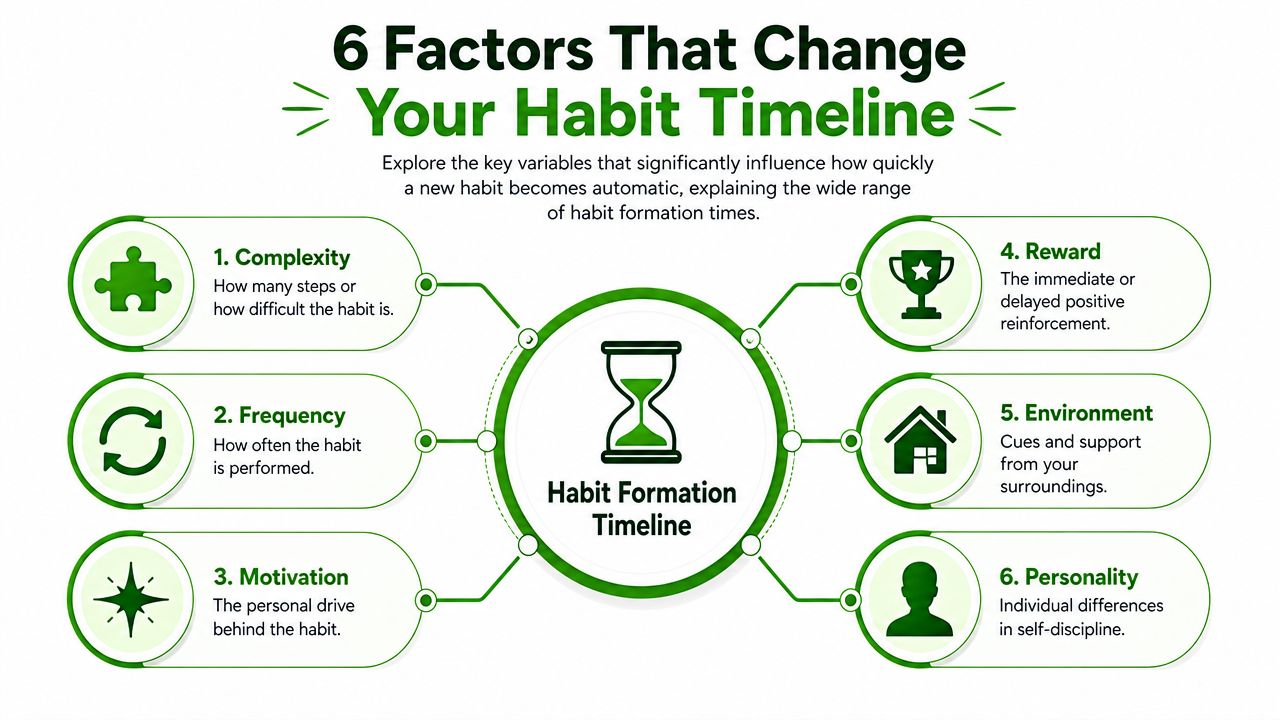
The range in habit formation is wide because real lives are wide. Some habits are almost frictionless. Others ask for planning, energy, travel, equipment, emotional effort, or identity change. Those variables shift the timeline.
The fastest habits are usually the simplest
A glass of water after brushing your teeth is easier to automate than a full workout program before work.
Here are the first three sliders that change your timeline:
- Complexity: The more steps a behavior has, the more chances there are to stall. “Read one page” is easier to repeat than “read for an hour and take notes.”
- Frequency: Behaviors you can repeat often tend to settle faster because you get more practice. A daily cue gives you more chances to strengthen the loop.
- Motivation quality: Strong reasons help at the beginning, but vague reasons fade fast. “I should exercise” is weak. “Walking clears my head before meetings” is usable.
A quick self-check helps:
| Factor | Faster end of the slider | Slower end of the slider |
|---|---|---|
| Complexity | One action, little prep | Multiple steps, setup required |
| Frequency | Built into daily life | Irregular or easy to postpone |
| Motivation | Clear personal reason | Abstract or borrowed goal |
Your environment does more work than motivation
People overrate intention and underrate context. If the cue is unstable, the habit stays fragile.
Three more factors matter here:
- Reward: Behaviors with an immediate payoff stick more easily. Stretching because it reduces stiffness right away is easier than meal prep that only feels rewarding later.
- Environment: Stable time and place help your brain link context to action. Same desk, same time, same trigger beats “whenever I remember.”
- Support or friction: A supportive setting makes showing up easier. A chaotic setting adds decision fatigue before the habit even begins.
A habit doesn't need perfect motivation. It needs a setup that makes the next repetition obvious.
You already know you can change.
You just need to take the first step. Habit Huddle helps you build habits around your goals, alongside friends who keep you accountable.
Stress and history both shape the curve
Two people can use the same habit plan and get different results because their baseline isn't the same.
Stress narrows attention and weakens follow-through. Under pressure, people default to what feels familiar, not what sounds ideal. That's why habits built with tiny minimums tend to survive rough weeks better than habits built on ambition alone.
Prior experience also matters. If you already identify as “someone who walks after dinner,” restarting that behavior is different from building it from zero. The movement may be the same, but the mental load isn't.
When you're estimating your own habit timeline, ask:
- How many steps does this habit require before I begin?
- Will I do it in the same context most days?
- What will I do when stress spikes and my usual plan becomes unrealistic?
Those questions give you a more honest estimate than any universal number ever will.
Why You Should Ignore Common Habit Advice
A lot of habit advice survives because it sounds disciplined. That's not the same as being useful.
The newest broad evidence makes that clear. A 2024 systematic review and meta-analysis of 20 studies involving 2,601 participants found that health-related habit formation usually takes 2 to 5 months, with median times of 59 to 66 days and a range from 4 to 335 days, according to the 2024 review on habit formation timelines.
Advice that sounds tough but fails in real life
Three examples come up constantly.
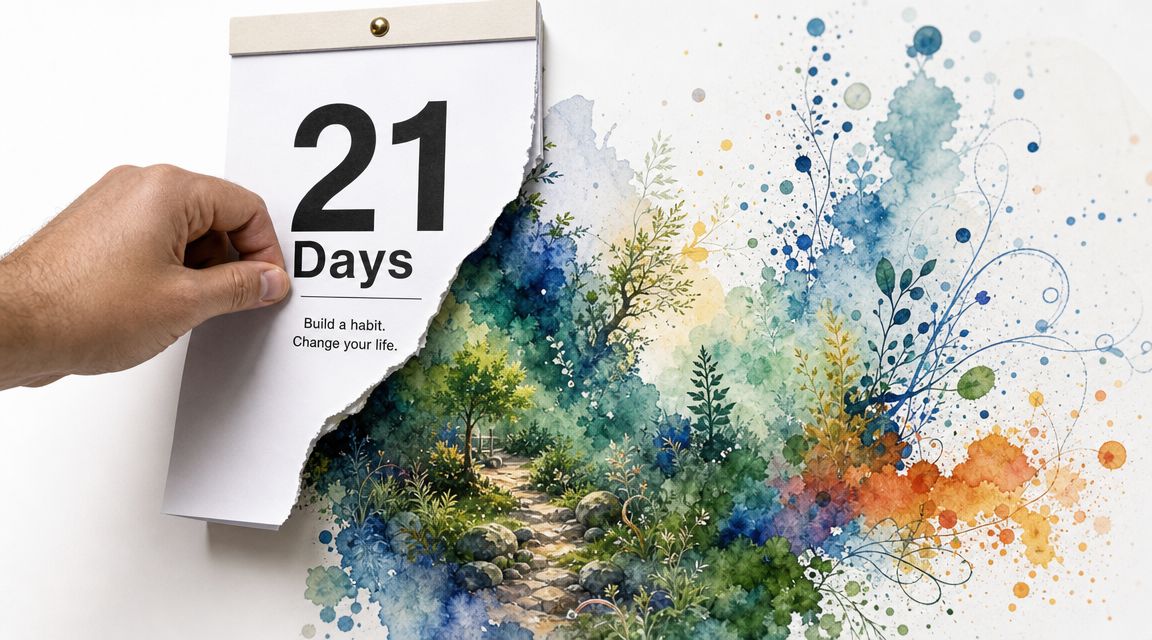
First, “just do it for 21 days.” That compresses a messy human process into a slogan. It might work as a short challenge, but it's a poor planning tool for meaningful behaviors like exercise or eating changes.
Second, “never break the chain.” Streaks can help, but people often turn them into all-or-nothing pressure. One miss becomes a story about failure instead of a normal interruption.
Third, “you just need more willpower.” That's one of the least helpful ways to think about behavior change. When a habit depends on daily heroics, it usually won't last.
What to believe instead
Use advice that leaves room for normal life.
- Misses are information: A missed day tells you where the system is weak. Maybe the cue is vague. Maybe the habit is too big for weekdays.
- Smaller counts more than harder: A repeatable low bar usually beats an inspiring high bar.
- Consistency isn't perfection: The habit gets stronger when you return quickly, not when you avoid every slip forever.
If advice makes you feel morally weak for being human, ignore the advice.
A Smarter System for Building Habits That Stick
The practical implication of the wide spread in habit timelines is simple. A universal number is misleading, so people need a flexible system that supports consistency over an uncertain stretch, as discussed in James Clear's overview of habit timing and repetition.
Build a minimum you can do on hard days
Most habits fail because the daily standard is too high for ordinary life. The answer isn't lower ambition forever. It's a lower floor.
Set two versions of the habit:
- Minimum: The smallest version that keeps the behavior alive.
- Full version: The version you do when time and energy are available.
For exercise, the minimum might be putting on shoes and taking a short walk. For reading, it might be one page. For writing, one paragraph. This protects continuity without pretending every day has equal capacity.
Attach the habit to something that already happens
Stable cues reduce thinking. That's why habit stacking works well. You connect the new action to an event that already exists.
Examples:
- After morning coffee, open your notebook.
- After brushing your teeth, drink water.
- After lunch, take a short walk.
If you need ideas, these habit stacking examples show how to anchor behaviors to routines you already have.
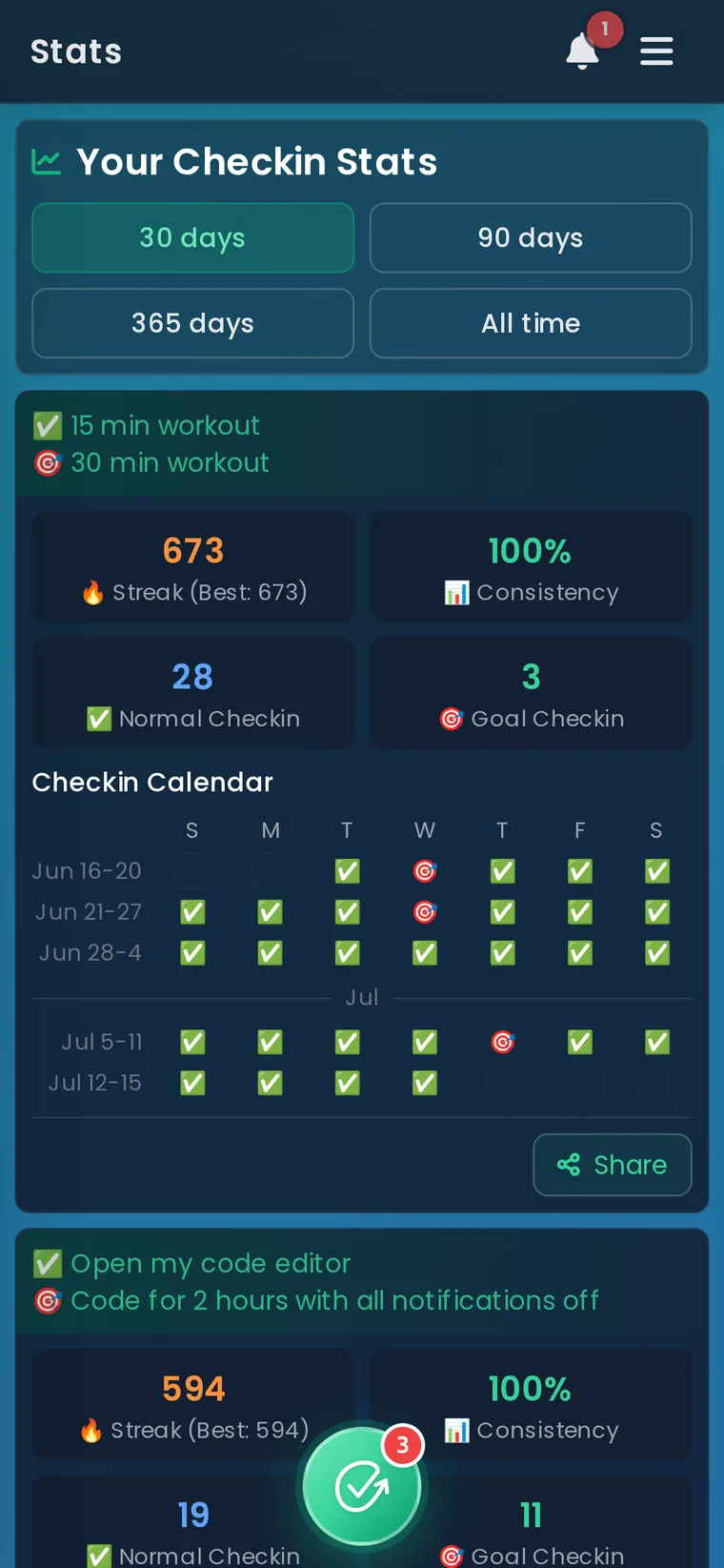
A tool can help here if it reinforces the system instead of adding friction. Habit Huddle is one option that uses daily checkins, a Minimum versus Daily Goal structure, streak tracking, and small group accountability through Huddles. That setup fits the reality that some days support the full habit and some days only support the minimum.
Use visible accountability
Private goals are easy to renegotiate. Visible goals are harder to forget.
Accountability works best when it isn't punitive. You want a structure where someone can see whether you showed up, not a system that turns every imperfect day into a public failure. Friends, coaches, partners, or small groups can all work if the checkin is simple and consistent.
This kind of setup is easier to sustain when the rules are clear and the action is small enough to repeat:
Winning isn't reaching some mythical day where the habit is finished. The win is building a process that still works when motivation drops, your week gets messy, or the payoff takes longer than expected.
Stop Counting Days and Make Your Days Count
If you came here wanting a precise answer to how long to form habit, the scientific answer is honest but unsatisfying. It varies widely. The practical answer is better. Build for repetition, not for a deadline.
That means choosing a habit small enough to survive real life, tying it to a stable cue, and making it visible enough that you notice when you're drifting. It also means judging success by return speed. Not by whether you performed perfectly from day one.
A strong habit system does something subtle but important. It removes drama. You don't wake up each day asking whether you feel inspired. You know the cue, you know the minimum, and you know what “done” looks like.
Progress shows up before automaticity does. If you're repeating the behavior with less debate than before, you're moving in the right direction.
If you want to stay objective, track what you did instead of what you meant to do. A simple log can reveal whether the habit is too large, too vague, or attached to the wrong cue. This guide on how to track progress can help you do that without overcomplicating it.
The people who keep habits aren't the people who found the perfect number. They're the people who kept the behavior alive long enough for it to become part of the day.
If you want a simple way to keep showing up, Habit Huddle gives you a flexible daily checkin system with Minimum and Daily Goal options, plus small-group accountability that makes consistency visible without requiring perfection.
Ready to Build Habits With Friends?
Stop failing alone. Join thousands using the #1 habit tracker with friends for real accountability and lasting results.
Prefer mobile? App Store · Google Play
Related Guides
More Habit Huddle articles on building habits with accountability.

HabitShare Alternatives: 6 Apps for Tracking Habits With Friends (2026)
Looking for a HabitShare alternative? Six social habit trackers compared by model, price, platforms, and what happens on a missed day, plus how to switch wit...

What to Do When You Miss a Workout Day: The 5-Step Comeback Plan
Missed a workout day? What one miss does to your body and habit, according to research, plus a five-step plan for the next 24 hours, when to make it up, and...

Habit Streak App With Friends: 7 Apps Compared (2026)
Seven habit streak apps with friends compared: Habit Huddle, HabitShare, Daily Pact, Habitica, Streaks, Habit Streak duels, HabitStreak.io. What friends see,...