
How to Restart a Habit After Falling Off (Without Starting Over)
How to restart a habit after falling off: do the Floor version today instead of Monday, hold it for seven days, write one if-then for what knocked you off, a...

📺 Related Video: How to Get Back on Track After Slipping Up
Video by: Tim Ferriss · Watch on YouTube
To restart a habit after falling off, do the smallest version of it today, not Monday, and treat the gap as one missed stretch rather than a verdict on you. Shrink the habit to its Floor, the version you can do on your worst day, hold that size for a week, and write one if-then plan for the thing that knocked you off. That is the whole method. The rest of this guide is why each step matters, a plan you can copy, and how to run the restart with one friend so the next gap closes faster.
The research is on your side. In the University College London study that produced the famous "66 days" figure, missing a single day made no measurable difference to how automatic a habit became. The gap is not what kills habits. The story you tell yourself about the gap is.
Why restarting feels harder than starting
Restarting feels harder than starting because you now have evidence that you stopped, and the mind reads that evidence as a verdict. The first time, the habit was a clean experiment. This time it comes with a history: a 40-day streak that ended, an app that reset to zero, a vague sense that you are the kind of person who quits. Every day the gap grows, the imagined cost of coming back grows with it, until the restart feels bigger than the original start ever did.
The data say that verdict is wrong. Lally and colleagues followed 96 people building a new daily habit for 12 weeks and found that one missed opportunity did not materially affect the habit-formation process. In a two-year study of New Year's resolvers, 53 percent of the people who succeeded had slipped at least once along the way. Slipping is part of the path for most people who make it. What separates them from the people who quit is how quickly they came back.
The gap does not end the habit. Waiting until you feel ready does.
Restart today, not Monday
The best day to restart a habit is today, at the Floor, because every day between deciding and doing is a day the decision can quietly dissolve. Monday feels like a clean line, and there is real science behind clean lines: the fresh start effect research from Wharton found people are more likely to pursue goals right after a temporal landmark such as a new week, month, or year. But the landmark is a tool for starting, not a reason to wait. If today is Sunday, Monday costs you one day. If today is Tuesday, Monday costs you six days of talking yourself out of it.
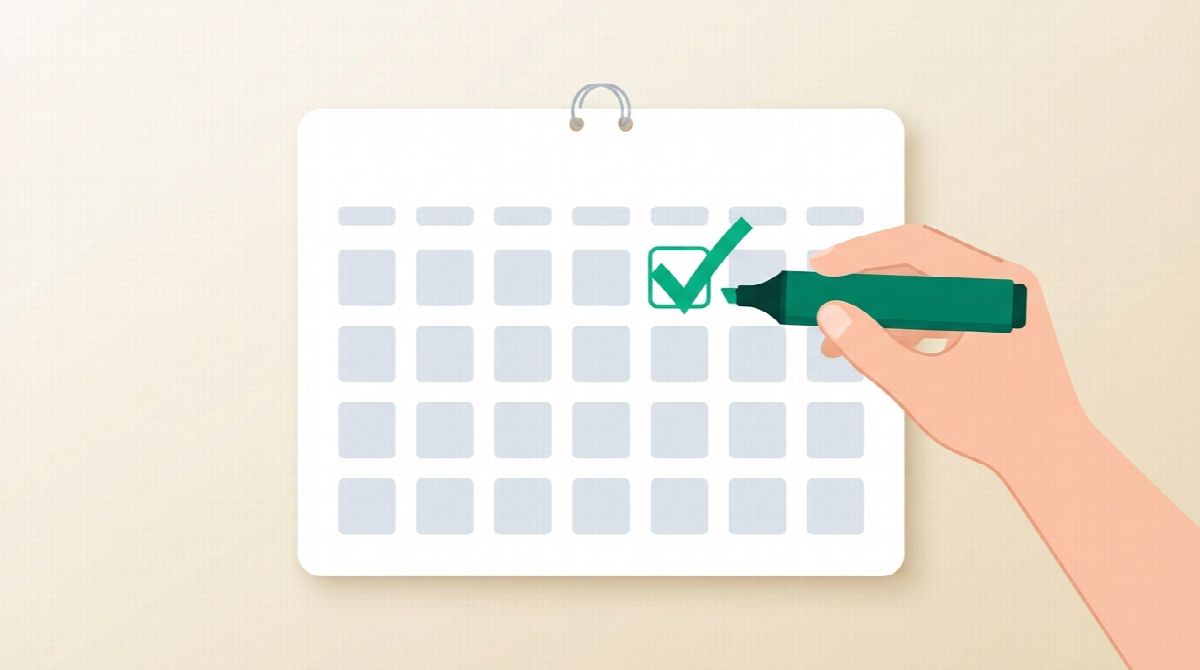
The fix is to make today the landmark. Say the restart out loud in one sentence: "I missed nine days. I'm doing the small version today." No backstory, no apology, no analysis of what went wrong. The analysis comes later, once you are moving again. Your one job right now is to make the gap end on this date rather than a future one.
If you genuinely cannot do the habit today, because you are in bed with a cold or on a plane, do the smallest gesture that points at it: lay out the running shoes, open the book to the page, put the journal on the pillow. The point is to end the gap before you sleep.
Restart at the Floor, not where you left off
Restart at the smallest version of the habit that still counts, not at the size you were doing before you stopped. If you were running 5K, the restart is a ten-minute walk-jog. If you were meditating for 20 minutes, it is three. If you were writing a page, it is three sentences. This is not lowering your standards. It is matching the habit to the person restarting it, who has less fitness, less momentum, and less trust in themselves than the person who stopped.
We call that smallest version the Floor. Every habit has a Floor, the least you can do that still fully counts, and a Ceiling, the version you reach for on a good day. Step on the Floor every day and the habit is alive. Burst through the Ceiling when you have it in you. A restart is a week of Floors, on purpose. If you want a list of habits already sized this way, our easy habit challenge for beginners has 20 of them.
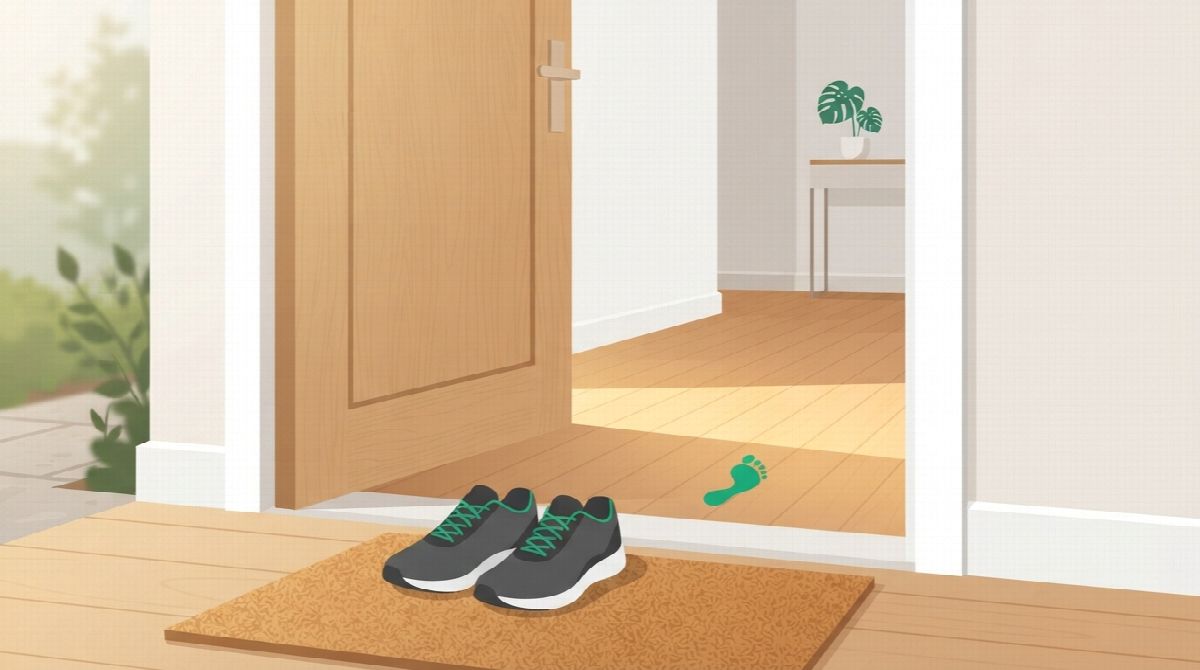
Restarting at the old size is the most common way a comeback dies on day two. The first session is miserable because your body or your attention is not where it was, the misery becomes the memory of the habit, and the next day you avoid it. The Floor produces the opposite: a first session that felt easy, a tick on the calendar, and a small piece of evidence that you are someone who does this. In the first week, evidence beats intensity every time.
Hold the Floor for seven days before you grow
Hold the Floor for seven consecutive days before you increase anything, even when day three feels easy. Day three always feels easy. That feeling is exactly what convinced you to restart at full size last time. Seven days at the Floor rebuilds the cue-and-response loop that a gap erodes, and a week of ticks is enough evidence to make the habit feel like yours again rather than like a comeback.
After the seventh day, grow by a step, not a leap. Ten minutes becomes fifteen. Three sentences become a paragraph. Hold the new size for another week. Most people are back at or past their old size within a month, and they got there on a stack of small wins instead of one heroic effort. The Floor never goes away, either. It stays as the version you drop to on the next bad week, so the next gap is one day long instead of three weeks. How long the full habit takes to feel automatic again varies a lot; our guide to how long it takes to form a habit covers the range.
Write the if-then for the thing that knocked you off
The habit fell off for a reason, and the restart only holds if that reason has a plan attached to it. Travel, a cold, a work crunch, a breakup, a new baby, a changed schedule. Name the specific one. Then write one sentence in the form "If X happens again, then I will do Y," where Y is the Floor. "If I'm travelling, then I do ten squats in the hotel room." "If I get home after 9pm, then I read one page instead of twenty."
This is not a motivational trick. Implementation intentions, the technical name for if-then plans, have one of the most reliable effects in behaviour-change research: a meta-analysis of 94 studies by Peter Gollwitzer and Paschal Sheeran found a medium-to-large effect on goal attainment. The plan works because the decision is made in advance, at a calm moment, instead of at 9pm on the day of the disruption.
One if-then is enough. Three is a project, and a project is a sophisticated way of not restarting.
Tell one person, and ask for a cheer
Telling one person you are restarting makes the first week easier, as long as you ask them for the right thing. The right thing is a cheer when you show up, not a check on whether you did. A friend who replies "nice, day three" to your checkin is a daily cue that does not depend on your motivation. A friend who asks "did you do it?" turns the habit into a debt.

The evidence for a witness is old and consistent. In the Norcross resolution study, social support was one of the factors that mattered more the longer people kept going. In the largest experiment ever run on gym attendance, a 2021 megastudy of more than 61,000 people tested 54 interventions and found that the single most effective one was a small reward for returning to the gym after a missed workout. What kept people going was not a penalty for the miss. It was something good waiting on the other side of the return.
So pick the person who will be glad to see you back, send them a one-line message, and ask them to cheer the first checkin. If you use a habit tracker with friends, post the checkin there. If you don't, a text thread works fine.
A restart plan you can copy
| When | What you do | What you do not do |
|---|---|---|
| Today | Say one sentence out loud, then do the Floor version before you sleep | Explain, apologise, or plan a "proper" restart for later |
| Days 1 to 7 | The Floor, every day, same cue, same time if you can | Grow the habit because one day felt easy |
| Day 2 | Write one if-then for whatever caused the gap | Write three |
| Day 3 | Tell one person and ask for a cheer, not a check | Announce it to everyone |
| Day 8 | Grow by one step and hold that size for a week | Jump back to the old size |
| Any bad day | Drop to the Floor; it still counts | Skip because you cannot do the full version |
| The next gap | End it the same day, at the Floor | Wait for Monday |
Screenshot it or copy it into your notes. The plan is deliberately boring. Boring is what survives. If you would rather have the Floor and the if-then written down as a promise you can show someone, our free habit contract generator builds a one-page version with a witness line. It never polices; it just makes the plan real.
You already know you can change.
You just need to take the first step. Habit Huddle helps you build habits around your goals, alongside friends who keep you accountable.
When the same habit keeps falling off
If the same habit has fallen off three times, the problem is usually the design of the habit, not your discipline. Look at what the gaps have in common. Same weekday? Same trigger? Always the week the habit got bigger? A habit that keeps failing at the same point is telling you where its Floor is too high or its cue is too weak.
Three changes fix most repeat offenders:
- Lower the Floor further than feels reasonable. If a ten-minute walk keeps failing, the Floor is putting on the shoes and stepping outside. It feels silly. It also survives the weeks that killed the ten-minute version.
- Move the cue. A habit that depends on "after work" fails whenever work runs late. Attach it to something that happens every day at the same point, such as the kettle, the school run, or brushing your teeth. James Clear's advice on getting back on track starts with exactly this: give the habit a specific time and place, or tie it to a behaviour you already do.
- Change the habit, not the goal. Maybe the gym is not it but cycling is. Maybe journaling on paper is not it but a two-minute voice memo is. Clear's list ends with "care": sometimes a habit keeps falling off because it was never yours. Keep the goal, swap the habit, and the restart gets easier.
If the gap landed in January, you are in good company. The second Friday of the year is known as Quitters' Day because that is when most resolutions fall off, and the restart method is the same.
Restart with a huddle
Habit Huddle is our app, so weigh the reasoning rather than the recommendation. It was built around the restart problem described above. Every habit you track is a huddle, solo or with friends. Each habit has a Floor and a Ceiling, so on the restart week a ten-minute walk is a full checkin, and on the good days the 5K gets logged as the flex it is. Your personal streak counts the days you showed up. When friends join the huddle, it also keeps a Checkin Chain that adds a link for every member who checks in that day, a number that only ever grows when someone shows up. Friends cheer checkins, and the product deliberately never shows anyone a list of someone else's missed days.
The trade-off: it needs an account and a phone, and it will not do the habit for you. The free plan covers one habit you are actively tracking, which for a restart is the right constraint, because the one habit you are rebuilding is the only one that matters this week. If a paper calendar is doing the job, keep the calendar. If you want a friend-shaped cue for the seven days that decide it, start a huddle at /app, set the Floor to the smallest version you can defend, and invite one person before you sleep tonight. For the general case, see habit tracker with friends.
Frequently asked questions
Should I restart from day one or continue my old streak?
Start a new count from today and let the old streak be a record you once set. Carrying the old number forward keeps the old failure story alive, and pretending the gap did not happen makes the next gap feel catastrophic. A new day one at the Floor is honest and, after a week, it feels like yours.
How long does it take to get a habit back after a break?
Usually faster than it took to build the first time, because the cue, the routine, and the environment already exist and only need reactivating. Plan on one week at the Floor before the habit stops feeling like a comeback and about a month before it feels normal again. Full automaticity depends on the habit; the research range runs from a few weeks to several months.
Why do I keep falling off the same habit?
Because the habit is designed for your best weeks, not your worst ones. If the gaps share a trigger, write an if-then for that trigger. If they share a size, lower the Floor. If they share a feeling of dread, change the habit and keep the goal. Repeated failure at the same point is information about the design, not about you.
Is it better to restart a habit on Monday or right away?
Right away, at the Floor. A fresh-start date like Monday or the first of the month does help people begin, but every day between deciding and doing is a day the decision can dissolve. If Monday is tomorrow, fine. If it is five days away, today is your landmark.
What if I have fallen off for months, not days?
The method is identical; only the Floor is smaller. After months away, treat it as starting a slightly familiar habit rather than resuming an old one: pick the two-minute version, do it today, hold it for a week, and tell one person. Your previous experience is an advantage, because you already know which cue and which time of day worked.
Ready to Build Habits With Friends?
Stop failing alone. Join thousands using the #1 habit tracker with friends for real accountability and lasting results.
Prefer mobile? App Store · Google Play
Related Guides
More Habit Huddle articles on building habits with accountability.

Running Accountability App: 8 Picks Compared (Stakes, Streaks, and Friends)
Eight running accountability apps compared: Strava, Nike Run Club, Runkeeper, Oath, RunMatch, RunHawk, StickK, and Habit Huddle, with prices, how runs are ve...

Body Doubling App: 7 Options Compared, from Live Video to Daily Checkins (2026)
Seven body doubling apps compared: Focusmate, Flow Club, Focus101, Dubbii, Caveday, Flown and Habit Huddle, with free tiers, prices, and which format fits ta...

Easy Habit Challenge for Beginners: 20 Ideas You Can Actually Finish
20 easy habit challenges for beginners, each with a two-minute Floor and a stretch Ceiling, plus how long to run one, the four rules that get you past week t...