
Easy Habit Challenge for Beginners: 20 Ideas You Can Actually Finish
20 easy habit challenges for beginners, each with a two-minute Floor and a stretch Ceiling, plus how long to run one, the four rules that get you past week t...
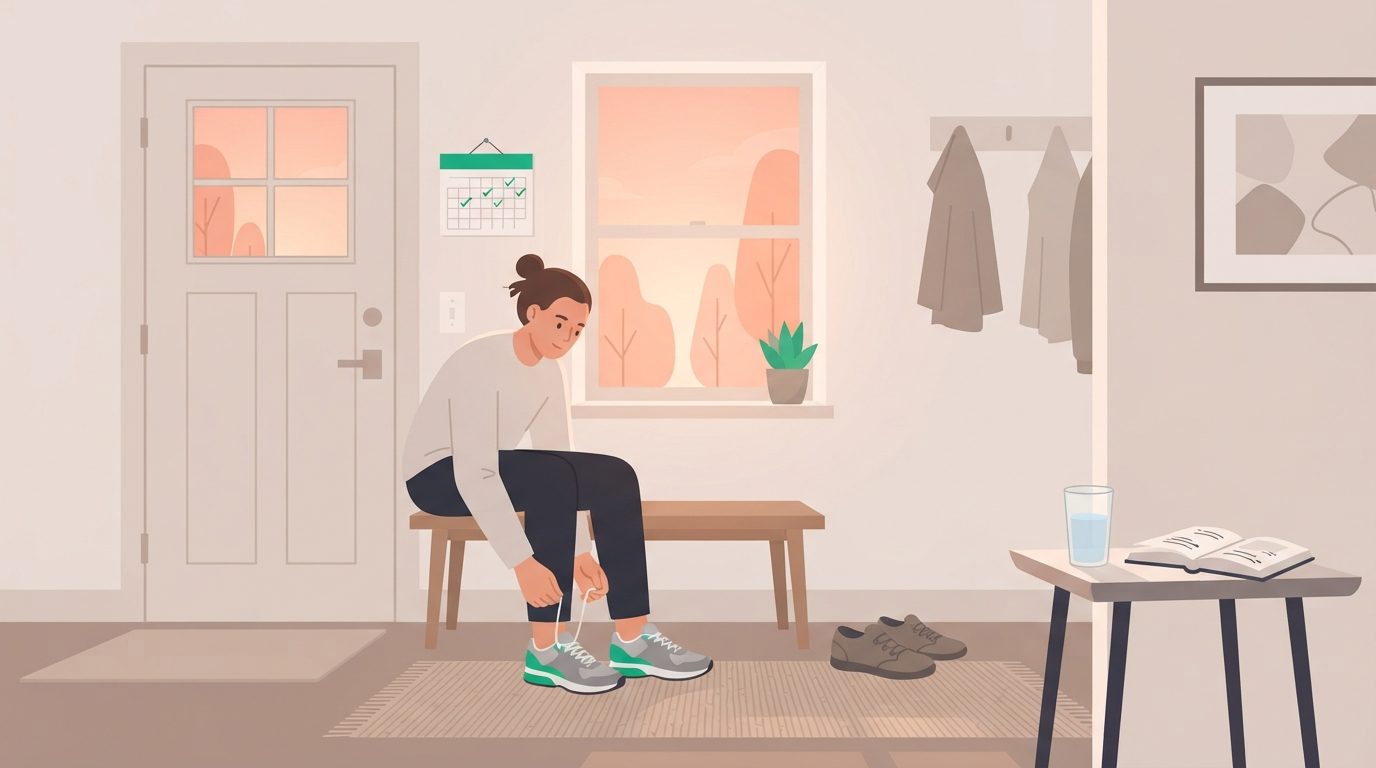
📺 Related Video: Forget big change, start with a tiny habit: BJ Fogg at TEDxFremont
Video by: TEDx Talks · Watch on YouTube
An easy habit challenge for beginners is one where the smallest version of the daily action takes under two minutes, the answer to "did I do it?" is a plain yes or no, and it fits into a slot you already have. Pick one habit, run it for 14 or 30 days, and count the days you showed up rather than the days you did it perfectly.
That is the whole recipe. The rest of this page gives you 20 challenges that pass those three tests, each with a Floor you can hit on a bad day and a Ceiling for the good ones, plus the four rules that keep first-timers going past week two.
What makes a habit challenge easy
A habit challenge is easy when its Floor is small, its result is binary, and its cue already exists. Most beginners fail not because they picked the wrong habit but because they picked the ambitious version of the right one. "Work out every day" is a hard challenge. "Put on your shoes and walk to the end of the street" is an easy one that turns into the first over a few weeks.
Run every idea through three tests before you commit:
- The two-minute test. Can the smallest version be done in under two minutes? James Clear calls this the two-minute rule: when you start a new habit, it should take less than two minutes to do. Read one page. Fill one glass. Put on the shoes.
- The yes-or-no test. Can you answer "did I do it today?" without a judgment call? "Eat healthier" fails. "Eat one piece of fruit" passes.
- The slot test. Is there a moment in your day that already happens, every day, that the habit can attach to? After the kettle boils. After you brush your teeth. When you sit down at your desk.
A challenge that passes all three is easy in the way that matters: it is easy to do on the days you do not feel like it. Those are the only days the challenge is really about.
20 easy habit challenge ideas for beginners
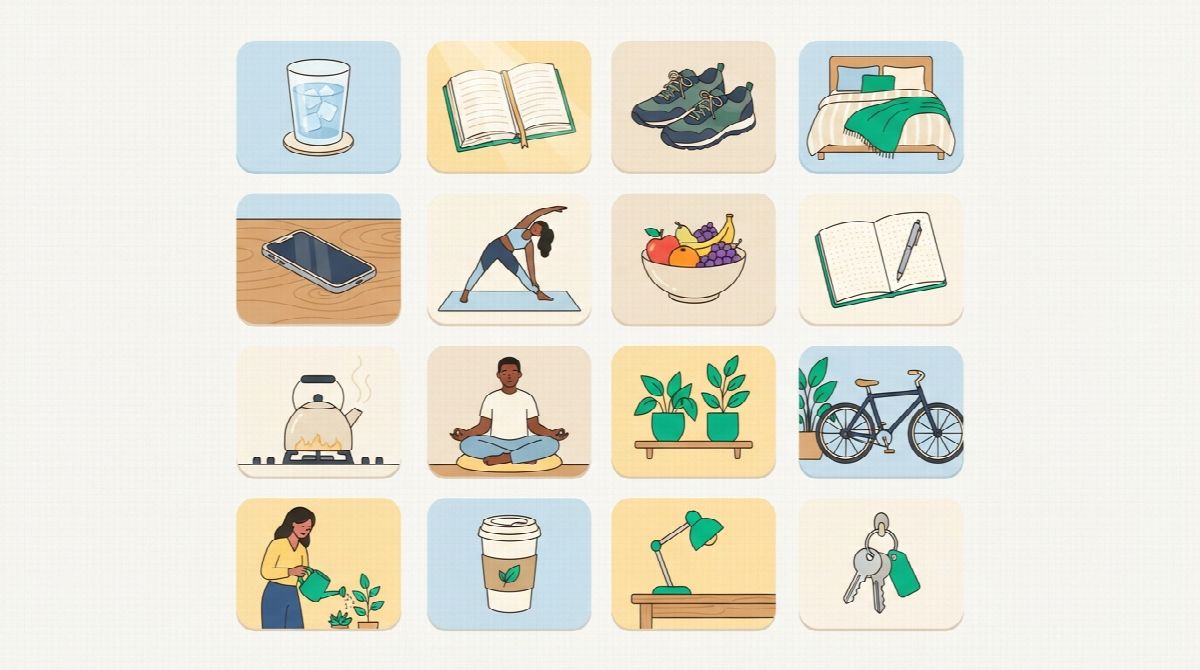
Each idea below lists a Floor, the smallest action that fully counts, and a Ceiling, the version you burst through when you have the energy. The Floor is what you commit to. The Ceiling is optional every single day.
Body
- Drink a glass of water first thing. Floor: one glass before coffee. Ceiling: a full bottle by lunch.
- Walk out the front door. Floor: shoes on, walk to the corner and back. Ceiling: a 20-minute loop.
- Stretch for one minute. Floor: 60 seconds of any stretch. Ceiling: a 10-minute routine.
- Do one push-up. Floor: one push-up, knees allowed. Ceiling: three sets of ten.
- Eat one piece of fruit. Floor: an apple, a banana, a handful of berries. Ceiling: fruit or vegetables with every meal.
- Lights out by a set time. Floor: in bed with the light off by the time you chose. Ceiling: no screen for the 30 minutes before it.
Mind
- Read one page. Floor: one page of a real book. Ceiling: a chapter.
- Write one sentence in a journal. Floor: one line about today. Ceiling: a full page.
- Sit quietly for one minute. Floor: 60 seconds, eyes closed, no phone. Ceiling: a 10-minute guided session.
- Learn five words. Floor: one lesson or five flashcards in the language you are learning. Ceiling: 20 minutes of practice.
- Write down three things that went well. Floor: three quick items before bed. Ceiling: a paragraph on each.
- Plan tomorrow in one line. Floor: write the one thing that matters most tomorrow. Ceiling: a full time-blocked plan.
Home and money
- Make the bed. Floor: pull the covers up. Ceiling: whole bedroom tidy before you leave.
- Clear one surface. Floor: one counter, desk or table cleared. Ceiling: a 15-minute reset of the main room.
- Wash the dishes before bed. Floor: no dishes in the sink overnight. Ceiling: kitchen fully wiped down.
- Log every purchase. Floor: write down what you spent today, even if it was nothing. Ceiling: categorise it and check the week's total.
- Put one item away. Floor: one thing returned to where it lives. Ceiling: a five-minute tidy sweep.
Screens and people
- No phone for the first ten minutes awake. Floor: ten minutes. Ceiling: no phone until after breakfast.
- Message one person. Floor: one text to a friend or family member. Ceiling: a call.
- Phone out of the bedroom. Floor: the phone charges somewhere other than your bedside. Ceiling: a paper book in its place.
Pick one. If you cannot choose, pick the one whose Floor feels almost embarrassingly small. That instinct is correct. For a broader list with a solo setup plan, see our 30 day habit challenge guide, and for a longer catalogue of habit ideas the Develop Good Habits 30-day challenge list runs to well over a hundred.
How long should a beginner's habit challenge be?
A beginner's habit challenge should be 14 or 30 days, and 30 is the better default. Seven days is too short to hit the first hard stretch, which usually arrives in week two when the novelty is gone and nothing has become automatic yet. Thirty days gets you through that stretch and gives you enough data to know whether the habit is one you want to keep.
Thirty days does not make the habit automatic, and it is worth knowing that going in. In the best-known study of habit formation, Lally and colleagues tracked 96 people building one daily habit and found automaticity took a median of 66 days, with a range from 18 to 254. Simple habits, like drinking a glass of water, sat at the fast end. Exercise habits sat at the slow end. So a 30-day challenge is a container for the first month, not a finish line, and the point of the container is that it makes starting cheap. For the full picture of what happens after day 30 see how long it takes to form a habit.
If 30 days feels heavy, run 14 and then decide whether to go again. Two completed 14-day rounds beat one abandoned 30-day attempt.
The four rules that keep beginners going
Beginners quit challenges for four predictable reasons, and each has a rule that prevents it.
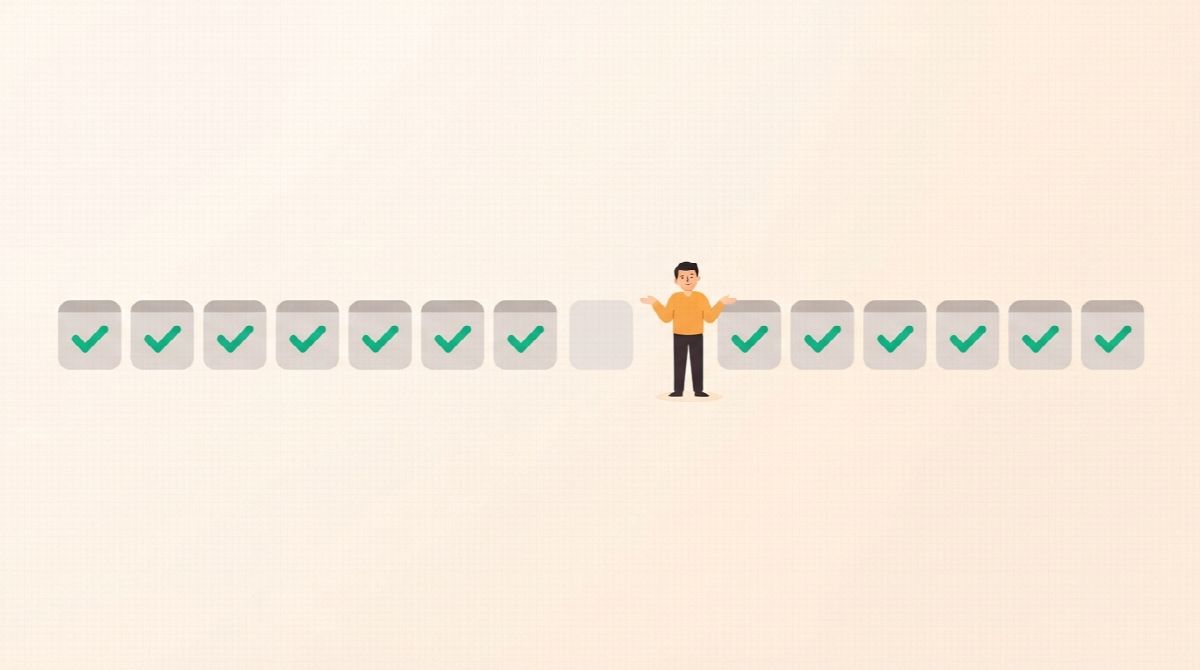
Rule 1: The Floor counts as a full day. On the day you are sick, travelling or exhausted, doing the Floor version is not a lesser success. It is the success. A challenge is built by the number of times the cue led to the action, not by the average size of the action. Ceilings are for good days; Floors are for the challenge.
Rule 2: Never miss twice. Missing one day does not undo anything. Lally's study checked this directly and found a single missed day made no measurable difference to whether the habit formed. What breaks a challenge is the second miss, because that one is a decision. Decide in advance that a missed day costs one day and nothing more, and that tomorrow's Floor goes ahead as normal. A large exercise study of over 61,000 gym members found the single most effective intervention tested was a small reward for coming back after a missed workout. Reward the return, not the perfect run.
Rule 3: Attach it to a cue you already have. A habit with no fixed trigger depends on remembering, and remembering is the thing beginners are worst at. "After I pour my coffee, I read one page" needs no willpower and no alarm. This is habit stacking, and there are worked examples here.
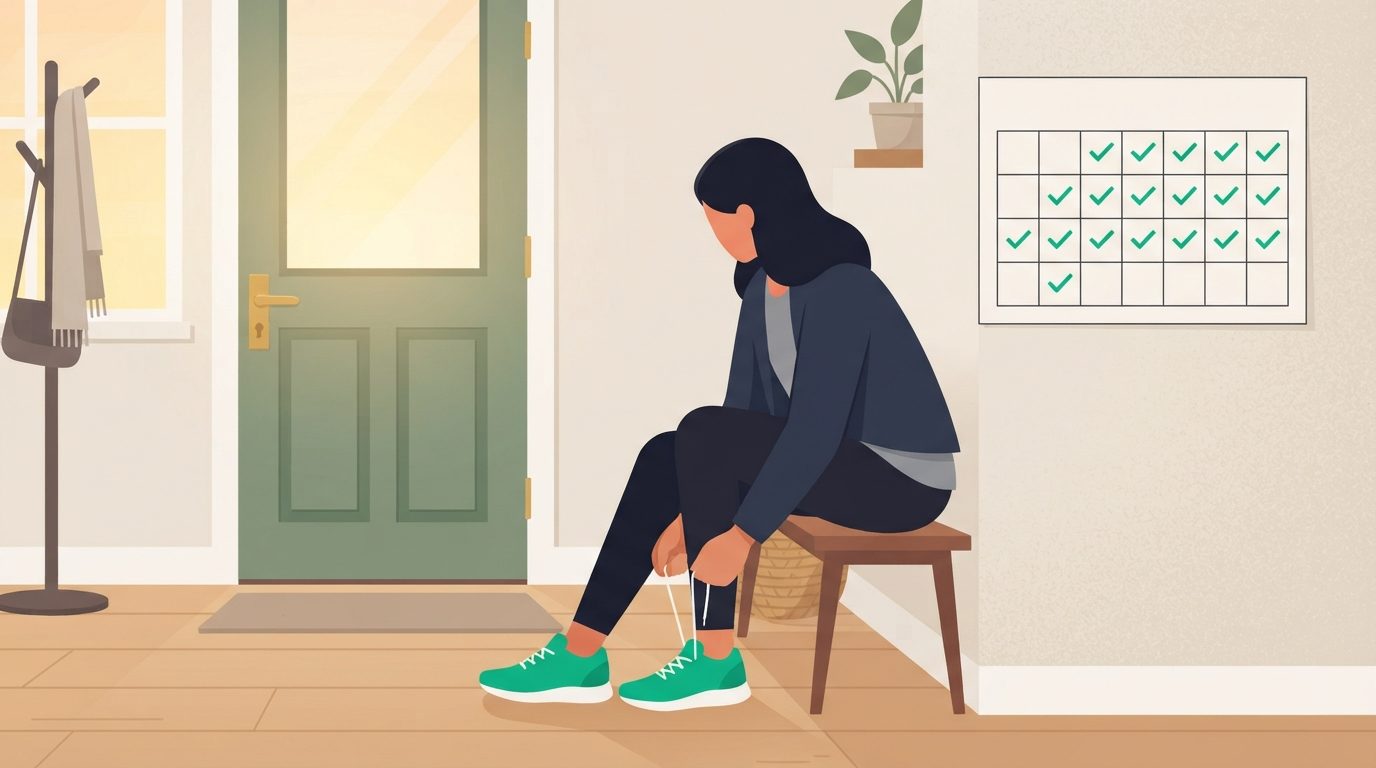
Rule 4: Track the days you showed up, not the days you missed. Keep a visible record of yeses. A paper calendar with a mark per day works. A free printable 30 day challenge tracker works. What does not work is a record that highlights gaps, because a gap-focused tracker makes the second miss feel inevitable. Count appearances.
You already know you can change.
You just need to take the first step. Habit Huddle helps you build habits around your goals, alongside friends who keep you accountable.
Named formats, if you want one with rules
Some beginners do better inside a format someone else designed, because the rules remove decisions. Three fit first-timers well; one famous one does not.
| Format | Length | Daily rule | Good for beginners? |
|---|---|---|---|
| Tiny Habits (BJ Fogg) | Open-ended | Anchor a tiny action to an existing routine, then celebrate it | Yes, the gentlest method there is |
| Two-minute rule (James Clear) | Open-ended | Scale the habit down to a two-minute starting version | Yes, pairs with any idea above |
| 30 day habit challenge | 30 days | One habit, one mark per day | Yes, the standard container |
| 57 Chill | 57 days | Two levels each day: a six-minute Floor or the full-day Ceiling | Yes, if you want a group format with no reset |
| 75 Hard | 75 days | Two workouts, a diet, a gallon of water, ten pages, a photo, and a full reset if you miss anything | No, start elsewhere |
Tiny Habits is Stanford researcher BJ Fogg's method, and his TEDx talk on it is 17 minutes well spent: pick a tiny behavior, anchor it after something you already do, and celebrate immediately. His famous example is flossing one tooth. The two-minute rule is the same idea from a different angle.
57 Chill is our own format, so treat that row as a recommendation from an interested party. It exists because 75 Hard's all-or-nothing reset sends a lot of beginners back to day one three times before they conclude they are the problem. 57 Chill keeps the two-level day and drops the reset. The full comparison of 75 Hard alternatives covers it alongside 75 Soft and 75 Medium.
If your challenge starts in January there is a whole set of January-sized challenge ideas built for that month's specific traps.
Do the challenge with people and the odds change
A beginner's habit challenge done with one or two other people lasts longer than the same challenge done alone, and the reason is not pressure. It is that a friend's checkin is a cue that does not depend on your mood, and a cheer for showing up is exactly the reward-for-returning that the research says works.
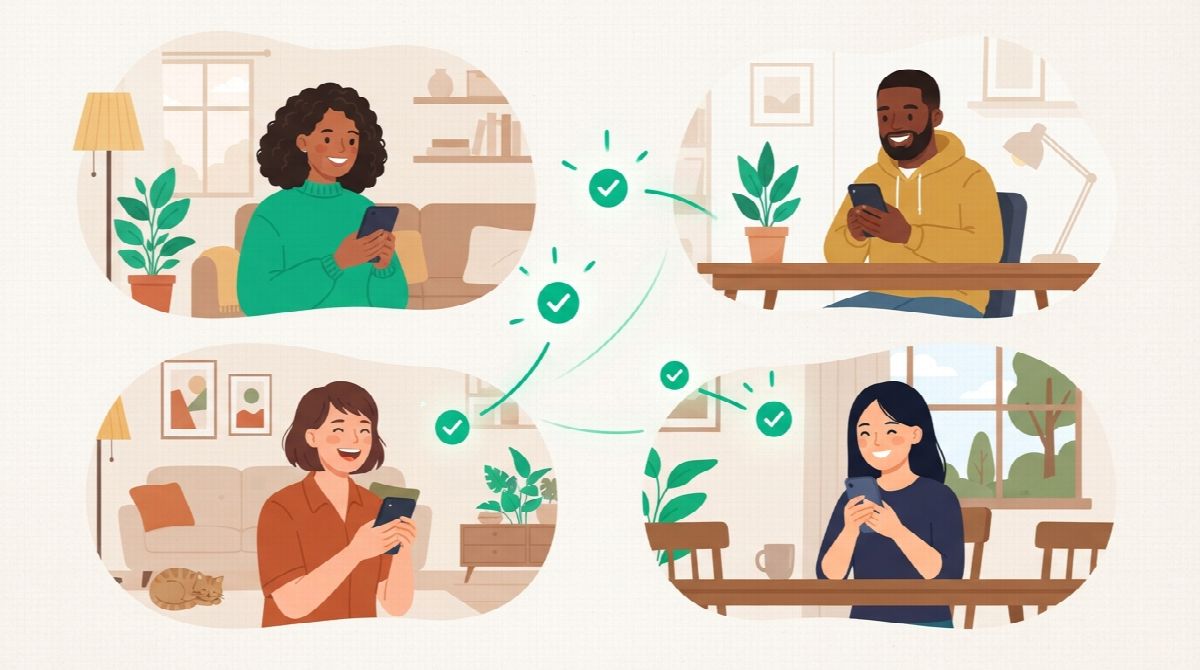
The oldest large study of New Year's resolutions, Norcross and colleagues in 1988, followed resolvers for two years. Seventy-seven percent were still going after one week and 19 percent after two years, and more than half of the eventual successes had slipped at least once along the way. Social support was one of the factors that mattered more the longer the resolution ran. Slipping is normal. Having someone to come back to is what turns a slip into a pause instead of an ending.
Set it up so nobody keeps score of misses. Everyone picks their own easy habit, everyone posts a quick checkin when they do it, everyone cheers the others' checkins. A group of four reading one page each is doing four different books and one shared thing, which is showing up.
If reading a page is your pick, the huddle below is a real one on our own account and you are welcome to join it.
Where Habit Huddle fits
Habit Huddle is our app, so weigh the reasoning rather than the recommendation. Every habit you track is a huddle, solo or with friends. Each habit carries a Floor and a Ceiling, so on the bad days the two-minute version is a full checkin and on the good days the Ceiling gets logged as the flex it is. Your streak counts days. When friends join the same huddle, it also keeps a Checkin Chain that adds one link for every member who checks in that day, a number that only ever grows when someone shows up. Checkins and cheers work from the web app, the iOS and Android apps, or the Discord bot.
The trade-off: it needs an account and a phone, and it will not do the habit for you. The free plan covers one habit you are actively tracking, which for a beginner's challenge is exactly the constraint you want. If a paper calendar on the fridge is doing the job, keep the calendar. If you want the friend-shaped cue for the 30 days that matter, start a huddle at /app, pick one idea from the list above, and invite one person before day one. For the general case of tracking with friends, see habit tracker with friends.
Frequently asked questions
What is the easiest habit challenge to start with?
Drinking a glass of water first thing in the morning. It takes under a minute, it has an obvious cue, the answer to "did I do it?" is a clear yes or no, and in habit-formation research simple hydration habits reached automaticity fastest. Reading one page and making the bed are close seconds.
How many habits should a beginner try at once?
One. A beginner's challenge is training the skill of showing up daily, and that skill transfers. Once one habit has held for 30 days, add a second. Starting with three habits usually ends with zero.
What if I miss a day of my habit challenge?
Do the Floor version tomorrow and carry on. One missed day made no measurable difference to habit formation in Lally's 2010 study; the second consecutive miss is the one to avoid. Decide in advance that a miss costs one day and never a restart.
Is a 7 day habit challenge worth doing?
Yes, as a rehearsal. Seven days proves the cue and the Floor work, but it ends before the week-two dip where most challenges fail. Treat it as the first week of a 30-day challenge rather than a challenge on its own.
Should I do an easy habit challenge alone or with friends?
With one or two friends if you can. Each person picks their own easy habit, posts a quick checkin, and cheers the others. Social support was one of the factors that mattered more over time in the Norcross resolution study, and a friend's checkin acts as a daily cue that does not depend on your motivation.
Ready to Build Habits With Friends?
Stop failing alone. Join thousands using the #1 habit tracker with friends for real accountability and lasting results.
Prefer mobile? App Store · Google Play
Related Guides
More Habit Huddle articles on building habits with accountability.

Body Doubling App: 7 Options Compared, from Live Video to Daily Checkins (2026)
Seven body doubling apps compared: Focusmate, Flow Club, Focus101, Dubbii, Caveday, Flown and Habit Huddle, with free tiers, prices, and which format fits ta...
How Long Does It Take for Exercise to Become a Habit? What Five Studies Found
Exercise takes about six weeks to feel automatic and months to become reliable. What five studies of new gym members actually found, why exercise is slower t...

The Fresh Start Effect: Why January 1 Feels Different, and How to Make It Last
The fresh start effect explained: the 2014 Wharton research behind January motivation, the numbers for Mondays and birthdays, a 2026-2027 fresh start calenda...