
Is It Better to Work Out Alone or With Friends? What the Research Says
Alone wins on focus and flexibility; friends win on showing up, and studies show people exercise up to twice as long together. Here is how to decide.

📺 Related Video: 7 Benefits Of Having A Workout Partner
Video by: Fitness At Home with Clint Grimes · Watch on YouTube
Working out alone is better for focus, flexibility, and training at your own intensity. Working out with friends is better for actually showing up, and the research on that side is not close: in controlled studies, people exercise up to twice as long with a partner, and completion rates for programs started with friends run far higher than for programs started alone.
So the honest answer depends on which problem you have. If you already train consistently and want deeper focus, solo wins. If your real problem is skipped sessions, quiet quitting in week three, and a membership you stopped using, friends win.
There is also a third option almost nobody ranking for this question mentions: train alone, but stay accountable to friends. We will get to that, because for most adults with jobs and mismatched schedules, it is the practical winner.
What working out alone does better
Solo training beats group training on three things: schedule, focus, and intensity control.
Your workout starts when you have time, not when three calendars align. That flexibility compounds: a solo exerciser can grab an unexpected free half hour, while a partner-dependent one loses the session the moment a buddy cancels.
Focus is the second edge. Nobody talks through your rest timer, and your gym session does not drift into a social hour. If you follow a serious program with prescribed weights and rest periods, training alone protects it.
Intensity control is the third. You work at your pace, not the group's. Beginners are not dragged into workouts that wreck them for a week, and advanced lifters are not held back by a class average.
The cost of all that freedom is that nobody notices your effort. On the days motivation is low, the only person you answer to is the one who wanted to sleep in.
What working out with friends does better: the evidence
Exercising with other people measurably increases how long and how often you show up. This is one of the better-replicated findings in exercise psychology, and the sizes of the effects are striking.
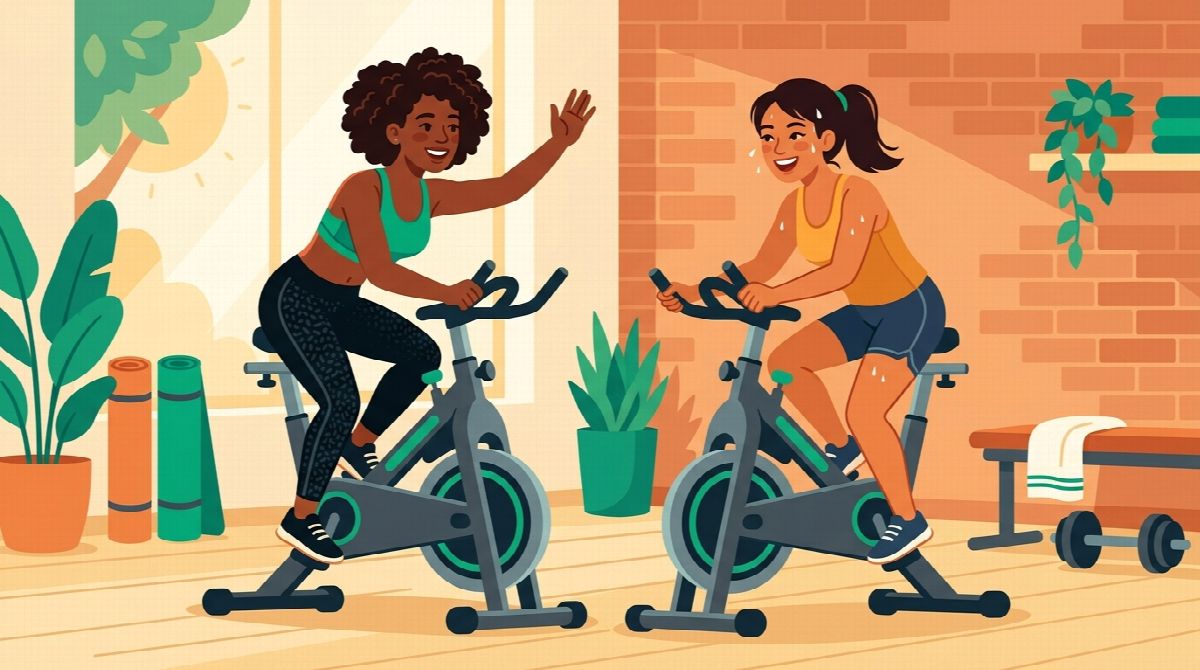
People exercise almost twice as long with a partner. In a 2012 trial at Michigan State University, participants rode a stationary bike alone for about 10.6 minutes per session. Paired with a slightly stronger partner whose team result depended on them, they averaged 21.9 minutes. Psychologists call this the Kohler effect: nobody wants to be the reason the team stops.
Programs started with friends get finished. In a classic weight-loss study by Wing and Jeffery, 76% of people who joined alone completed the program, and 24% maintained their results in the months after. Among people who joined with three friends and got social support built into the program, 95% completed it and 66% maintained their results.
Exercise spreads between friends. An MIT analysis of five years of running data from over a million people, published in Nature Communications, found that running is socially contagious: when your friends run more, you run more, and the effect flows most strongly from less-active friends trying to keep up.
A fair one-line summary of the literature: working out with friends does not make you stronger, it makes you consistent, and consistency is what makes you stronger.
The catch: workout partners fail at logistics
The weakness of training with friends is never motivation, it is coordination. Your schedules have to match, your gyms have to match, and your paces have to roughly match, every single time.

Partner setups also inherit each other's bad days. When your buddy texts that they are too tired, the session suddenly becomes negotiable for you too. The same social force that doubles your bike time works in reverse.
And pace mismatch is real. A partner far above your level turns every session into survival; one far below turns it into coaching. The Kohler research found the sweet spot is a partner slightly better than you, which is a hard thing to keep constant as two people progress at different rates.
None of this makes friends a bad idea. It makes real-time friends a fragile mechanism. The motivation is worth keeping; the calendar dependency is worth dropping.
The hybrid: train alone, stay accountable together
You do not have to choose between solo flexibility and social consistency. The hybrid is to work out on your own schedule and make your showing up visible to people who care.
That can be as simple as a group chat where everyone posts after their workout. The structure matters more than the tool: everyone commits to a habit, everyone reports daily, and effort gets acknowledged.
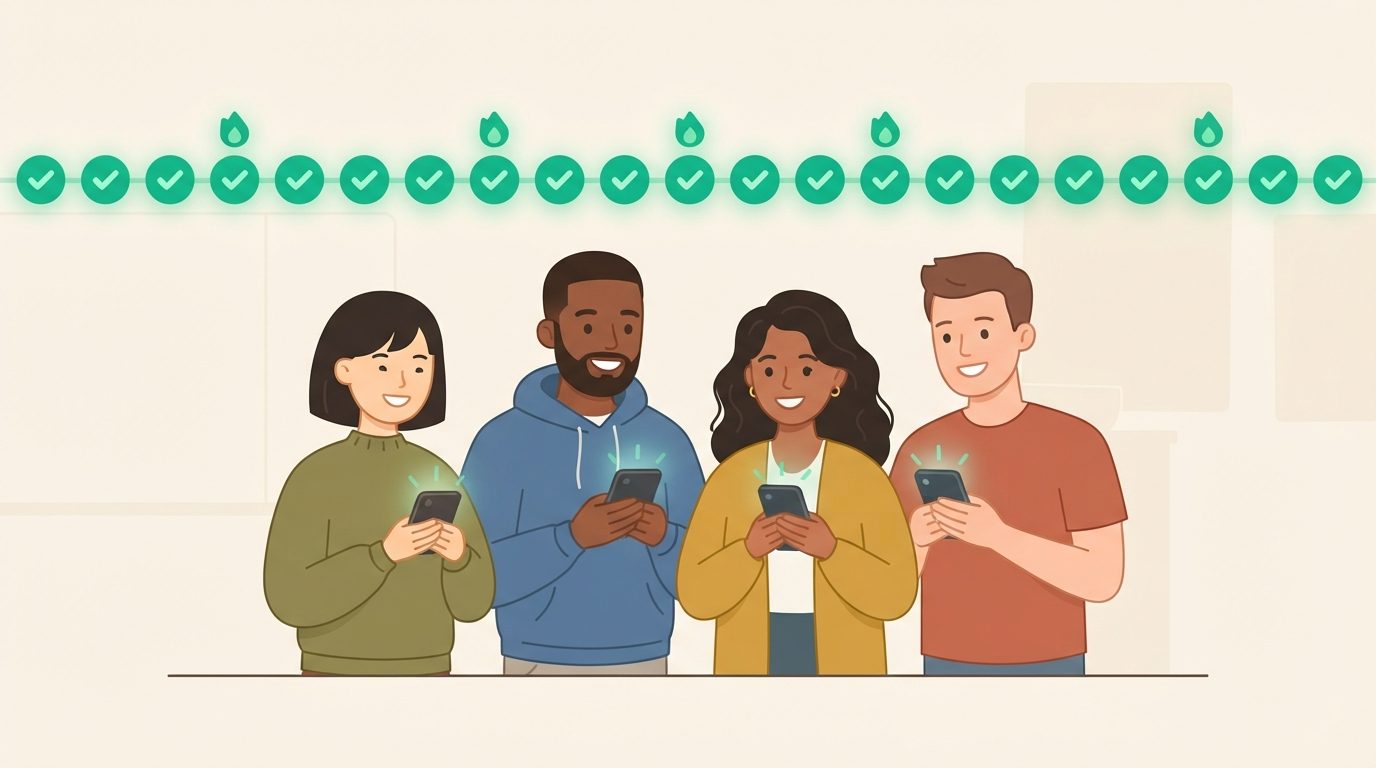
This is the exact shape we built Habit Huddle around, so full disclosure, and judge the fit for yourself. You and your friends form a huddle around a habit, each person sets a Floor, the minimum that counts on a rough day, and a Ceiling to burst through on strong ones. When you work out, you checkin, whenever your workout happens. Friends see the checkin and cheer it, and every member's daily checkin adds a link to the huddle's Checkin Chain, the chain the group builds together, one link per member per day.
Nobody has to be free at the same hour, nobody's canceled session cancels yours, and the encouragement still lands. The research on progress monitoring backs the mechanism: a large meta-analysis found that recording and reporting progress toward a goal reliably increases the odds of reaching it.
If that setup sounds right, our guides to workout accountability apps with friends and habit trackers with friends compare the tools, including ours, with honest trade-offs.
How to decide in one minute
Choose to work out alone if:
- You train consistently already and skipped sessions are rare.
- Your program needs strict pacing, loads, and rest periods.
- The gym is your quiet hour and you want to keep it that way.
Choose to work out with friends if:
- Your history is three motivated weeks followed by a quiet quit.
- You are starting from zero and dreading it; company lowers the barrier.
- Enjoyment is the goal, because the workout you laugh through is the one you repeat.
Choose the hybrid if:
- Motivation is your problem but scheduling with friends never works.
- You want your effort witnessed without coordinating calendars.
- You have remote friends who would happily cheer you on from another city.
Whichever you pick, the deciding metric is not how hard any single session feels. It is how many sessions still happen in March. We wrote more about building that kind of consistency in how to hold yourself accountable to work out and gym accountability apps.
You already know you can change.
You just need to take the first step. Habit Huddle helps you build habits around your goals, alongside friends who keep you accountable.
Frequently asked questions
Is it better to exercise alone or in a group?
Alone is better for focus, flexible scheduling, and training at your own intensity. Group or partner exercise is better for consistency: controlled studies show people exercise up to twice as long with a partner, and programs joined with friends have far higher completion rates. Pick based on whether your bottleneck is performance or showing up.
Why do I work out harder with other people?
Psychologists call it the Kohler effect: when your performance affects a team, you push harder to avoid being the weak link. In a Michigan State study, people paired with a slightly stronger partner roughly doubled their exercise duration compared to exercising alone.
What if my friends' schedules never match mine?
Use asynchronous accountability: each person works out on their own schedule and reports it to the group the same day. A group chat works, and apps like Habit Huddle are built for it, with daily checkins your friends can see and cheer whenever your workout happens.
Do I need a workout partner to get results?
No. Training alone builds the same strength and fitness if you show up. A partner or accountability group changes the odds that you show up, which is where most fitness plans actually fail.
Ready to Build Habits With Friends?
Stop failing alone. Join thousands using the #1 habit tracker with friends for real accountability and lasting results.
Prefer mobile? App Store · Google Play
Related Guides
More Habit Huddle articles on building habits with accountability.

HabitShare Alternatives: 6 Apps for Tracking Habits With Friends (2026)
Looking for a HabitShare alternative? Six social habit trackers compared by model, price, platforms, and what happens on a missed day, plus how to switch wit...
What to Do When You Miss a Workout Day: The 5-Step Comeback Plan
Missed a workout day? What one miss does to your body and habit, according to research, plus a five-step plan for the next 24 hours, when to make it up, and...
Habit Streak App With Friends: 7 Apps Compared (2026)
Seven habit streak apps with friends compared: Habit Huddle, HabitShare, Daily Pact, Habitica, Streaks, Habit Streak duels, HabitStreak.io. What friends see,...