How Many Water Bottles to Drink Per Day? Your 2026 Guide
Wondering how many water bottles to drink per day in 2026? Ditch the '8 glasses' myth! Calculate your personal goal and track your hydration with ease.
If you've ever searched for hydration advice and felt more confused than helped, you're not alone. One article says eight glasses. Another says half your body weight in ounces. Then your reusable bottle says 32 ounces, your gym bottle says 40, and suddenly you're doing math before breakfast.
The good news is that how many water bottles to drink per day doesn't need to be a guessing game. The most useful approach isn't a one-size-fits-all rule. It's a simple personal system: start with a baseline, convert it into your actual bottle size, then adjust based on what your day looks like.
Table of Contents
- Why "8 Glasses a Day" Is an Outdated Myth
- Calculating Your Personal Hydration Baseline
- Translating Ounces to Actual Water Bottles
- When to Drink More Adjusting for Your Lifestyle
- How to Read Your Body's Hydration Signals
- How to Build a Lasting Daily Water Habit
Why "8 Glasses a Day" Is an Outdated Myth
If hydration advice has ever felt weirdly rigid, you are not the problem. The familiar “8 glasses a day” rule became popular because it is easy to remember, not because it fits every body, schedule, and environment.
That rule turns hydration into a one-size-fits-all math problem. Your body does not work that way. A person who eats water-rich foods, works at a desk, and stays in air conditioning will not need the same intake as someone who sweats through workouts, spends time outside, or carries more body mass.
The old advice also blurs an important distinction. Total daily fluid is not the same as plain water from a bottle or glass. Food and other drinks contribute too, which is one reason a fixed “8 glasses” target can feel too low for some people and excessive for others.
A better way to look at it is this: 8 glasses is a rough cultural shortcut.
It works like using one shoe size for everyone. It is simple. It is also a poor fit for a lot of people.
Why the myth sticks around
Simple rules spread fast because they remove decision-making. “Drink 8 glasses” gives you a number without asking about your size, habits, climate, or activity level.
That simplicity is appealing, but it hides the part that matters most. Hydration is personal, and your target should be easy to track in real life. For many people, ounces stay abstract. Bottles are easier to see. One 32-ounce bottle means something concrete in a way that “hit your fluid goal” often does not.
That is why bottle counts can be more useful than old glass-based advice. They turn a vague rule into something visible on your desk, in your bag, or in your car. If you want extra support staying consistent, a hydration tracking app that turns intake into an easy daily habit can make that visual system even easier to follow.
What to use instead
Start with the idea that your goal should match your actual day. Then translate that goal into the reusable bottle you already carry, whether that is 16.9 ounces, 32 ounces, or 40 ounces.
That shift matters because habits stick better when the target is tangible. “Drink more water” is fuzzy. “Finish two 32-ounce bottles by dinner” is clear.
The 8-glasses rule is outdated because it gives everyone the same finish line. Good hydration works better when the finish line matches your body and can be measured in bottles you can count.
Calculating Your Personal Hydration Baseline
If hydration advice has left you torn between tiny glass counts, giant ounce goals, and fitness formulas, start smaller. You do not need the perfect number first. You need a baseline you can repeat on a normal day.
A good baseline works like a shoe size. It gives you a reliable starting fit, even though some days call for a different pair. Your water baseline is the amount that makes sense before you factor in a hard workout, hot weather, travel, or illness.
Start with the broad guideline
The U.S. National Academies of Sciences, Engineering, and Medicine set adequate intake levels for total daily fluid. As summarized by Elpis Healthcare's breakdown of daily fluid intake, that works out to 3.7 liters (125 ounces) for men and 2.7 liters (91 ounces) for women.
The part many readers miss is what those numbers include. They cover total fluid, not just plain water. Coffee, milk, tea, sparkling water, and the fluid in foods all count toward that bigger picture.
That matters because a baseline should calm you down, not make you feel behind before lunch.
Use body size to personalize the starting point
If the broad guideline feels too general, a common practical method is to take your body weight in pounds and divide by two. The result gives you a rough ounce goal for plain water.
So a person who weighs 120 pounds might start around 60 ounces. A person who weighs 200 pounds might start around 100 ounces.
This approach is not magic. It is more appropriate. A smaller body and a larger body usually do not need the same default target, so this method gives you a more realistic place to begin.
Which baseline should you pick?
Choose the method that reduces friction.
- Use the official guideline if you want a broad public-health reference point.
- Use the body-weight method if you want a starting number that reflects your size more directly.
- Pick one system and follow it for a week before adjusting. Mixing formulas usually creates confusion, not accuracy.
If you already track habits on your phone, a hydration tracking app that turns your daily goal into a visible routine can make that baseline easier to follow consistently.
If part of your daily fluid routine includes workout mixes or electrolytes, keeping them separate from your main water bottle can simplify tracking. A portable supplement shaker is one practical way to do that.
Your baseline is a starting line, not a test. If it feels realistic on an ordinary day, you have found a number you can build a habit around.
Translating Ounces to Actual Water Bottles
“Ounces per day” is technically useful and practically annoying. Individuals typically don't walk around measuring from a pitcher. They carry a bottle.
That's why bottle math works so well. If your goal is “about three refills” or “finish this bottle and refill it twice,” you're much more likely to stay consistent than if your goal is a number you keep forgetting.
Why bottle counts work better than ounce goals
Some hydration content still gives abstract fluid targets without translating them into the reusable bottles people use. That gap matters because a person with a 32-ounce bottle needs a different mental system than someone carrying a standard single-serve bottle. Blue Cross Blue Shield of Michigan's coverage notes this practical gap and gives an example: a man needs roughly four 32-ounce bottles and a woman needs three for daily tracking with that bottle size in mind, as described in their bottle-based hydration article.
If you use add-ins like electrolytes or protein around workouts, a separate mixing bottle can help keep your main water bottle dedicated to plain water. A compact portable supplement shaker can make that setup simpler without turning your hydration routine into clutter.
For flavor-only habits, some people also make water more appealing with citrus. If that's your style, this guide on how much lemon juice to use for lemon water keeps it practical.
You already know you can change.
You just need to take the first step. Habit Huddle helps you build habits around your goals, alongside friends who keep you accountable.
Daily Water Bottle Count Calculator
Here's a visual conversion table for common daily goals and common bottle sizes.
| Daily Goal (Ounces) | 16.9 oz Bottles | 32 oz Bottles | 40 oz Bottles | 64 oz Bottles |
|---|---|---|---|---|
| 60 oz | about 4 | about 2 | about 2 | about 1 |
| 91 oz | about 6 | about 3 | about 2 to 3 | about 2 |
| 100 oz | about 6 | about 3 to 4 | about 3 | about 2 |
| 125 oz | about 7 to 8 | about 4 | about 3 to 4 | about 2 |
A few examples make this easier to picture:
- If your baseline is 91 ounces: that's roughly three 32-ounce bottles.
- If your baseline is 125 ounces: that's roughly four 32-ounce bottles.
- If your baseline is 100 ounces: that's about two and a half 40-ounce bottles, which is typically rounded to three fills.
The best bottle is the one that makes your target obvious by looking at it.
A larger bottle reduces refill frequency. A smaller bottle creates more mini-checkpoints throughout the day. Neither is better. It depends on whether you struggle more with forgetting to drink or forgetting to refill.
When to Drink More Adjusting for Your Lifestyle
Your baseline only describes an ordinary day. Real life rarely stays ordinary.
Exercise and heat change the math
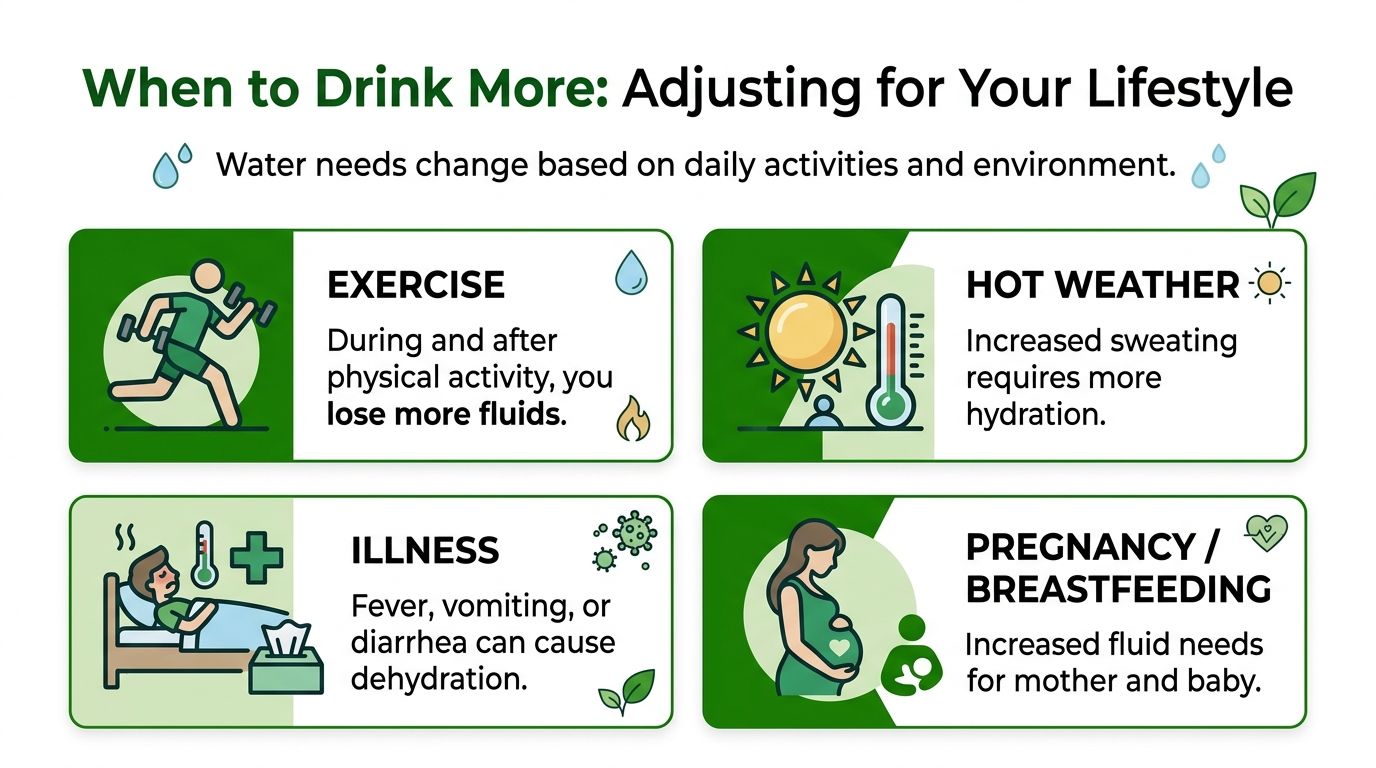
Exercise increases fluid loss, and hot conditions can push that loss higher. For fitness-focused people, a practical adjustment is one extra 16.9-ounce bottle for every 30 to 45 minutes of moderate-to-vigorous exertion or high-heat exposure, and the same source notes that a 1% body weight loss through sweat can reduce aerobic performance by 10 to 20%, according to BBC Future's hydration reporting.
That gives you a clean working rule. If your baseline is three 32-ounce bottles and you do a hard workout in the heat, your day's total probably shouldn't stay at your baseline.
A simple way to understand it:
- Desk day indoors: stay near baseline.
- Workout day: add an extra bottle based on duration.
- Hot day outdoors: add another bottle if you're sweating more than usual.
If you train regularly and want a sport-specific walkthrough, HYDAWAY's hydration guide is a useful companion read.
Other situations that raise your needs
Not every higher-need day comes from exercise. Your water needs often rise when your body is under more strain or losing fluid more quickly.
Common examples include:
- Hot weather: sweating climbs even if you're not exercising.
- Illness: fever, vomiting, or diarrhea can drain fluid fast.
- Pregnancy or breastfeeding: many people need more deliberate hydration.
- Long travel days: routines get disrupted and drinking gets forgotten.
If your day includes sweat, heat, or illness, your normal bottle goal probably isn't your real goal.
Rigid hydration rules often break down. A flexible bottle system works better because you can add one bottle, not rebuild your whole plan.
How to Read Your Body's Hydration Signals
Your bottle target gives structure. Your body gives feedback.
The fastest self-check
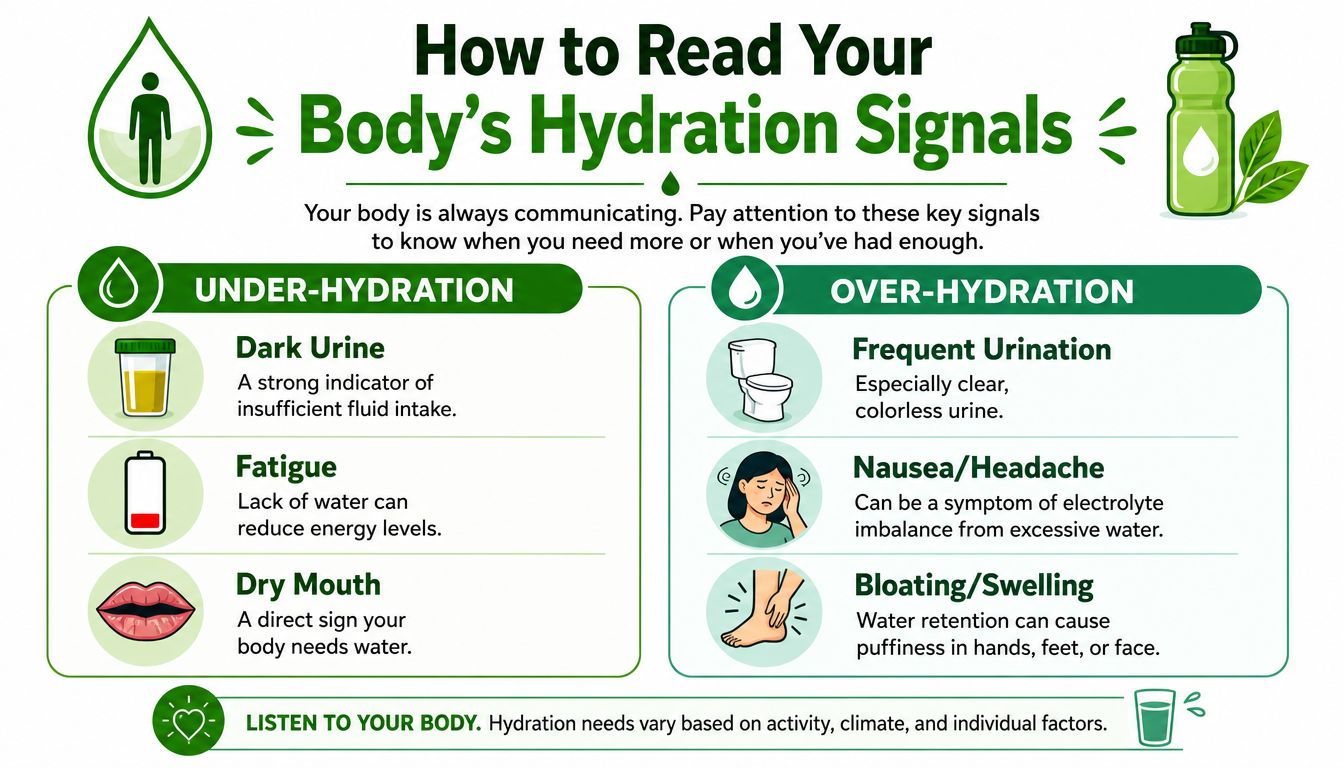
One of the most practical hydration checks is urine color. Earlier guidance covered the broad intake range, but real life changes day to day, and pale yellow is generally treated as a sign you're in a good range while dark amber suggests you need more fluid.
That check is useful because it brings your plan into the present tense. If your bottle count says you're “on track” but your body is clearly telling a different story, the body wins.
Other under-hydration cues can include:
- Dry mouth: often one of the first obvious signs.
- Fatigue: low fluid intake can leave you feeling flat.
- Headache: dehydration is a common reason people feel off.
- Strong thirst: simple, but easy to ignore when you're busy.
Why hunger can sometimes mean thirst
One overlooked reason people under-drink is that the body's signal gets misread. Revere Health notes that 37% of Americans mistake a weak thirst mechanism for hunger, which helps explain why some people snack when they really needed fluid first, as discussed in their hydration article on thirst and hunger confusion.
That doesn't mean every craving is dehydration. It means hunger and thirst can overlap enough that a glass of water is often a smart first check.
Try this pattern when you feel snacky at an odd time:
- Drink some water first.
- Wait a short while and notice whether the urge changes.
- If you're still hungry, eat.
Sometimes the most useful hydration habit is pausing long enough to ask, “Am I thirsty, hungry, or just on autopilot?”
It's also worth keeping balance in mind. Drinking far beyond comfort all day isn't the goal either. If you're urinating constantly and it's consistently completely clear, that can be a sign to ease off and pay attention to overall balance.
How to Build a Lasting Daily Water Habit
Knowing your number is helpful. Remembering to hit it every day is the hard part.
Many individuals don't fail hydration because they don't care. They fail because the habit has too much friction. The bottle is empty, the refill station is far away, the day gets busy, and by evening they're trying to catch up.
Make your goal visible
A visible target beats a vague intention. “Drink more water” is forgettable. “Finish this 32-ounce bottle three times” is concrete.
These tactics work well because they reduce decision-making:
- Use one primary bottle: Switching between mugs, cups, and random bottles makes tracking fuzzy.
- Choose a bottle size that fits your routine: A 40-ounce bottle helps if you hate refilling. A 16.9-ounce bottle may suit people who like smaller milestones.
- Mark your checkpoints: Morning, midday, afternoon, evening.
If you want to make habit setup simpler in general, this practical guide on how to start a habit applies well to hydration too.
Lower the friction
Hydration sticks when it's attached to things you already do. That's habit stacking in plain English.
Try pairing water with anchors like these:
- After waking up: drink before coffee.
- With meals: take a few steady sips before and during eating.
- Before leaving the house: refill before keys and shoes.
- After workouts: refill immediately, not later.
Flavor can help too. Some people drink more when water is cold. Others do better with ice, mint, cucumber, or lemon. There's no prize for forcing yourself to drink water in the least enjoyable way possible.
A quick visual walkthrough can help if you want ideas for keeping the routine simple and repeatable.
The key is to make your baseline automatic, then let lifestyle adjustments be the exception rather than the whole system. When your normal day already includes your standard bottle count, adding more on workout or hot-weather days becomes much easier.
Hydration doesn't need to feel strict. It works better as a calm daily rhythm.
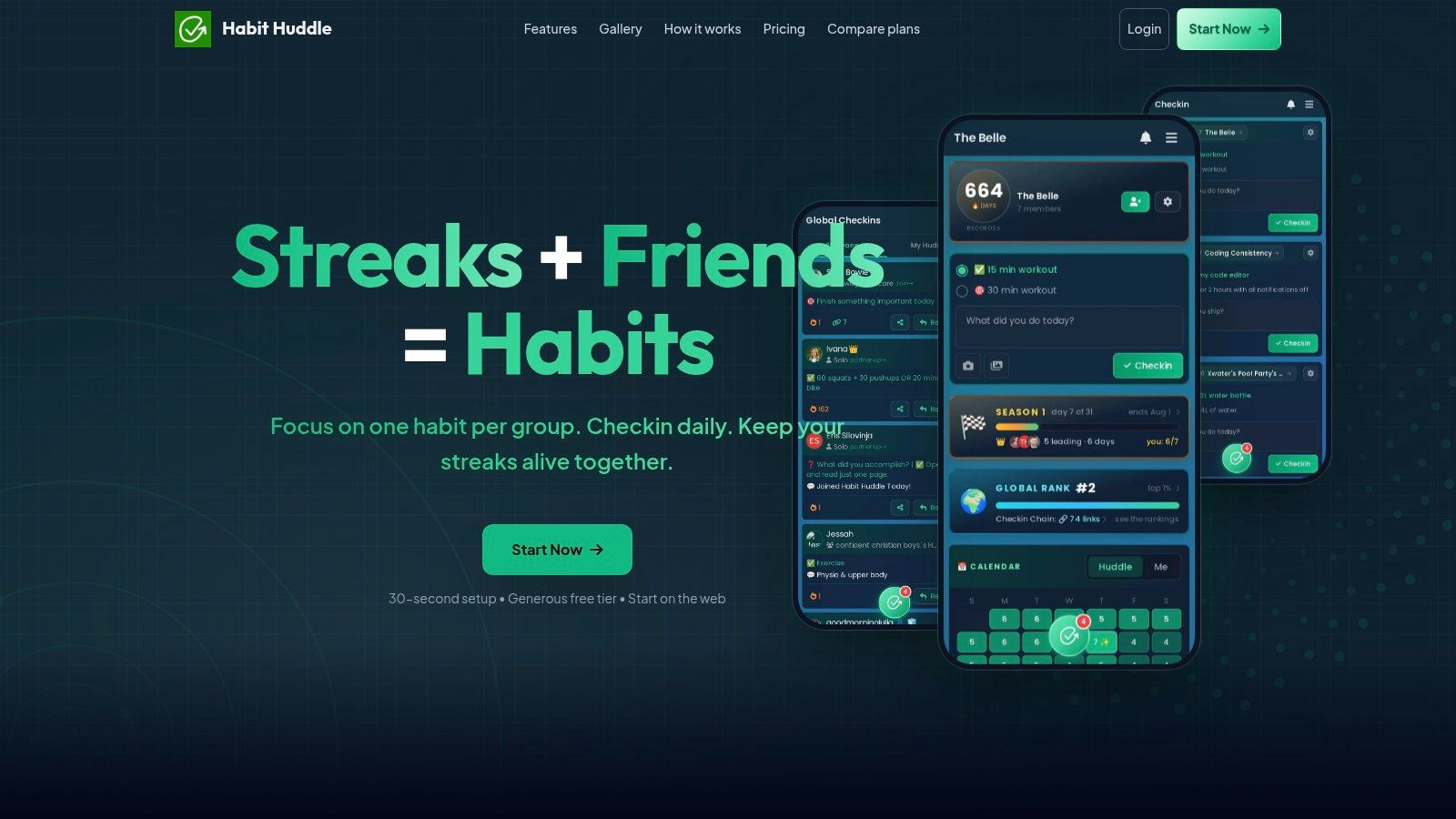
If you want help turning your bottle goal into something you follow, Habit Huddle gives you a simple way to track daily habits with accountability. You can set a flexible hydration target, check in consistently, and build momentum with other people instead of trying to remember everything on your own.
Ready to Build Habits With Friends?
Stop failing alone. Join thousands using the #1 habit tracker with friends for real accountability and lasting results.
Prefer mobile? App Store · Google Play
Related Guides
More Habit Huddle articles on building habits with accountability.
HabitShare Alternatives: 6 Apps for Tracking Habits With Friends (2026)
Looking for a HabitShare alternative? Six social habit trackers compared by model, price, platforms, and what happens on a missed day, plus how to switch wit...
What to Do When You Miss a Workout Day: The 5-Step Comeback Plan
Missed a workout day? What one miss does to your body and habit, according to research, plus a five-step plan for the next 24 hours, when to make it up, and...
Habit Streak App With Friends: 7 Apps Compared (2026)
Seven habit streak apps with friends compared: Habit Huddle, HabitShare, Daily Pact, Habitica, Streaks, Habit Streak duels, HabitStreak.io. What friends see,...