
Why Do I Feel Hungover Without Drinking? 9 Real Causes
Sleep debt, dehydration, blood sugar crashes, and 6 more reasons you feel hungover without drinking, plus what fixes each one.
📺 Related Video: Why You Wake Up Feeling Hungover Without Drinking
Video by: Dr. Andrew Neville · Watch on YouTube
Feeling hungover without drinking usually comes down to one of a few causes: broken or shallow sleep (including sleep apnea), dehydration, an emotional hangover after an intense day, a blood sugar swing, caffeine withdrawal, a late heavy meal, a food sensitivity, a low-grade illness, or an underlying medical issue such as a migraine or thyroid problem. The symptoms are real, they are common, and in most cases they are trackable to a trigger.
That morning is unmistakable: heavy head, dry mouth, unsettled stomach, foggy and irritable, exhausted after a full night in bed. When there was no late night out to blame, it is easy to start second-guessing yourself. Am I getting sick? Did I sleep badly? Is something wrong?
Usually this kind of phantom hangover is not random. It is a clue. Your body is telling you that something about your sleep, hydration, stress load, food intake, or health needs attention. This guide walks through the nine causes worth checking, what helps right now, and how to find your personal pattern so it stops happening.
Hangover symptoms without the alcohol
Hangover-like symptoms are not unique to alcohol. Your brain and body produce a very similar signal after a rough night for other reasons: headache, nausea, dry mouth, dizziness, brain fog, light sensitivity, and a fatigue that coffee does not fix.
The dizziness deserves a special note, because it is the symptom that worries people most. Waking up dizzy and hungover-feeling most often points to dehydration or poor-quality sleep, and the NHS lists feeling dizzy or lightheaded, headache, tiredness, and a dry mouth as core dehydration symptoms. Dizziness that keeps returning, or gets worse when you stand up, is also the symptom most worth raising with a doctor rather than self-managing.
The helpful shift is to stop asking "why do I feel weird?" and start asking "what pattern keeps showing up before these mornings?" That question turns a vague, annoying symptom into a problem you can investigate.
The usual suspects behind a non-alcoholic hangover
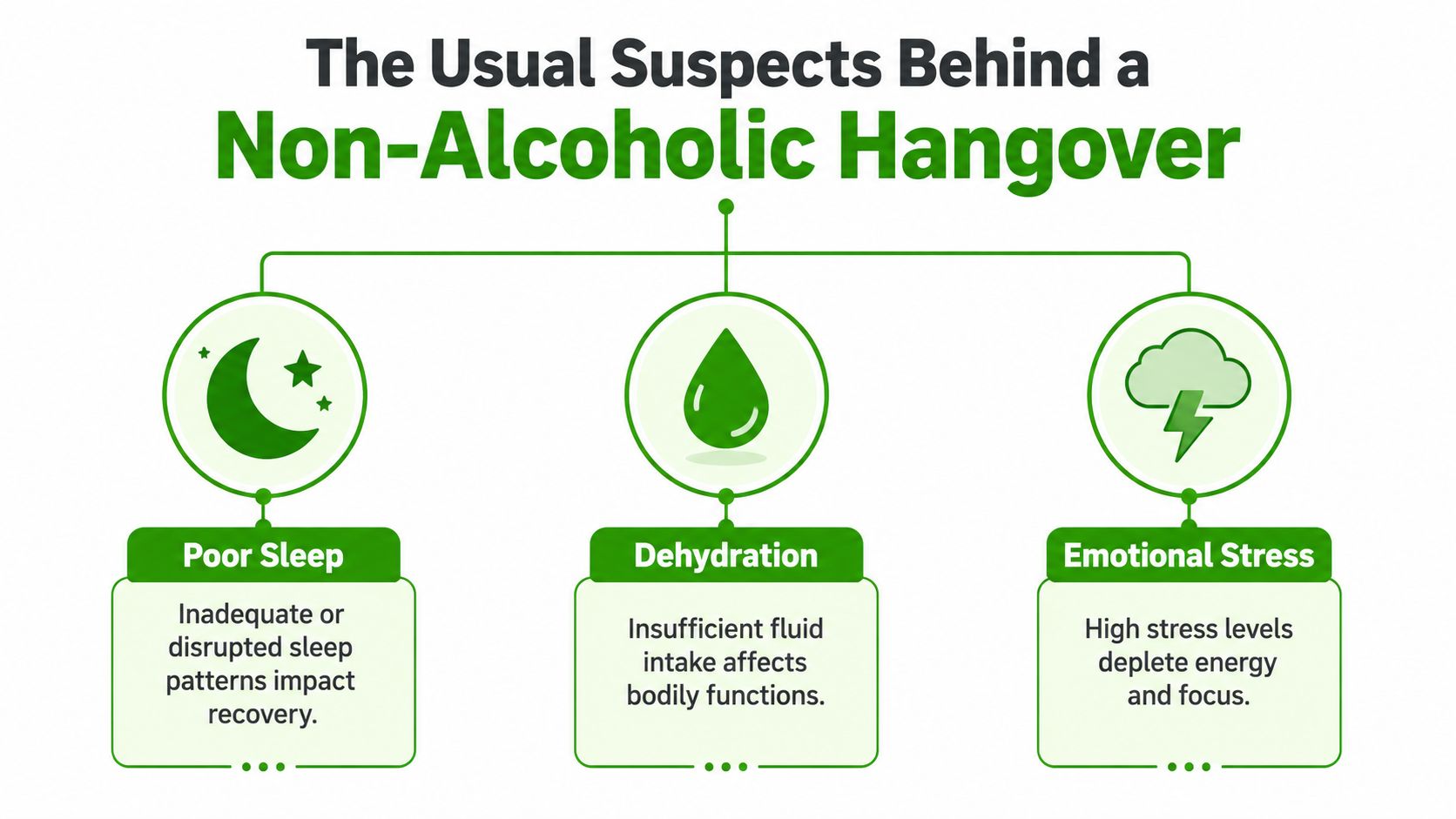
Most cases come back to three big categories. Poor sleep, dehydration, and emotional stress show up again and again because each one can create the same cluster of symptoms people associate with a hangover.
Poor sleep can mimic a hangover fast
Sleep is the first place to look, especially if this happens often. Cedars-Sinai's overview of the science of hangovers notes that sleep deprivation alone can produce a hangover state by cutting slow-wave sleep by 30 to 40 percent. Fragmented sleep and sleep apnea are the classic culprits: repeated overnight interruptions to breathing and deep sleep that leave you with a morning headache, dry mouth, and grogginess that looks exactly like a hangover.
That is where many people get confused. They say, "but I was in bed for eight hours." Time in bed is not the same as restorative sleep. If you snore heavily, wake frequently, or never feel refreshed in the morning, the problem may be the quality of sleep rather than the quantity.
A practical clue is how you feel before noon. If your brain stays foggy, your head aches, and you are reaching for caffeine just to function, your overnight recovery was probably incomplete. If mornings are especially rough, our guide on how not to sleep through your alarm can help you work out whether you are waking from deep exhaustion rather than simple oversleeping.
Dehydration changes more than thirst
Dehydration does not only make you thirsty. It can leave you headachy, sluggish, dizzy, dry-mouthed, and mentally slow. Those symptoms overlap almost perfectly with what many people call a hangover.
What catches people off guard is how ordinary the setup can be. A salty dinner, a warm room, a long walk, travel, poor fluid intake during a busy workday, or extra caffeine can all leave you starting the next morning behind. You might not notice the dehydration until you try to get moving.
Here's a quick way to understand it:
| Morning symptom | Possible dehydration clue |
|---|---|
| Headache | You drank very little the day before |
| Dizziness | You wake up dry and feel worse standing up |
| Fatigue | You had coffee but very little water |
| Brain fog | You skipped fluids during work or travel |
Emotional hangovers are real
This one surprises people, but it matters. After a day of extreme emotional intensity, positive or negative, many people wake up anxious, mentally tired, and physically off, as if the nervous system is still paying for yesterday.
That means the trigger might not be something you ate or drank. It might be the all-day wedding, the intense argument, the huge work presentation, the family crisis, or even an exciting event that kept your nervous system running hot for hours.
Practical rule: Don't only review what went into your body. Review what ran through your mind and nervous system.
Exploring your diet and other hidden triggers
If the big three don't fully explain your mornings, it's time to get more curious about smaller triggers. It's common for people to miss the answer because the cause isn't dramatic. It's subtle, and it often shows up only when a few factors stack together.
Start with what changed yesterday
Ask a simple question: what was different? Not what was "bad," just what was different.
Maybe you had a very sweet dessert after a light dinner and woke up shaky and drained. Maybe you skipped your usual morning coffee and ended up with a pounding headache by late morning. Maybe you ate a rich, heavy meal late at night and slept restlessly. Maybe your digestion was already off, and the next morning felt like a full-body tax.
Common hidden triggers to investigate
A few patterns are worth checking in your own routine:
- Blood sugar swings: A day of irregular meals, long gaps without eating, or a heavy sugary snack at night can set up a rough next morning for some people.
- Caffeine withdrawal: If you usually have coffee and suddenly skip it, headache and fatigue can feel a lot like a mild hangover.
- Late heavy meals: Greasy, spicy, or oversized dinners can disrupt sleep and leave you sluggish on waking.
- Food sensitivities: Some people notice headaches, flushing, congestion, or brain fog after particular foods.
- Low-grade illness: Sometimes your body is fighting something off before obvious symptoms appear.
You don't need to label any of these immediately. You just need to notice timing.
A short food and symptom log helps more than memory does. If you often add sweeteners or flavored creamers to your coffee, this article on sugar in coffee can help you think through how daily choices might affect your energy rhythm.
When a symptom keeps repeating, assume there's a trigger worth finding.
One caution here. Don't turn this into a punishment project where every symptom means you "ate wrong." Use a detective mindset instead. You're looking for links between inputs and outcomes, not reasons to blame yourself.
When to see a doctor about your symptoms
Sometimes a rough morning is just a rough morning. Sometimes it keeps happening, and that's when it deserves a more careful look.

You already know you can change.
You just need to take the first step. Habit Huddle helps you build habits around your goals, alongside friends who keep you accountable.
Patterns that deserve medical attention
Cedars-Sinai notes in its overview of the science of hangovers that migraines, chronic fatigue syndrome, and hormonal imbalances such as thyroid dysfunction and estrogen fluctuation can trigger the same symptom cluster people associate with a hangover.
That means "I feel hungover without drinking" can be a symptom pattern, not a diagnosis.
A doctor visit makes sense if your symptoms are persistent, worsening, or hard to connect to obvious lifestyle causes. It also makes sense if the fatigue feels disproportionate. If rest doesn't help, or if the symptoms interfere with work, exercise, mood, or daily functioning, don't keep trying to out-hydrate or out-caffeinate the problem.
Watch for patterns like these:
- Standing makes you feel worse: Dizziness, racing heartbeat, or feeling faint when you get up may need evaluation.
- Fatigue is unusually deep: If you feel wiped out in a way that sleep doesn't fix, that deserves attention.
- Headaches keep returning: Especially if they come with nausea, light sensitivity, or visual changes.
- Your symptoms are broad: Fatigue plus temperature sensitivity, cycle changes, digestive changes, or unexplained weight shifts can point away from a simple lifestyle issue.
A simple way to decide
You don't need to wait until symptoms are extreme. You just need enough pattern to describe what's happening.
Bring notes if you can. A few mornings of written observations are more useful than a vague memory of "I've felt off lately." Write down when symptoms happen, how long they last, what your sleep was like, and whether you notice dizziness, headaches, palpitations, or unusual exhaustion.
Here's a simple decision table:
| Situation | Best next step |
|---|---|
| It happened once after a stressful or poorly slept night | Rest, hydrate, monitor |
| It happens often with snoring or unrefreshing sleep | Ask about sleep quality or sleep apnea screening |
| It's paired with dizziness, severe fatigue, or recurring headaches | Book a medical evaluation |
| It's getting worse over time | Don't self-manage indefinitely |
The goal of a medical visit isn't to prove something is seriously wrong. It's to stop guessing.
Your first aid kit for immediate relief
If you feel bad right now, keep the response simple. You're trying to reduce stress on your body, not win the day by force.
What to do in the first hour
Start with fluids. Sip water steadily, and if you have an electrolyte drink or a balanced rehydration option, that may feel better than chugging plain water all at once.
Eat something gentle if your stomach can handle it. Toast, bananas, oatmeal, rice, crackers, yogurt, or a simple egg can be easier to tolerate than greasy food. The goal is steady energy, not a huge meal.
Then lower the sensory load. A dark room, a cool compress, a brief lie-down, and a quiet environment can help if you're headachy or nauseated.
- Hydrate first: Small sips are often easier than large amounts.
- Choose bland food: Think easy digestion, not "comfort food."
- Rest your brain: Reduce noise, bright light, and screen intensity.
- Loosen your body: Gentle stretching can help if you woke up tense.
What to avoid while you recover
Don't punish yourself with an intense workout if you're dizzy, depleted, or nauseated. A short walk may help some people, but hard exercise can backfire when your system already feels stressed.
Be careful with the "more caffeine will fix it" approach. If dehydration, poor sleep, or a stress crash caused the problem, more coffee may make you jittery without really helping.
A greasy brunch also isn't a cure. Heavy food can make nausea and sluggishness worse.
Relief usually comes from supporting the basics. Fluids, simple food, and actual rest beat heroic hacks.
Building your prevention protocol
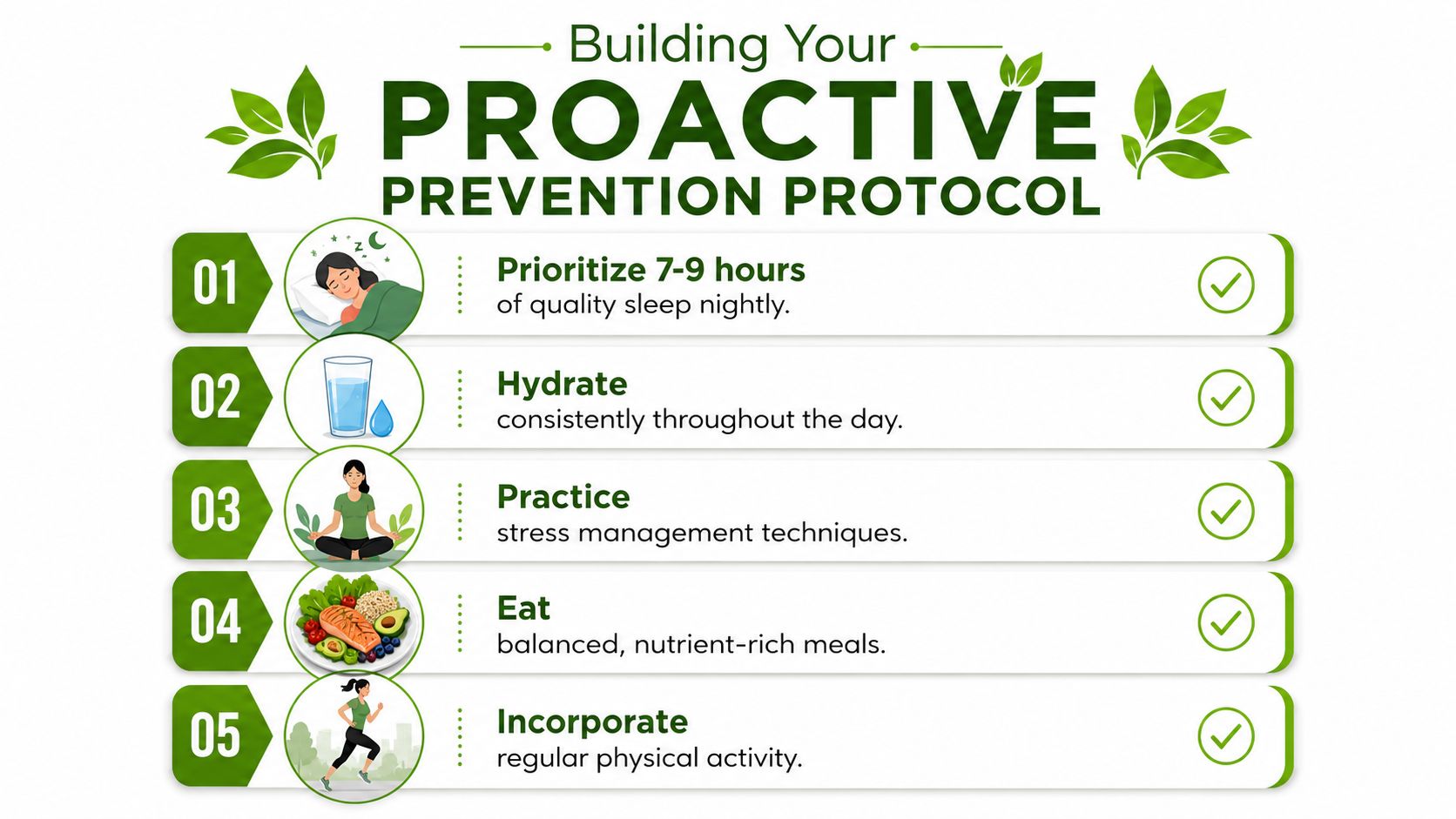
Once you've had this feeling a few times, prevention matters more than rescue. A good prevention plan doesn't need to be complicated. It needs to be repeatable.
The habits that protect your mornings
Think in terms of a few daily anchors rather than a perfect routine.
- Protect your wind-down: A consistent pre-sleep routine helps you arrive at bed calmer instead of crashing into it overstimulated.
- Front-load hydration: Drink earlier in the day so you're not trying to catch up at night.
- Stabilize meals: Regular, balanced meals can reduce the "I woke up wrecked and shaky" pattern that follows chaotic eating.
- Notice emotional spikes: Big highs and big lows both matter. Your body still has to recover from them.
- Keep mornings predictable: Light, water, and a calm first hour can make it easier to spot whether you're improving.
Some people do best with a written checklist on the fridge. Others use phone reminders. Others keep a paper notebook by the bed. The tool matters less than the consistency.
A simple weekly review
Prevention gets easier when you review your week instead of judging each day in isolation.
Try these prompts once a week:
- Which mornings felt best? Look at the night before.
- Which mornings felt worst? Look for stacked factors like stress plus poor sleep plus low fluids.
- What repeats? Same symptoms, same timing, same trigger.
- What's one change to test next week? Keep it small.
This keeps the process practical. You're not trying to become a full-time self-experimenter. You're trying to reduce friction and build a routine your body responds well to.
Track your triggers until the pattern shows itself
Knowing the likely causes is useful. Seeing your own pattern on paper is what usually makes the answer obvious.
If you want to stop guessing, track a small set of variables for two weeks. Not every detail. Just the few inputs most likely to affect how you wake up:
- Sleep quality: Not just bedtime, but whether sleep felt broken or refreshing
- Hydration: Whether you drank consistently through the day
- Stress load: Low, medium, or high
- Emotional intensity: Especially unusually exciting or upsetting days
- Meals: Late dinner, skipped meals, sugar-heavy eating, or digestive discomfort
- Morning symptoms: Headache, nausea, fog, fatigue, dizziness
A useful daily checkin might look like this:
| Variable | Quick check |
|---|---|
| Sleep | Restful or broken |
| Fluids | On track or behind |
| Stress | Low, medium, high |
| Emotional intensity | Calm, elevated, overwhelmed |
| Morning state | Clear, foggy, headachy, drained |
That kind of record can show you something memory misses. You may find that your worst mornings don't follow random days. They follow nights of fragmented sleep, high-stimulation evenings, skipped meals, or emotionally loaded events. Our guide to tracking progress covers how to turn vague intentions into a daily record like this without it becoming a chore.
Once you know that, you can build a recovery habit, not just a reaction.
If you're ready to stop guessing and start spotting your patterns, Habit Huddle gives you a simple way to track daily habits like sleep, hydration, and morning walks in one place. Each habit gets a daily checkin, the structure stays light, and doing it alongside a few friends makes it much easier to keep the log going long enough to finally learn why you feel hungover without drinking.
Ready to Build Habits With Friends?
Stop failing alone. Join thousands using the #1 habit tracker with friends for real accountability and lasting results.
Prefer mobile? App Store · Google Play
Related Guides
More Habit Huddle articles on building habits with accountability.

HabitShare Alternatives: 6 Apps for Tracking Habits With Friends (2026)
Looking for a HabitShare alternative? Six social habit trackers compared by model, price, platforms, and what happens on a missed day, plus how to switch wit...
What to Do When You Miss a Workout Day: The 5-Step Comeback Plan
Missed a workout day? What one miss does to your body and habit, according to research, plus a five-step plan for the next 24 hours, when to make it up, and...
Habit Streak App With Friends: 7 Apps Compared (2026)
Seven habit streak apps with friends compared: Habit Huddle, HabitShare, Daily Pact, Habitica, Streaks, Habit Streak duels, HabitStreak.io. What friends see,...