
How to Not Sleep Through Your Alarm (Even as a Heavy Sleeper)
Keep sleeping through your alarm? Fix the alarm setup tonight, retrain your body clock this week, and build a morning worth waking up for.

📺 Related Video: How to Feel Energized & Sleep Better With One Morning Activity | Dr. Andrew Huberman
Video by: Huberman Lab Clips · Watch on YouTube
You set the alarm. You meant it. And the next thing you knew it was 8:40 and the morning was already gone. If that keeps happening, the fix is not more willpower. To stop sleeping through your alarm you need three layers working together: an alarm setup your half-asleep brain cannot dismiss from bed, a sleep schedule consistent enough that the alarm stops firing during your deepest sleep, and a reason to get up that pays off in the first five minutes of the day.
Any one of those alone tends to fail. A louder alarm loses to heavy sleep debt. A perfect bedtime loses to a snooze habit. A motivating goal loses to a phone within arm's reach. Together, they hold. This guide walks through all three layers, then gives you a four week plan to install them one at a time.
Why You Sleep Through Your Alarm
Sleeping through an alarm is usually a depth problem: the sound arrives while your brain is in a sleep stage that filters noise out. During deep sleep, your brain actively screens incoming sound, and some people screen better than others. Sleep specialist Dr. Guy Meadows explains in Healthline's guide to sleeping through alarms that naturally deep sleepers produce more sleep spindles, a form of brain activity that works like a noise canceling device. If that is you, an ordinary phone alarm on the nightstand never stood a chance.
Depth is rarely the whole story, though. The usual suspects stack on top of each other:
- Sleep debt. Run short on sleep for a few nights and your brain repays the debt with deeper sleep, concentrated in the early morning hours. That is exactly when your alarm fires.
- A drifting schedule. Bed at 11 on weeknights and 2 AM on weekends means your body clock never learns when morning is. The alarm becomes random noise instead of a predictable signal.
- Your chronotype. Natural night owls are often still in a deep phase of sleep when an early alarm goes off. A 6 AM alarm during your biological night is asking your body to do something it is built to resist.
- Habituation. The same tone every morning for a year becomes background sound. Brains tune out what never changes.
- Health factors. Sedating medications, sleep apnea, and depression can all make waking dramatically harder. Oversleeping is a common symptom of depression, not a character flaw.
A missed alarm is rarely a discipline problem. It is a signal problem: the sound never got through, or it got through to a brain with no reason to act on it.
Alarm Tactics That Work Tonight
The fastest fix is making your alarm impossible to dismiss without standing up. Getting vertical is what breaks sleep's grip. So put your main alarm far enough away that turning it off requires your feet on the floor and several real steps, a method sleep experts recommend in the Sleep Foundation's guide to waking up early.
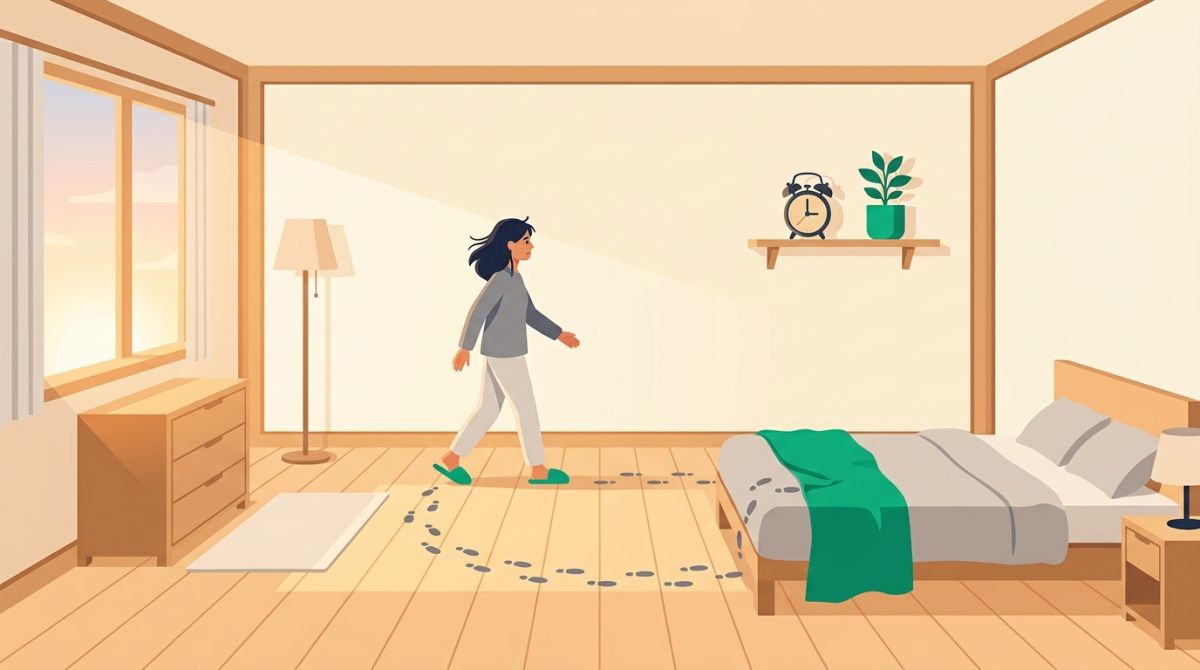
Practical rule: if you can dismiss the alarm without your feet touching the floor, the alarm is in the wrong place.
Heavy sleepers should layer stimulation types rather than volume alone:
- Main sound alarm across the room. Phone or a dedicated clock, loud, with a clear path to reach it.
- Vibration on a second device. Healthline notes experts recommend multiple alarms on separate devices, and that vibrating alarms on a watch or a bed shaker pad under the mattress can succeed where sound fails, because touch gets around a brain that has learned to mute your ringtone.
- A puzzle alarm as backup. Apps like Alarmy make you solve a task or photograph your bathroom sink to silence the alarm. Cognition first, negotiation never.
Two supporting moves: rotate your alarm tone every few weeks so it never fades into the background, and resist the urge to set six alarms at five minute intervals. A wall of alarms teaches your brain that the first five do not matter. One decisive wake time, reinforced by different types of stimulation, beats a snooze ladder every morning.
Retrain Your Body Clock So Waking Gets Easier
An alarm can only interrupt sleep; your body clock decides how brutal that interruption feels. If your circadian rhythm expects wakefulness at your alarm time, sleep naturally lightens in the final hour and the alarm becomes a confirmation instead of an ambush. If your rhythm expects sleep, every morning is a fight you start from behind.
Three moves retrain it:
- Pick one wake time and hold it seven days a week. Weekend sleep-ins feel like recovery, but they shift your clock late and make Monday the hardest wake of the week.
- Move bedtime earlier in 15 minute steps. A dramatic overnight reset almost always snaps back. Small increments stick. Most adults need 7 to 9 hours of sleep opportunity; an alarm cannot rescue a wake time your bedtime does not support.
- Use light deliberately. Light is the strongest signal your circadian system responds to. The Sleep Foundation's circadian rhythm guide explains that morning light shifts your clock earlier while bright evenings push it later. Get light within minutes of waking, and dim screens and rooms in the last hour before bed. A sunrise lamp that brightens before your sound alarm helps some people, but it works best paired with a fixed wake time, not instead of one.
The alarm should confirm a wake time your body already expects, not drag you out of the wrong phase of sleep.
If You Keep Oversleeping, Find the Broken Layer
Repeated oversleeping means one specific layer is failing: the alarm setup, the sleep underneath it, or the reason to get up. Diagnosing which one saves you months of tweaking the wrong thing.
Start with snoozing, because it hides in plain sight. Snoozing is a trained response. Every time you hit snooze and nothing bad happens, you teach your brain that the first alarm is a suggestion. Many people who say they sleep through alarms actually wake just enough to dismiss them without the memory sticking. If your phone shows dismissed alarms you do not remember, that is you. The fix is the tactics layer: distance, a puzzle to dismiss, one decisive alarm.
If the alarm setup is solid and mornings are still a wall, look at the sleep itself:
| Pattern | What it suggests |
|---|---|
| Loud snoring, gasping, or choking at night | Breathing related sleep disruption such as sleep apnea |
| Exhausted mornings despite 7 to 9 hours in bed | A sleep quality or timing problem, or a medical cause |
| Different alarm types and placements all fail | Something stronger than habit; worth a clinical look |
| Falling asleep unintentionally during the day | Time to talk to a doctor |
None of this is a willpower issue, and a clinician can actually help with all of it. If you have adequate time in bed, a serious alarm setup, and mornings still feel impossible, treat that as useful data rather than a personal failing.
Attention differences matter here too. Many people with ADHD run on a delayed body clock and describe alarms as simply not registering. The layered approach in this guide still applies, but external structure carries more of the load; our guide to habit tracking with ADHD covers what that structure looks like in practice.
Give Yourself a Morning Worth Waking Up For
People do not get up for alarms; they get up for things. The weakest point of most mornings is the five minutes after the sound stops, when a half-awake brain weighs "get up" against "warm bed" with nothing on the get-up side of the scale. Put something there.
The best morning anchors are small, prepared the night before, and genuinely pleasant. Skip the fantasy morning of a 45 minute workout, journaling, and a cold shower. That plan survives exactly three days. Instead pick one:
- Coffee set up so the first step is pressing a button
- Ten minutes of walking or stretching with a playlist you save for mornings only
- Breakfast you actually look forward to
- A real early commitment: a class, a call, a friend expecting you at the park
Then make the win social, because a morning victory that somebody celebrates is worth more than one that vanishes into your notes app. Text a friend your sunrise photo. Plan a 7 AM walk together. Join a group where showing up gets applauded. The point is not surveillance; it is that sharing the win gives your groggy brain an immediate payoff for standing up, and shared momentum compounds in a way solo effort does not. Our guide to social accountability breaks down why habits shared with people stick better than habits kept in your head.

A wake-up habit becomes durable when all three layers support each other: the alarm gets you conscious, your body clock stops fighting the schedule, and the first five minutes of the day contain something worth waking up for.
The Four Week Plan
Do not change everything at once. A burst of total reinvention usually collapses by day ten. Install one layer per week instead:
| Week | Focus | Key actions |
|---|---|---|
| 1 | Alarm overhaul | Alarm across the room, add vibration on a second device, puzzle app as backup, one wake time, no snooze ladder |
| 2 | Body clock reset | Hold the wake time all seven days, shift bedtime earlier in 15 minute steps, light on waking, dim evenings |
| 3 | Morning anchor | Pick one small enjoyable first action, prepare it the night before, do it immediately after getting up |
| 4 | Make it social | Share the wake-up habit with a friend or group so every morning you show up gets celebrated |
Each week solves a different failure mode. First you wake up. Then waking stops hurting. Then mornings gain a payoff. Then the habit gets other people invested in it. If you want a deeper walkthrough of turning week four into a permanent habit, start with how to start a habit.
You already know you can change.
You just need to take the first step. Habit Huddle helps you build habits around your goals, alongside friends who keep you accountable.
Where Habit Huddle Fits
Habit Huddle is our app, so judge the reasoning for yourself: the hardest part of this plan is week four, keeping the habit alive after novelty fades, and that is the part an alarm cannot do. In Habit Huddle you create a huddle with a few friends, everyone tracks a wake-up habit like "up by 6:30," and each morning you log a checkin the group can cheer. Your huddle's Checkin Chain grows a link for every member who logs a checkin that day, so showing up builds something shared. On rough mornings, a small Floor like "up before 7, no phone in bed" keeps the habit alive without demanding a perfect routine. If you track best alone, a paper calendar or a solo app will serve you fine; Habit Huddle is built for people who want mornings with teammates. It is free to start a huddle, or read more about tracking habits with friends.
FAQ
Why do I sleep through my alarm even after a full night of sleep?
Timing and quality matter as much as duration. If your alarm fires during deep sleep, your brain can filter it out entirely, and conditions like sleep apnea fragment sleep so your brain compensates with deeper sleep toward morning. If it happens consistently despite good habits, a sleep study is the reliable way to find out why.
Do people with ADHD sleep through alarms more often?
Delayed sleep timing is commonly reported with ADHD, which means an ordinary alarm often fires during that person's biological night. The layered approach still works, but lean harder on forced movement alarms, light, and external structure like a shared morning habit rather than memory and intention.
What is the 10-3-2-1 rule for sleep?
It is a popular rule of thumb for winding down: no caffeine within 10 hours of bed, no food or alcohol within 3, no work within 2, and no screens within 1. Treat it as a checklist for better sleep pressure at bedtime, which in turn makes morning alarms easier to respond to.
Is hitting snooze bad for you?
Snoozing trades your clearest minutes of morning for fragmented dozing, and it trains your brain to treat the first alarm as optional. If you cannot resist it, remove the option: put the alarm across the room and use an app that requires a task to dismiss.
When should I see a doctor about oversleeping?
See a doctor if you sleep through alarms consistently despite adequate time in bed and a serious alarm setup, or if you snore loudly, gasp at night, wake with headaches, or fall asleep unintentionally during the day. Those patterns point at treatable conditions like sleep apnea, and no alarm tactic substitutes for treatment.
Ready to Build Habits With Friends?
Stop failing alone. Join thousands using the #1 habit tracker with friends for real accountability and lasting results.
Prefer mobile? App Store · Google Play
Related Guides
More Habit Huddle articles on building habits with accountability.

Reading Challenge App With Friends: 8 Apps Compared (2026)
Eight reading challenge apps for friends compared: Goodreads, StoryGraph, Fable, Bookclubs, ReadRats, Reading Rivals, BookBuds, Habit Huddle. What friends se...
Why Can't I Stick to a Routine? 7 Real Reasons and the Fix for Each
Routines fail on design, not willpower: sized for your best day, no cue, five changes at once, one miss treated as a quit. Seven reasons, the research, and a...

Habit Contract: How to Write One That Works (Free Template)
What a habit contract is, what goes in one, what randomized trials say about signed commitments, why the stakes belong on quitting rather than a missed day,...