
Does Crystal Light Count as Water? Yes, With Caveats
Crystal Light does count toward your daily water intake. The aspartame and dental caveats, and when plain water is still the better choice.
Yes. From a pure hydration standpoint, Crystal Light does count toward your daily water intake, and many varieties contain 0 to 5 calories per 8 oz serving, 0 g sugar, and 10 to 20 mg sodium. But that simple yes misses the more useful conversation about additives, dental impact, and whether flavored water is helping you build a hydration routine you can actually keep.
A lot of hydration advice gets too rigid. People hear that only plain water “counts,” then swing between perfection and giving up. In practice, that mindset backfires. If Crystal Light helps you drink more fluid than you would otherwise drink, it can be a practical tool. The smarter question isn't just whether it hydrates. It's whether it supports your health and habits well enough to be useful without becoming your only answer.
Table of Contents
- The Short Answer and the Real Question
- How Your Body Processes Flavored Water
- Crystal Light vs Pure Water A Side-By-Side Look
- Health Considerations Beyond Simple Hydration
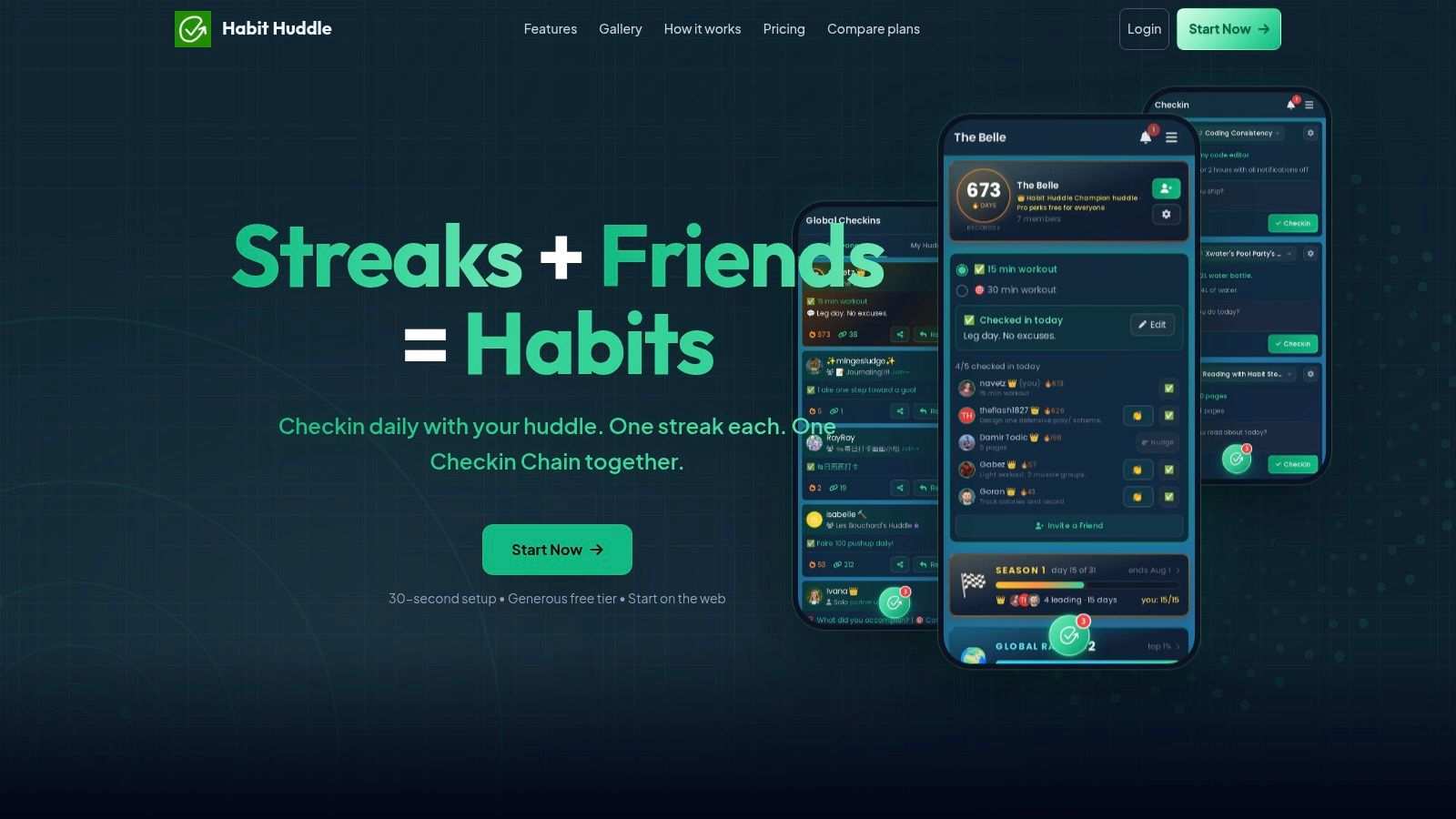
- How to Track Flavored Drinks in Habit Huddle
- Finding Your Sustainable Hydration Strategy
The Short Answer and the Real Question
If you're asking, “Does Crystal Light count as water?”, the honest answer is yes for hydration. Health experts and hydration guides confirm that non-alcoholic beverages, including Crystal Light, contribute to total fluid intake, and the Environmental Literacy Council explicitly states that flavored water like Crystal Light “absolutely counts towards your daily water intake” because the body does not distinguish between plain and flavored water for hydration purposes, as summarized in this hydration discussion and source roundup.
That matters because many people avoid logging flavored water at all. They think if it isn't plain water, it doesn't help. That's too simplistic. If the drink is mostly water and it helps you meet fluid needs, it belongs in the hydration conversation.
The question is different. It's not just whether Crystal Light hydrates. It's whether relying on it every day works well for your body, your teeth, your preferences, and your long-term habits.
Practical rule: If Crystal Light helps you move from “barely drinking anything” to drinking enough fluid consistently, that's progress.
There's also a mindset shift here. You don't need to choose between “perfect” hydration and “bad” hydration. For many people, Crystal Light works best as a middle step. It can make water more appealing while you build the routine of carrying a bottle, sipping through the day, and noticing thirst earlier.
That said, “counts as water” doesn't mean “identical to plain water in every way.” The hydration box gets checked. The health trade-offs still deserve attention.
How Your Body Processes Flavored Water
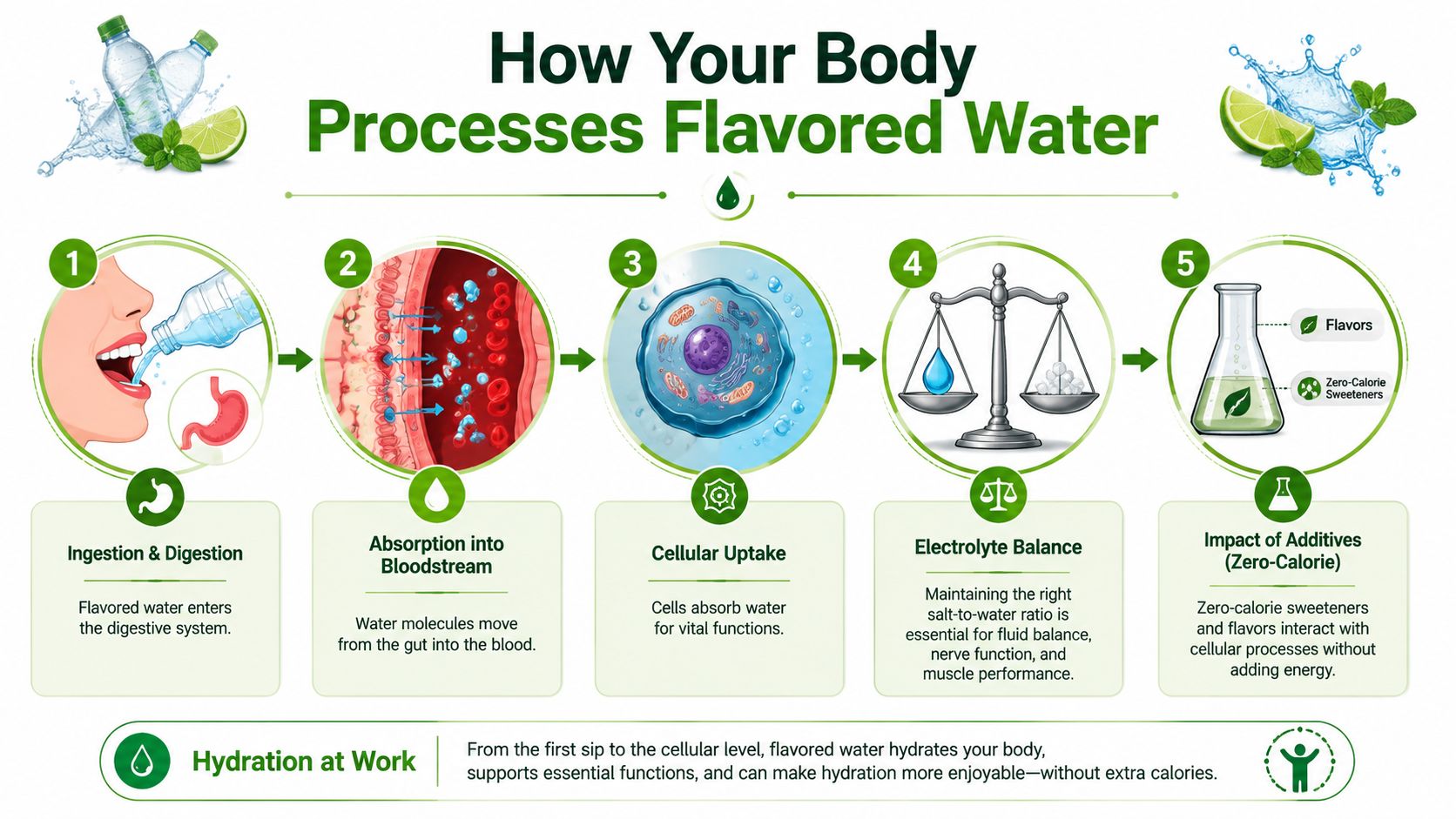
Your body is much less fussy about flavor than the internet is. When you drink Crystal Light mixed into water, the water still moves through the normal hydration pathway.
Water still does the main job
Think of hydration like a delivery system. The package is water. The flavor is the label on the outside. Your digestive tract and bloodstream are interested in the package, not the label.
From a technical nutrition standpoint, Crystal Light's composition of 0 to 5 calories, 0 g sugar, and 10 to 20 mg sodium places it in the same hydration efficacy category as plain water under Institute of Medicine guidance for beverages with minimal sodium, according to this nutritional breakdown of Crystal Light and fluid intake.
Once you drink it, the fluid enters the digestive system, moves into the bloodstream, and becomes available to cells for the usual work of circulation, temperature regulation, and normal body function. The flavoring doesn't block that process.
If you're trying to estimate your daily fluid rhythm more practically, a guide on how many water bottles to drink per day can help you turn hydration from an abstract goal into something you can measure.
Why the additives matter less for hydration than for overall health
The role of additives often causes confusion. While additives can matter, they do not hold the same significance as the water itself.
For hydration, the key point is straightforward:
- Water content matters most. If the drink is mostly water, it contributes to fluid intake.
- Low sugar helps. Crystal Light doesn't come with the heavy sugar load that changes the picture with many sweet drinks.
- Minimal sodium doesn't cancel hydration. The sodium level listed above is still in a range that supports full fluid contribution.
Your body can absorb water from a flavored drink even if that drink isn't nutritionally identical to plain water.
That distinction is useful. It lets you answer the hydration question clearly without pretending all beverages are equal in every other respect.
Crystal Light vs Pure Water A Side-By-Side Look
Plain water and Crystal Light overlap more than people think. They also differ in ways that matter depending on your goals.
Where they overlap
Both can help you stay hydrated. If your only question is fluid intake, Crystal Light is much closer to water than it is to soda.
That's why this topic gets people tied in knots. They expect a dramatic answer. Usually there isn't one. If someone drinks more fluid because flavored water feels easier to stick with, that can be a practical win.
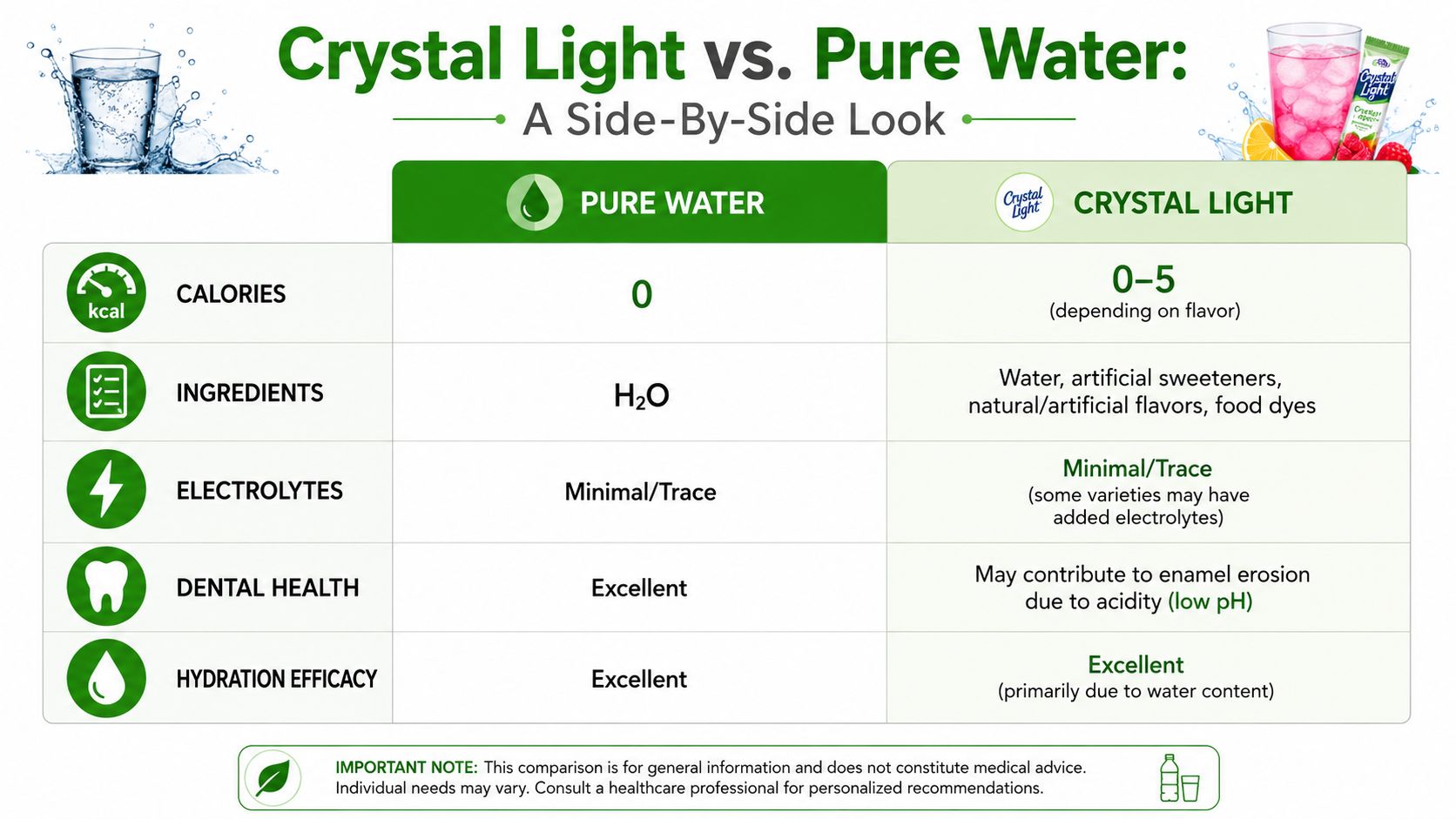
Here's the cleanest comparison.
| Attribute | Pure Water | Crystal Light |
|---|---|---|
| Hydration efficacy | Excellent | Excellent |
| Calories | 0 | Very low or none, depending on variety |
| Main contents | H2O | Water plus sweeteners, flavors, acids, and other additives |
| Sugar | None | Typically none |
| Taste | Neutral | Sweet and flavored |
| Dental profile | Gentle on teeth | Can be harsher because flavored drink mixes are often acidic |
| Best use case | Default everyday hydration | A useful option when plain water feels hard to drink consistently |
You already know you can change.
You just need to take the first step. Habit Huddle helps you build habits around your goals, alongside friends who keep you accountable.
Where the trade-offs show up
Pure water wins on simplicity. No sweeteners. No acids. No ingredient list to think about. If someone tolerates plain water well and drinks enough of it, there's no practical reason to complicate that.
Crystal Light wins on compliance for some people. It can make hydration more appealing, especially for people who are bored by plain water or who are trying to replace soda, juice, or other sweeter drinks.
The catch is that convenience can slide into dependence. If you get so used to intense flavor that plain water starts feeling impossible, the bridge habit stops being a bridge. It becomes the only road.
A balanced perspective is:
- Choose plain water most often if your goal is the simplest, least processed option.
- Use Crystal Light strategically if flavor helps you drink enough fluid.
- Watch patterns, not single servings. An occasional packet and an all-day flavored-water habit aren't the same thing.
The best hydration choice is the one you'll repeat consistently without creating a new problem.
Cost also enters the picture for some households. Tap water or filtered water is usually the simplest baseline. Powdered drink mixes add convenience and taste, but they also add another purchased product to your routine. That doesn't make them wrong. It just makes them a deliberate choice, not a neutral one.
Health Considerations Beyond Simple Hydration
The hydration answer is straightforward. The health conversation needs more nuance.
Artificial sweeteners and flavor systems
Crystal Light is generally calorie-free or very low in calories, with 5 to 10 calories per serving in many versions, which is one reason people use it to support hydration without adding much to daily intake. Wellness communities such as Weight Watchers often recognize it as counting toward water intake, as described in this overview of Crystal Light and hydration tracking.
That practical upside is real. A low-calorie flavored drink can be far more useful than a sugary beverage when someone is trying to improve daily habits.
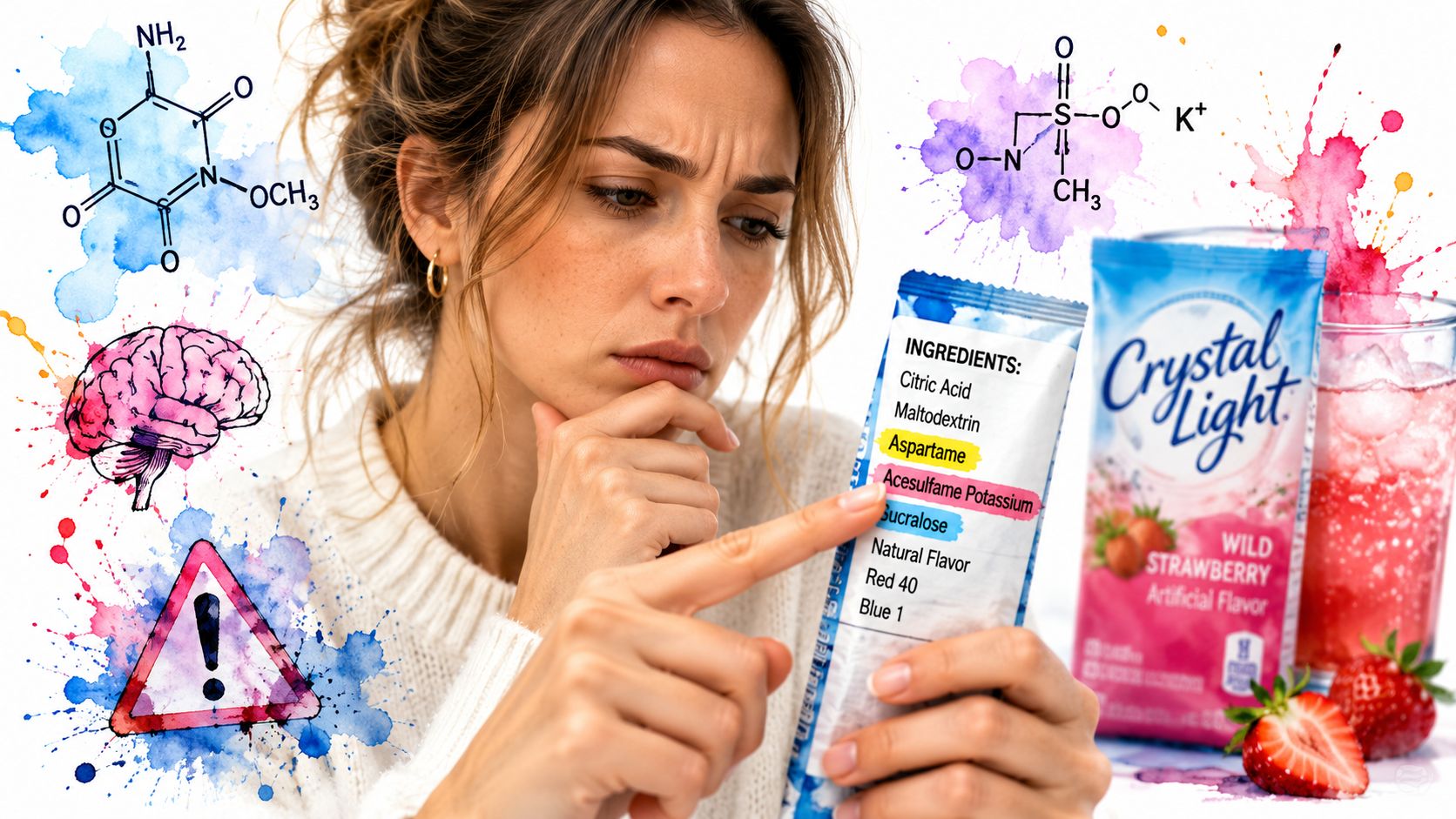
But ingredient tolerance is personal. Crystal Light may contain sweeteners such as aspartame, sucralose, or acesulfame potassium, along with acids, colorings, and flavoring agents. Many healthy people use products like this without any obvious issue. Others notice they prefer to limit them, especially if they're sensitive to aftertaste, sweetness, or certain additives.
If you already enjoy flavor in your water but want a less processed option sometimes, ideas like citrus can help. This guide on how much lemon juice for lemon water is useful if you want to experiment without overdoing it.
Teeth, acidity, and daily use
The bigger everyday issue often isn't hydration at all. It's your mouth.
Flavored powders commonly include acidic ingredients. Over time, frequent sipping of acidic drinks can be tougher on enamel than plain water. That doesn't mean a packet of Crystal Light is automatically harmful. It means there's a difference between drinking it once with a meal and slowly sipping it all day, every day.
A few practical ways to reduce friction:
- Don't nurse it for hours if you're worried about teeth. Longer exposure means more contact time.
- Alternate with plain water. This keeps flavored drinks from becoming your only fluid source.
- Notice your own response. If a product leaves you with stomach discomfort, headaches, or a strong craving for sweeter tastes, that feedback matters.
If Crystal Light helps you drink more, use it. If it starts replacing plain water completely, that's your cue to rebalance.
Moderation sounds boring, but here it works. Crystal Light can fit into a healthy routine. It just shouldn't automatically become the foundation of one.
How to Track Flavored Drinks in Habit Huddle
Hydration habits fail when the rules are too strict. People set a goal to drink only plain water, miss it for two days, then stop paying attention altogether. A better approach is to separate fluid intake from ideal intake.
Use a bridge habit, not an all-or-nothing rule
Crystal Light works well as a bridge habit. You use it to make the behavior easier while the routine is still fragile.
That can look like this:
- Start with what you'll drink. If plain water feels like a battle, begin with water plus Crystal Light.
- Attach it to repeatable moments. Keep the drink with breakfast, after workouts, during work blocks, or in the car.
- Gradually shift the ratio. Some days are plain water first, flavored water second. Some days are half and half.
- Protect the habit before optimizing it. Consistency comes before purity.
This matters even more if your tap water tastes off. In that case, improving the water itself may help you need less flavoring. If that's your issue, this explainer on water filter tech for lead reduction is a useful starting point for thinking through water quality at home.
A simple tracking approach that stays honest
A flexible tracker works best when it distinguishes between “I did the baseline” and “I hit the ideal.”
One effective setup is:
- Minimum check-in: Any meaningful hydration, including plain water or non-caffeinated flavored water.
- Daily goal check-in: Your preferred target for plain water or mostly plain water.
That structure keeps you from pretending flavored water and plain water are exactly the same, while still giving yourself credit for real progress. It also avoids the common mistake of abandoning the habit because you fell short of your perfect version.
If you want a system built around that kind of flexible consistency, a hydration tracking app can help you log the baseline and the stretch goal separately.
The point isn't to create fake precision. The point is to build a routine you can repeat on ordinary days.
Finding Your Sustainable Hydration Strategy
So, does Crystal Light count as water? Yes for hydration. That part is clear.
The more useful answer is that Crystal Light can be a smart tool when it helps you drink enough fluid, replace higher-sugar drinks, or build a routine that hasn't stuck before. It becomes less helpful when it turns into your only way to drink water, or when the additives and acidity create downsides you can feel.
A sustainable hydration strategy usually looks simple. Plain water is the foundation. Flavored options can support the habit when needed. The right balance depends on what you'll keep doing, not what sounds the cleanest in theory.
Progress beats purity here. If Crystal Light helps you move toward better hydration, use it intentionally. Then keep nudging your routine toward what feels good, works in daily life, and supports your health over time.
If you want a simple way to stay consistent with hydration and other daily habits, Habit Huddle makes it easy to track the minimum that keeps your streak alive and the bigger goal you're working toward. That kind of flexible accountability is often what turns a short burst of motivation into a routine that lasts.
Ready to Build Habits With Friends?
Stop failing alone. Join thousands using the #1 habit tracker with friends for real accountability and lasting results.
Prefer mobile? App Store · Google Play
Related Guides
More Habit Huddle articles on building habits with accountability.

HabitShare Alternatives: 6 Apps for Tracking Habits With Friends (2026)
Looking for a HabitShare alternative? Six social habit trackers compared by model, price, platforms, and what happens on a missed day, plus how to switch wit...
What to Do When You Miss a Workout Day: The 5-Step Comeback Plan
Missed a workout day? What one miss does to your body and habit, according to research, plus a five-step plan for the next 24 hours, when to make it up, and...

Habit Streak App With Friends: 7 Apps Compared (2026)
Seven habit streak apps with friends compared: Habit Huddle, HabitShare, Daily Pact, Habitica, Streaks, Habit Streak duels, HabitStreak.io. What friends see,...