
Is Turkey Sausage Good for You? a Complete Guide
Is turkey sausage good for you? Explore its nutrition, pros and cons, sodium concerns, and how it compares to pork sausage to make healthier choices.
You're standing in the grocery aisle, comparing packages, trying to make a better breakfast choice than the one you made last month. Pork sausage feels like the obvious thing to cut back on, and turkey sausage looks like the smarter swap. Then you flip the package over and the label gets messy. Protein sounds good. Lower fat sounds good. Sodium looks less good.
That's why the question “is Turkey sausage good for you?” doesn't have a simple yes or no answer. It can be a useful upgrade. It can also become one of those foods people call healthy just because it sounds lighter.
A better way to think about it is this: turkey sausage is a decision test. If you can learn when it's a solid shortcut and when it's better to choose a less processed protein, you'll make better food choices far beyond breakfast.
Table of Contents
- The Turkey Sausage Dilemma in the Grocery Aisle
- The Nutritional Upside Lean Protein and Key Nutrients
- The Hidden Downsides Sodium and Processing Concerns
- Turkey Sausage vs The Alternatives A Nutritional Showdown
- How to Choose a Healthier Turkey Sausage
- Making It Part of a Healthy Habit Portions and Recipes
The Turkey Sausage Dilemma in the Grocery Aisle
The grocery store version of healthy eating usually starts with a swap. Regular yogurt for Greek yogurt. White bread for whole grain. Pork sausage for turkey sausage. That instinct isn't wrong, but it can turn food choices into oversimplified rules.
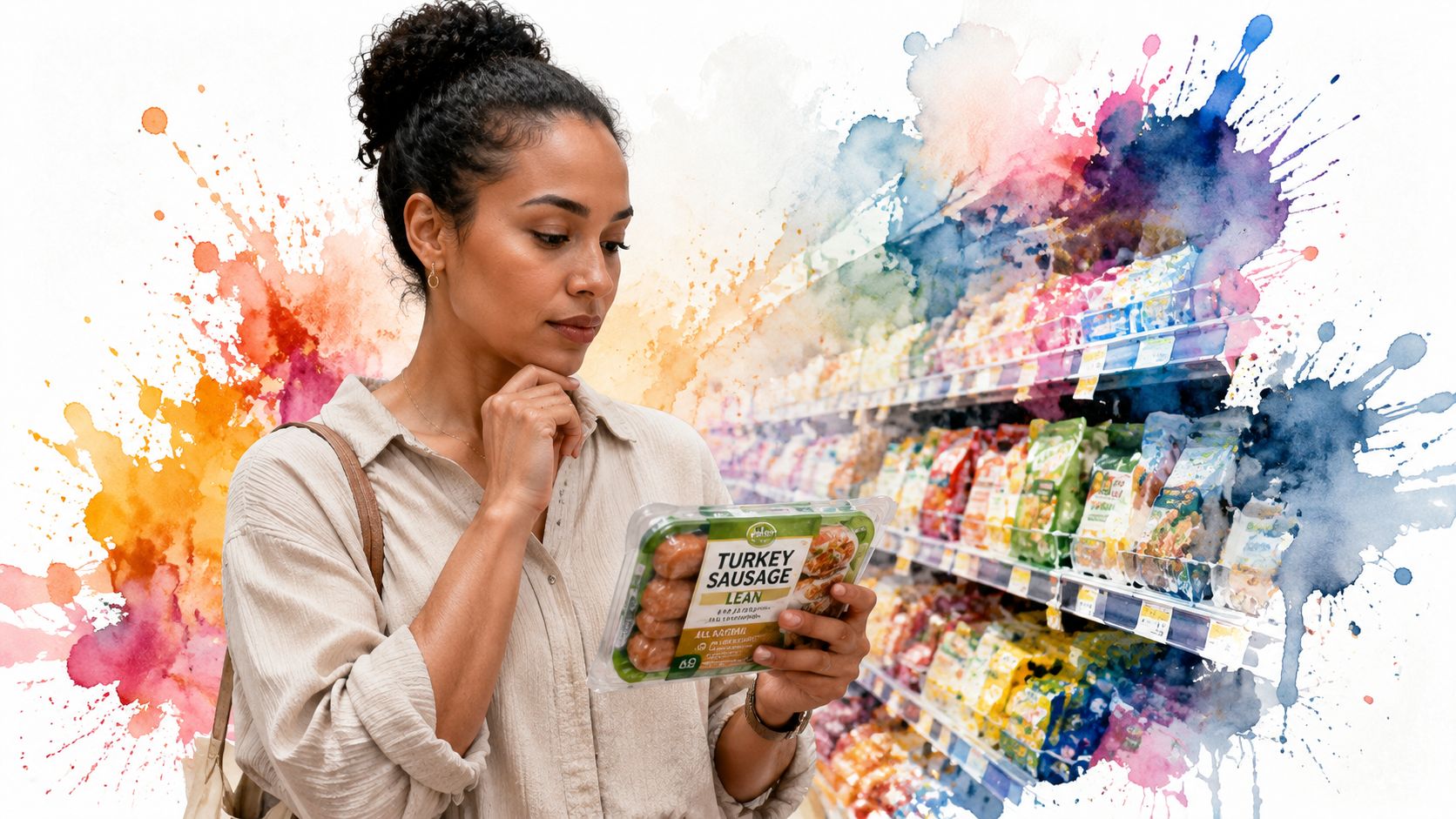
Turkey sausage often earns its healthy reputation because it's usually leaner than pork. But that doesn't mean every package deserves a health halo. A commonly cited turkey sausage serving can reach about 620 mg sodium, or roughly 26% of the 2,300 mg daily limit, according to the American Heart Association's guidance on turkey and sodium.
Why people get confused
Most shoppers are scanning for one thing at a time. They might look for lower calories, or more protein, or less fat. Food companies know that. So the front of the package says “turkey,” “lean,” or “protein,” and your brain fills in the rest.
The main question isn't “Is this food perfect?” It's “Compared with what, and for how often?”
Practical rule: A food can be a better option without being an ideal everyday option.
That mindset matters because healthy eating works better when you build flexible judgment instead of rigid food labels. If you're trying to improve one shopping choice at a time, the same kind of thinking used in behavior change psychology and habit formation applies here too. Look for repeatable decisions, not purity.
The real trade-off
Turkey sausage can be a good enough swap when you want the flavor and convenience of sausage with less fat than pork. It's less impressive when you're treating it like a whole-food protein.
That's the key tension for the rest of this article. Turkey sausage can help, especially when it replaces a fattier processed meat. But if you don't read the label, you may trade one issue for another.
The Nutritional Upside Lean Protein and Key Nutrients
Turkey sausage has a real nutritional upside, and it helps to separate the meat itself from the product built around it.
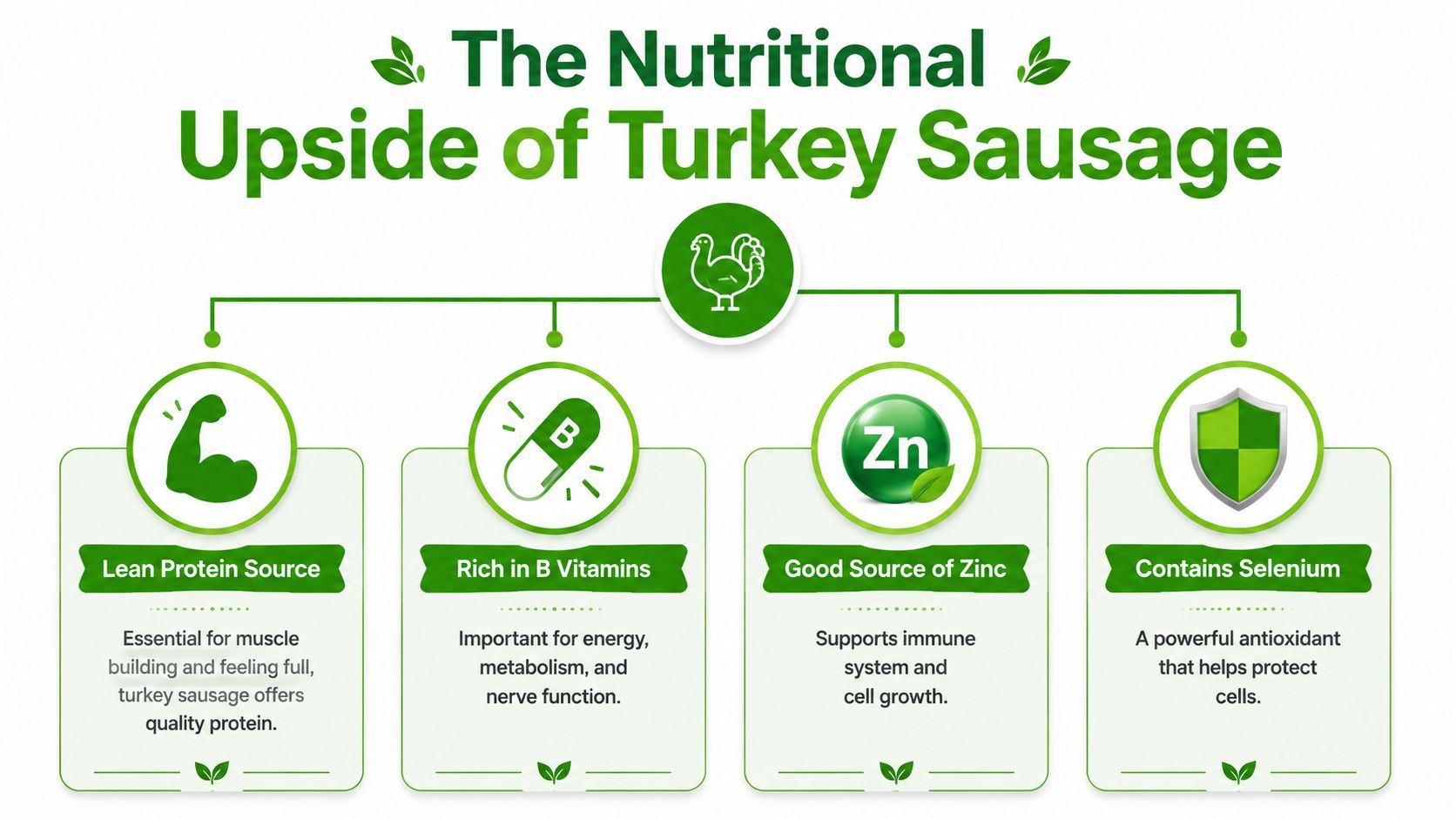
Start with the core benefit. Turkey is a protein-rich food, so turkey sausage often gives you a decent amount of protein in a small portion. That matters because protein helps meals feel more complete. A breakfast with enough protein tends to keep you full longer than one built mostly from toast, juice, or sugary cereal.
Protein also supports muscle repair and daily maintenance in the body. If you exercise, are trying to stay satisfied between meals, or want breakfast to hold you until lunch, that protein can make the swap useful. In a habit system, that counts. A food does not need to be perfect to help you build a better routine.
That is why turkey sausage can be a good enough choice on busy mornings. It works a bit like a middle step between highly processed, heavier breakfast meats and a more whole-food option like eggs, plain Greek yogurt, or leftover roasted turkey. For someone trying to improve one repeat meal at a time, that middle step can be practical and sustainable.
Turkey also brings more than protein. According to the USDA's overview of ground turkey nutrition, turkey provides nutrients such as B vitamins, selenium, zinc, and phosphorus. Those names can blur together on a label, so here is the plain-English version:
- B vitamins help your body turn food into usable energy.
- Selenium supports thyroid function and helps protect cells from damage.
- Zinc helps with immune function and healing.
- Phosphorus supports bones and energy production.
A helpful way to read this is: turkey sausage may carry some of the benefits of turkey, but it is still a sausage product, not a plain turkey cutlet.
That distinction matters. If your goal is “better than my old breakfast drive-thru sandwich,” turkey sausage may fit well. If your goal is “choose the least processed protein I can most days,” a whole-food protein will usually do more for you.
So yes, turkey sausage can offer a meaningful nutritional upside. The smart habit-building question is not whether it earns a health halo. It is whether it is the right level of improvement for this meal, on this day, in the bigger pattern of how you eat.
The Hidden Downsides Sodium and Processing Concerns
A carton can say “turkey,” look lighter than pork, and still be a food you need to read carefully.
The catch is that turkey sausage often gets judged by the first improvement people notice, usually lower fat. But nutrition labels work more like a budget than a single score. A food can be better in one column and weaker in another. With turkey sausage, the trade-offs usually show up in sodium and processing.
Sodium changes the conversation
Sodium is one of the fastest ways a “better choice” can drift away from a healthy routine. Turkey sausage can pack a lot of salt into a small portion, which matters because breakfast rarely exists by itself. Add toast, cheese, a condiment, or a store-bought wrap, and the total climbs quickly.
As noted earlier, the American Heart Association advises limiting sodium and paying attention to processed poultry products because they can still be high in salt. That matters most for people with high blood pressure, fluid retention, kidney concerns, or a pattern of eating many packaged foods throughout the day.
This is why label reading matters. Two turkey sausage products can look almost identical from the front of the package but create very different totals by the end of the day.
Processed still means processed
Turkey sausage is still a sausage product. That usually means the turkey has been mixed with salt, flavorings, and other ingredients that make it taste consistent, last longer, or cook with that familiar sausage texture.
Some brands keep the ingredient list fairly simple. Others add preservatives or curing agents, including nitrates or nitrites. That does not mean you need to fear every package. It means “made with turkey” is not the same as “close to whole turkey.”
A useful habit-system question is: what job is this food doing for me?
- Convenience protein for a busy morning: Often a reasonable compromise.
- Everyday default protein: Worth questioning if sodium is high and the ingredient list is long.
- Flavor boost in a larger meal: Often a smarter role than making it the entire protein base.
That framing helps because healthy eating is rarely about finding a perfect food. It is about choosing the right level of compromise for the situation.
Where the health halo breaks down
The trouble starts when turkey sausage gets treated like a free pass. A person may switch from pork sausage, feel they made the healthy choice, then stop checking portions, sodium, or what else is in the meal.
A simple example helps. If turkey sausage helps you replace a greasy fast-food breakfast sandwich a few times a week, that may be a solid step forward. If it becomes the automatic protein at breakfast every day, even when eggs, yogurt, beans, or leftover turkey are easy options, it may be less helpful than it first appears.
So is turkey sausage good for you? Sometimes, yes. As a habit-building choice, it works best as a “good enough” swap when it helps you improve a meal you already eat. When you have the time and access to choose a less processed whole-food protein, that option usually gives you more nutritional value with fewer trade-offs.
Turkey Sausage vs The Alternatives A Nutritional Showdown
You are in the grocery store deciding between three fast breakfast options. Pork sausage feels familiar. Turkey sausage looks healthier. Plain chicken breast sounds less exciting, but simpler. That small choice is really a skill test. Are you trying to improve a meal you already eat, or build a stronger everyday default?
Turkey sausage often sits in the middle. It can be a better swap than pork sausage without being the same as a whole-food protein. That middle ground matters, because healthy habits usually work better when you know which compromises are good enough for real life.
What changes when you swap from pork sausage
The clearest win is usually lower calories and less fat than traditional pork sausage. In plain terms, turkey sausage often gives you the sausage experience with a lighter nutritional cost.
That can be useful if sausage is the food you are realistically going to eat.
If a turkey sausage helps you move from a heavier, greasier breakfast toward something more balanced, that is progress. It works a bit like switching from a heavy winter coat to a lighter jacket. You still get coverage, but with less extra weight.
You already know you can change.
You just need to take the first step. Habit Huddle helps you build habits around your goals, alongside friends who keep you accountable.
What does not change as much as people expect
Turkey sausage is still a processed meat product. Seasoning, sodium, preservatives, and added ingredients are often part of the package. A plain chicken breast or turkey cutlet is much simpler nutritionally, even if it takes a little more prep.
So the better question is not “Which one is healthy?” It is “Which one fits the job today?”
If the job is convenience with familiar flavor, turkey sausage may be a reasonable choice. If the job is building an everyday protein base with fewer trade-offs, whole poultry usually wins.
Nutritional comparison per 100g serving
| Nutrient | Pork Sausage (Typical) | Turkey Sausage (Typical) | Chicken Breast (Unprocessed) |
|---|---|---|---|
| Calories | 300 to 340 kcal | 180 to 220 kcal | 160 to 170 kcal |
| Total fat | 25 to 30g | 10 to 16g | 3 to 4g |
| Sodium | 700 to 1,000mg | 600 to 900mg | 60 to 90mg |
| Processing level | Processed meat | Processed meat | Unprocessed whole protein |
| Best use case | Occasional comfort-food choice | Good-enough swap when you want sausage with fewer calories and less fat | Better everyday default for a simple protein base |
Those numbers tell a practical story. Turkey sausage often improves on pork sausage, especially for calories and fat. It does not usually beat plain chicken breast for simplicity, sodium, or overall “less processed” quality.
That is why the smartest comparison is not just nutrient versus nutrient. It is role versus role. Sausage is a convenience-flavor food. Chicken breast is a foundation protein. They solve different problems.
For example, a turkey sausage patty next to fruit and eggs can be a reasonable upgraded breakfast. But if you are meal prepping lunches or building a regular high-protein dinner, plain poultry cooked with simple seasonings or olive oil for cooking chicken usually gives you more control.
A practical framework for the choice
Use this filter:
- Choose turkey sausage when it helps you make a realistic improvement over pork sausage or a fast-food breakfast.
- Choose whole-food poultry when you want a regular protein staple with less sodium and less processing.
- Choose based on the full meal if the plate already includes salty foods like cheese, toast toppings, or packaged sauces.
A good habit is not “always pick turkey sausage.” A good habit is knowing when turkey sausage is a smart upgrade and when a simpler protein is the better base.
That is the showdown. Turkey sausage is not the winner in every category. It is the useful middle option when convenience matters and “better” is enough.
How to Choose a Healthier Turkey Sausage
Shopping for turkey sausage gets easier when you stop trusting the front of the package. The front is marketing. The back is where the true answer lives.
Start with the nutrition facts panel
Read the serving size first. Then scan sodium before you get excited about protein.
If one product looks lean but the sodium is high, that's not necessarily a dealbreaker. It just means you need to decide whether this is an occasional convenience food or a frequent staple.
Then read the ingredient list like a filter
You don't need to memorize every additive. Just look for a short list, recognizable ingredients, and turkey listed prominently.
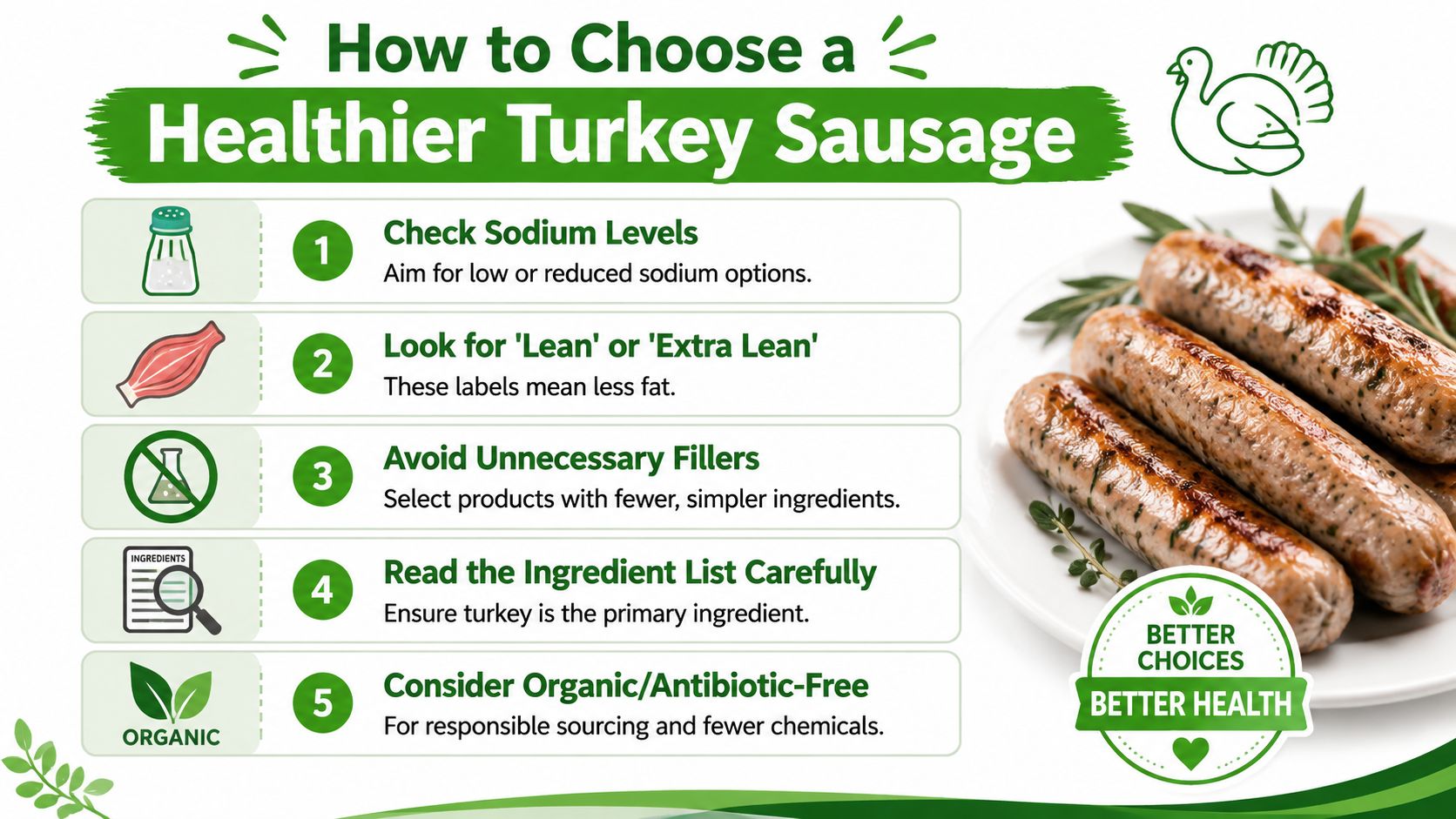
A good shopping checklist:
- Check sodium early. If sodium looks high for the serving, treat the product more like an occasional food.
- Look at fat in context. Lower fat than pork sausage is helpful, but it isn't the whole story.
- Scan for simpler ingredients. Fewer extras usually makes the product easier to understand.
- Watch the wording. Terms like “lean” can be useful, but they don't cancel out heavy processing.
- Match the product to the meal. A turkey sausage used in a vegetable scramble is different from several links beside salty toast and cheese.
Don't let “healthy” language make the decision for you
Labels often use words that sound reassuring. Natural. Lean. Protein-packed. These can point you in a direction, but they can't replace reading the panel.
A good food choice is often about the full meal pattern, not one product in isolation. If you're already cooking poultry at home, learning a few better prep habits can help more than endlessly hunting for the perfect sausage. For simple ideas, see this guide on using olive oil for cooking chicken in a balanced way.
Shopping shortcut: If two turkey sausages seem similar, choose the one with the simpler ingredient list and the more reasonable sodium profile.
Think in tiers, not labels
This habit-based approach helps:
-
Best everyday option
A minimally processed whole protein. -
Good enough option
A turkey sausage with a reasonable label that helps you stay consistent. -
Less useful option
A turkey sausage that looks healthy on the front but is loaded with sodium and extra ingredients.
That way, you don't need a perfect product. You just need to know what tier you're buying.
Making It Part of a Healthy Habit Portions and Recipes
Turkey sausage works best when you stop treating it like the star of the plate. Use it as a supporting ingredient, and it becomes much easier to fit into a balanced routine.
That means pairing it with foods that add volume, fiber, and color. Think vegetables, beans, whole grains, or eggs. This shifts the meal from “processed meat plus sides” to “mostly whole foods with some sausage for flavor.”
Better ways to use it
These patterns work well for many people:
- Breakfast scramble: Crumble a small amount into eggs with spinach, onions, and peppers.
- Soup booster: Add sliced turkey sausage to a lentil or vegetable soup for extra flavor.
- Pasta helper: Use a modest amount in a whole-wheat pasta sauce with tomatoes and greens.
- Sheet pan meal: Pair it with roasted vegetables instead of stacking it next to other salty breakfast foods.
Portion thinking beats food labeling
When people ask if Turkey sausage is good for you, they're often asking the wrong level of question. A more useful question is, “How do I use this food without letting it dominate my diet?”
That shift matters. You don't need to ban every processed food to eat well. You do need a system for deciding how often it belongs on your plate.
Use turkey sausage like a seasoning protein, not an automatic main character.
A habit mindset that actually lasts
Healthy eating usually sticks when the plan is realistic. If turkey sausage helps you cook breakfast at home instead of grabbing a less balanced fast-food meal, that can be a solid trade. If it becomes the default protein at every breakfast, lunch, and dinner, it's probably time to rebalance.
For many people, success comes from repeatable routines, not perfect meals. Build a few “good enough” options, keep whole-food proteins in regular rotation, and make your choices easier to repeat. If you want a simple framework for building routines that last, this guide on how to start a habit that stays doable is a useful next step.
The bottom line is simple. Turkey sausage can be a smart swap. It isn't a free pass. Read the label, watch the role it plays in your meals, and use it where it helps rather than where it takes over.
If you want help turning choices like this into daily consistency, Habit Huddle gives you a simple way to build habits with accountability. You can track one habit at a time with friends, keep streaks alive with flexible check-ins, and make steady progress without overcomplicating the process.
Ready to Build Habits With Friends?
Stop failing alone. Join thousands using the #1 habit tracker with friends for real accountability and lasting results.
Prefer mobile? App Store · Google Play
Related Guides
More Habit Huddle articles on building habits with accountability.

Running Accountability App: 8 Picks Compared (Stakes, Streaks, and Friends)
Eight running accountability apps compared: Strava, Nike Run Club, Runkeeper, Oath, RunMatch, RunHawk, StickK, and Habit Huddle, with prices, how runs are ve...

How to Restart a Habit After Falling Off (Without Starting Over)
How to restart a habit after falling off: do the Floor version today instead of Monday, hold it for seven days, write one if-then for what knocked you off, a...

Body Doubling App: 7 Options Compared, from Live Video to Daily Checkins (2026)
Seven body doubling apps compared: Focusmate, Flow Club, Focus101, Dubbii, Caveday, Flown and Habit Huddle, with free tiers, prices, and which format fits ta...