
Alcohol Withdrawal Headache: How Long It Lasts, What Helps
Headaches after you stop drinking are a normal withdrawal symptom. The typical timeline, what actually brings relief, and when to see a doctor.
Headaches after stopping alcohol usually start within 6 to 24 hours after your last drink, tend to peak within 24 to 72 hours, and generally improve within about 4 to 7 days. But recovery doesn't always move in a straight line, and some people get headache flare-ups that return in cycles for months as part of the healing process.
If you're reading this with a pounding head, a dry mouth, and a worried feeling that something is wrong, you're not overreacting. A lot of people expect to feel better as soon as they stop drinking, so it's unsettling when the opposite happens first. That doesn't mean you've failed. It often means your brain and body are adjusting to alcohol no longer being there.
These headaches can feel different from a normal hangover. They may show up alongside anxiety, nausea, poor sleep, shakiness, or a sense that your whole system is on edge. The hard part is that no one tells you clearly what's typical, what's manageable at home, and what signs mean you need medical help right away.
Table of Contents
- Understanding Headaches After You Quit Drinking
- Why Stopping Alcohol Causes Headaches
- The Complete Headache Withdrawal Timeline
- Actionable Steps for Symptom Relief At Home
- Red Flags When to Seek Immediate Medical Help
- Building Habits to Prevent Relapse and Future Headaches
- Frequently Asked Questions About Post-Alcohol Headaches
- Your Path Forward Through Recovery
Understanding Headaches After You Quit Drinking
You quit drinking because you want to feel better, then a few hours later your head starts throbbing and your body feels keyed up. That reaction can feel discouraging and confusing. It can also be a familiar part of alcohol withdrawal.
Headaches after quitting alcohol often show up early, alongside symptoms like shakiness, nausea, sweating, anxiety, and poor sleep. The National Institute on Alcohol Abuse and Alcoholism notes that withdrawal can happen when a person who has been drinking heavily for a long time suddenly cuts back or stops. In other words, a headache in this moment is not a sign that you failed. It is a sign that your body has noticed a sudden change.
A hangover and a withdrawal headache can overlap, but they are not always the same experience. Withdrawal headaches tend to come with a wider sense of nervous system strain. People often describe feeling tense, restless, or unusually alert while also exhausted.
One practical clue helps. If the headache starts after stopping alcohol and arrives with symptoms such as trembling, insomnia, nausea, or rising anxiety, withdrawal deserves serious consideration.
The timeline can also throw people off. Many people expect symptoms to peak, fade, and stay gone. Recovery often behaves less like a straight line and more like a healing process with flare-ups. You may have a few better days, then wake up with another wave of headache or pressure.
That pattern matters because alcohol recovery does not always end after the first 72 hours. Some people go through Post-Acute Withdrawal Syndrome, often called PAWS, where symptoms such as headache, sleep disruption, irritability, and brain fog can return in cycles for weeks or months. The episodes are usually less dramatic than acute withdrawal, but they can still be upsetting if you were expecting steady progress.
A helpful way to understand this is to picture your nervous system like a home thermostat that has been forced to run on unusual settings for a long time. Once alcohol is removed, the system does not settle at the correct temperature all at once. It overshoots, corrects, and gradually steadies. That is one reason symptoms can feel inconsistent even when recovery is real.
So if your headache pattern seems messy, you are not imagining it, and you are not doing recovery wrong. Your body may still be adjusting, sometimes in short intense waves, and sometimes in quieter cycles that show up later than expected.
Why Stopping Alcohol Causes Headaches
A lot of people assume the answer is simple dehydration. Dehydration can absolutely make a headache worse, but it's not the full story. Withdrawal headaches are tied to what happens when alcohol suddenly stops pressing the brake pedal on your nervous system.
Your brain is recalibrating
Alcohol acts as a central nervous system depressant. Over time, your brain adapts to its presence. A useful way to picture it is a seesaw.
Alcohol pushes one side of the seesaw down by enhancing calming signals and suppressing excitation. Your brain tries to compensate so you can still function. When alcohol disappears, the seesaw swings hard in the opposite direction. Now the system is overactive, and that can produce headache, restlessness, poor sleep, tremor, and autonomic symptoms.
Clinical descriptions of early withdrawal note that headache often appears alongside other early symptoms as the nervous system becomes hyperactive, and headaches after stopping alcohol commonly begin within the first day and peak in the next few days, as described by CT Addiction Medicine's overview of early recovery headaches.
This is why the pain can feel sharper and stranger than a typical next-day hangover. Your brain isn't just recovering from one night of drinking. It may be reacting to the sudden absence of something it had adapted to.
The newly identified pain pathway
There's also a more specific biological explanation. Researchers identified a peripheral pathway that helps explain alcohol withdrawal headaches. After alcohol cessation, the stress hormone CRF travels to the dura mater, binds to the receptor MrgprB2 on mast cells, and triggers the release of chemicals that dilate blood vessels and sensitize trigeminal sensory neurons, directly causing pain, according to the School of Dentistry team's report on alcohol withdrawal headache mechanisms.
In plain language, your body's stress signaling can set off a chain reaction around the coverings of the brain and the nerves that carry head pain. That matters because it shows these headaches are not “all in your head” in the dismissive sense. They are real, biological, and tied to a defined pain pathway.
These headaches aren't just a willpower problem. They reflect a stressed nervous system and a real pain signal.
Withdrawal headache vs hangover headache
Here's a simple way to separate the two.
| Symptom | Withdrawal Headache | Hangover Headache |
|---|---|---|
| When it starts | Usually begins after you stop or sharply reduce alcohol, often alongside early withdrawal symptoms | Usually follows a recent episode of drinking |
| What it feels like | Can come with a wired, agitated, shaky, or anxious feeling | Often feels more like general dehydration, fatigue, and next-day misery |
| What else shows up | Anxiety, nausea, tremor, insomnia, sweating, restlessness may appear with it | Thirst, fatigue, stomach upset, and sensitivity are common |
| Why it happens | Nervous system rebound and stress-related pain signaling after alcohol is removed | Short-term effects of alcohol, including dehydration and sleep disruption |
| How long it may last | Can continue through early withdrawal and sometimes return in waves later | Usually improves as the hangover passes |
If you feel both exhausted and overstimulated at the same time, that pattern often points people toward withdrawal rather than a routine hangover.
The Complete Headache Withdrawal Timeline
You stop drinking, make it through a rough first day, and expect the headache to fade on a straight line. Then it eases, comes back, softens again, and shows up after a bad night of sleep. That pattern can feel confusing, but it is common in recovery.
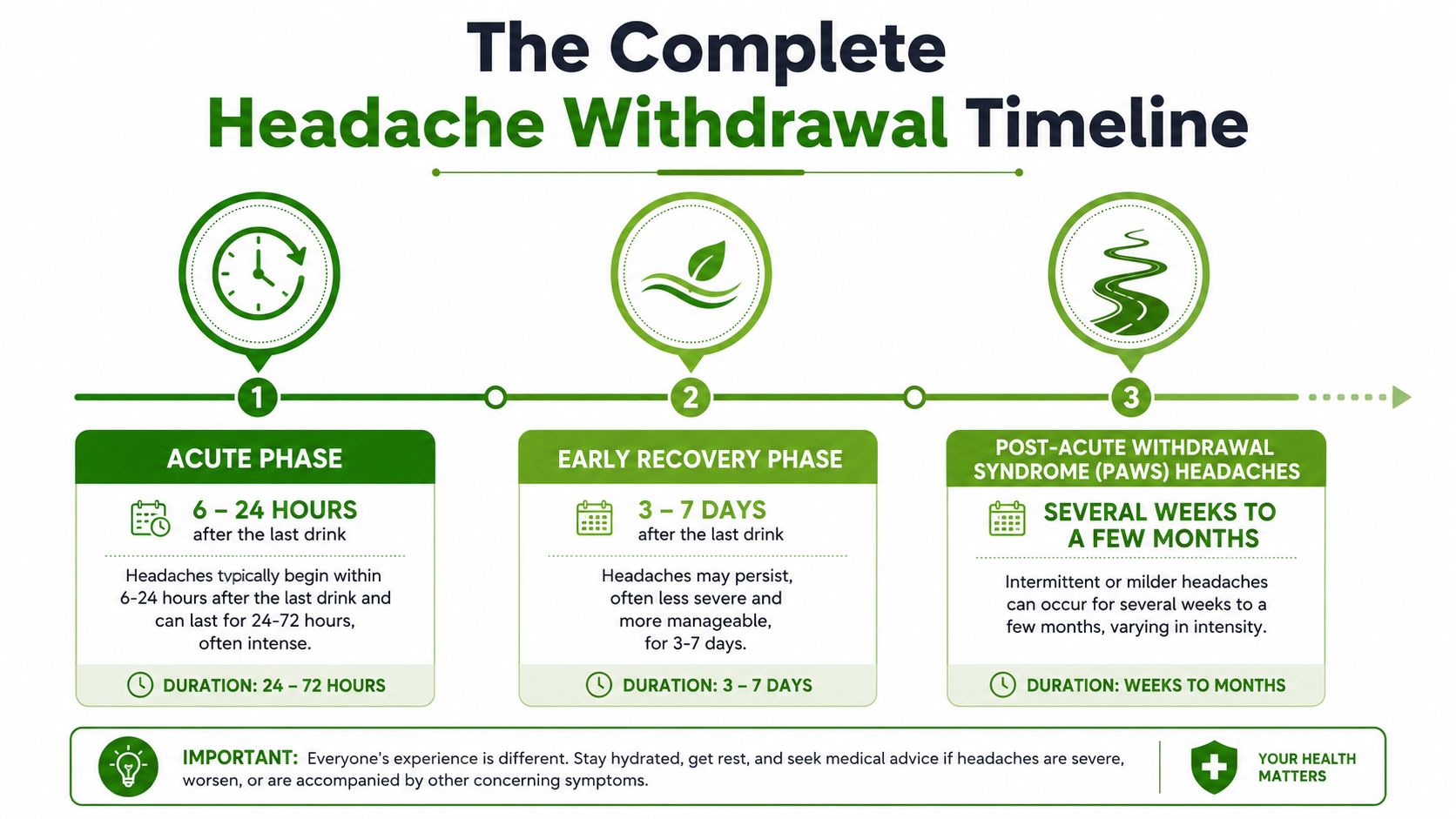
Acute phase
The first stretch is usually the hardest. Headaches often begin during the early withdrawal window, within hours to about a day after the last drink, then intensify over the next couple of days before gradually easing over several days. The exact timing varies from person to person, especially if alcohol use was heavy, frequent, or long-term.
A simple way to understand this phase is to picture a brain recalibrating after relying on alcohol to slow things down. Once alcohol is removed, the nervous system can swing into an overactive state. That can feel like head pressure, pounding, throbbing, light sensitivity, nausea, shakiness, sweating, or a wired-but-exhausted feeling.
Symptoms can rise and fall within the same day.
A worse evening does not always mean the process is getting more dangerous. Early withdrawal often comes in surges, and headaches can flare when sleep is poor, meals are missed, or anxiety is high.
Early recovery phase
After the acute window, the pain often changes character rather than disappearing all at once. For many people, severe pounding gives way to a duller pressure, scalp tension, or an on-and-off ache that is easier to function with but still draining.
This stage frustrates a lot of people because the crisis seems over, yet the body does not feel settled. Recovery works more like a home thermostat after a power outage. The system is back on, but it still needs time to stabilize and hold a steady setting.
Daily habits matter more here than people expect. Sleep, hydration, regular meals, and stress load can all influence whether a headache stays in the background or pushes back to the front. Building a few mental health habits that support nervous system recovery can make this stretch feel more manageable.
PAWS and the return of symptoms
This is the part many short guides leave out. Some people move beyond the first few days and still get headaches in waves during Post-Acute Withdrawal Syndrome, or PAWS. Instead of a steady fade, symptoms can cycle. You may have a better week, then a setback that seems to come out of nowhere.
Clinical descriptions of PAWS note that symptoms can come and go for weeks or months after acute withdrawal, especially when sleep is disrupted or stress is high, as described by the Cleveland Clinic in its overview of post-acute withdrawal syndrome. That does not make the pain “minor.” It means the brain and body are still adjusting after a long period of adaptation to alcohol.
This non-linear pattern matters. A returning headache does not automatically mean you are back at the beginning. It may reflect a nervous system that is still sensitive, not one that has stopped healing.
Gentle support still counts during this phase. Some people use quiet routines, rest, and warm drinks for soothing withdrawal discomfort, especially when a flare-up feels discouraging.
If headaches return after initial improvement, track when they happen, how long they last, what your sleep has been like, and whether stress, dehydration, or missed meals showed up first. Patterns can tell you a lot.
Actionable Steps for Symptom Relief At Home
You can't force your nervous system to settle instantly, but you can make the environment around it easier to heal in. Think support, not perfection.
Start with the basics your body needs
- Hydrate steadily: Sip water through the day instead of chugging all at once. Electrolyte drinks can also help if you've been sweating, not eating well, or feeling depleted.
- Eat simple meals: Go for easy foods you can tolerate. Toast, soup, fruit, oatmeal, eggs, rice, yogurt, or a sandwich are often easier than greasy or very sugary foods.
- Keep blood sugar stable: Long gaps without food can make a headache feel louder. Even a small snack can help if nausea is making full meals hard.
- Prioritize sleep over productivity: A dark room, reduced screen brightness, and a quiet space matter more right now than “powering through.”
If warm drinks feel soothing, some people also find gentle routines like tea, rest, and a calm environment helpful for soothing withdrawal discomfort.
You already know you can change.
You just need to take the first step. Habit Huddle helps you build habits around your goals, alongside friends who keep you accountable.
Use simple comfort tools
A few low-tech tools can make a real difference.
- Cold compress on the forehead: Useful when the pain feels hot, pounding, or vascular.
- Warm compress on the neck: Better if the headache comes with tight shoulders or clenched neck muscles.
- Gentle stretching or a short walk: This can reduce tension without overloading your system.
- Slow breathing: A longer exhale can help your body shift out of that “everything is turned up too high” feeling.
Here's a short guided resource many people use when they need a calmer rhythm during withdrawal discomfort:
Protect your recovery environment
Don't underestimate how much stimulation can amplify pain.
- Lower sensory load: Dim lights. Turn down volume. Reduce notifications.
- Pause unnecessary decisions: If possible, postpone draining tasks and difficult conversations.
- Watch your self-talk: “Why am I still like this?” usually adds stress. “My body is healing, and I need support today” tends to calm things down.
If emotional strain is making symptoms harder to manage, building a few supportive routines around sleep, stress, and daily structure can help. Habit-based mental wellness practices like the ones in this guide to mental health habits can give your days more stability while your body settles.
Try this today: Water nearby, lights lower, one simple meal, one period of real rest, and one gentle calming practice. Small inputs count.
Use over-the-counter pain relief carefully and only as directed. If you have liver concerns, stomach issues, ulcers, are vomiting, or have other medical conditions, it's smarter to check with a clinician before taking anything.
Red Flags When to Seek Immediate Medical Help
Most withdrawal headaches are miserable but temporary. Some symptoms are not routine discomfort. They are warning signs.
Symptoms that go beyond expected discomfort
Get urgent medical help right away if you have any of the following:
- Seizures: This is an emergency.
- Severe confusion or disorientation: If you can't think clearly, don't know where you are, or someone notices a major change in your awareness, get help.
- Hallucinations: Seeing, hearing, or feeling things that aren't there needs immediate attention.
- High fever: A fever during withdrawal shouldn't be brushed off.
- A severe headache that keeps escalating or won't respond to basic care: Especially if it feels different from what you expected or comes with neurological symptoms.
- You can't keep fluids down or stay hydrated: That can quickly make everything worse.
Don't try to tough this out alone if symptoms cross that line. Severe alcohol withdrawal can become dangerous quickly, and headaches may be just one part of a bigger medical problem.
A good safety question is this: are you uncomfortable, or are you becoming impaired, confused, unstable, or unable to care for yourself? If it's the second one, seek medical care now.
Building Habits to Prevent Relapse and Future Headaches
The hardest part for many people isn't just surviving the first headache. It's staying steady after the crisis has passed. That matters because about 50% of people with alcohol use disorder experience withdrawal symptoms when they cut down or stop drinking, including headaches, which is one reason relapse prevention matters so much in recovery.
Small routines lower risk
When people feel better, they often stop doing the basics that helped them recover. Sleep slips. Meals get skipped. Stress builds subtly. Then the body feels rough again, and alcohol can start to look like an easy shortcut.
A better approach is to keep a few foundational habits visible:
- Hydration: Not perfect. Just consistent.
- Regular meals: Especially on stressful days.
- Sleep protection: A wind-down routine, lower evening stimulation, and a set bedtime when possible.
- Support contact: A friend, counselor, sponsor, or group check-in.
- Trigger awareness: Boredom, conflict, isolation, and certain social settings can all raise risk.
For people working on long-term sobriety, practical strategies for effective trigger management can help you spot relapse patterns before they turn into action.
Make your recovery visible
Many people do better when they track what protects their recovery, not just whether they drank. You might log hydration, sleep, meals, mood, stress, headache intensity, support attendance, or sober days.
That kind of pattern tracking is useful because PAWS symptoms can be cyclical. If a headache returns, you can look at the bigger picture instead of panicking. Maybe stress spiked. Maybe sleep collapsed for three nights. Maybe you isolated.
If you want to understand why routines work better than motivation alone, this breakdown of behavior change psychology is a helpful place to start.
A stable recovery often looks ordinary from the outside. Water. Food. Sleep. Support. Repetition. Those plain habits do a lot of heavy lifting.
Frequently Asked Questions About Post-Alcohol Headaches
Can I take ibuprofen or acetaminophen
Sometimes, but don't treat that as automatic. Over-the-counter pain relievers can help some people, but they aren't risk-free. Acetaminophen may not be ideal if you have liver concerns. Ibuprofen and similar medicines may irritate the stomach and can be a poor fit if you're vomiting, dehydrated, or prone to ulcers.
If you have any medical condition, take other medications, or aren't sure what's safe for you, ask a doctor or pharmacist instead of guessing.
Is this a withdrawal headache or a migraine
It can be either, and sometimes alcohol withdrawal can trigger migraine-like pain. What often points people toward withdrawal is the context and the cluster of symptoms around it. If the headache appears after stopping alcohol and comes with shakiness, anxiety, sweating, poor sleep, or nausea, withdrawal becomes more likely.
If you have a history of migraines, the change in sleep, stress, and body chemistry may also provoke one. What matters most is the pattern, severity, and whether anything feels unusual for you.
What should I tell my doctor
Be direct and specific. Tell them when your last drink was, when the headache started, what the pain feels like, what other symptoms you have, and whether symptoms improved and then returned.
PAWS headaches can worsen in cycles, and a returning headache after initial improvement may still fit a recovery pattern rather than meaning something has gone wrong. At the same time, a clinician can help rule out other causes and decide whether you need monitored withdrawal care.
A simple script works well: “I stopped drinking, my headache began after that, and I'm also having these other symptoms.” Clear timelines help doctors make safer decisions.
Your Path Forward Through Recovery
Headaches after stopping alcohol can feel scary, but they often make more sense once you see the full picture. Your brain and body are recalibrating. The pain is real, the timeline may be uneven, and a setback doesn't automatically mean failure.
If your headaches fade, that's encouraging. If they come back in waves, that may still be part of healing. What matters is staying safe, caring for your body, and getting help when symptoms move beyond normal withdrawal. If deeper stress or past experiences are making recovery harder, support like trauma counselling in Penticton may be worth exploring alongside sobriety work. You may also find encouragement in personal recovery stories and milestones like this look at 60 days no alcohol.
If you're rebuilding your routine one day at a time, Habit Huddle can help you stay consistent with the basics that support recovery, like hydration, sleep, daily check-ins, and sober-day tracking. It's a simple way to make progress visible and keep accountability close when motivation dips.
Ready to Build Habits With Friends?
Stop failing alone. Join thousands using the #1 habit tracker with friends for real accountability and lasting results.
Prefer mobile? App Store · Google Play
Related Guides
More Habit Huddle articles on building habits with accountability.

HabitShare Alternatives: 6 Apps for Tracking Habits With Friends (2026)
Looking for a HabitShare alternative? Six social habit trackers compared by model, price, platforms, and what happens on a missed day, plus how to switch wit...
What to Do When You Miss a Workout Day: The 5-Step Comeback Plan
Missed a workout day? What one miss does to your body and habit, according to research, plus a five-step plan for the next 24 hours, when to make it up, and...
Habit Streak App With Friends: 7 Apps Compared (2026)
Seven habit streak apps with friends compared: Habit Huddle, HabitShare, Daily Pact, Habitica, Streaks, Habit Streak duels, HabitStreak.io. What friends see,...