
60 Days No Alcohol: Benefits, Timeline, and How to Actually Finish
What 60 days no alcohol really does: the week-by-week timeline, verified research on the benefits, the day 45 slump, and a plan to finish the full two months.

📺 Related Video: What Happens When You Quit Drinking Alcohol
Video by: Institute of Human Anatomy · Watch on YouTube
Sixty days without alcohol is long enough for your body to hand you real evidence. In studies of people who took even a one month break, insulin resistance dropped by roughly a quarter, blood pressure fell, weight came down, and sleep and energy improved.
The second month is where the deeper change happens. The physical discomfort is gone, the novelty is gone, and what remains is the actual work: rebuilding evenings, weekends, and stress relief so they no longer run through a glass.
Most guides cover week one and stop. This one covers the whole arc, including the day 45 slump that quietly ends more 60-day attempts than any party or bad day does.
Why a 60-Day Alcohol-Free Challenge Is Worth It
A 60-day break works because it is an assessment period, not a punishment. You are gathering data on your sleep, mood, focus, skin, spending, and social life, and testing what role alcohol actually plays in each.
Most people do not start this after hitting a dramatic bottom. They start after one too many ordinary Tuesday mornings of feeling foggy, flat, and vaguely annoyed that the evening drink decided itself again.
Sixty days beats a shorter break for one simple reason. A weekend off proves nothing, and even 30 days can end while your evenings still feel like resisting. Two full months gets you past resisting and into replacing, which is the part that lasts.
The research backs the longer frame. A University of Sussex study of 857 Dry January participants found that people who took a planned break were drinking less six months later and felt more able to turn down a drink, with no rebound effect. Those gains showed up even in people who slipped partway through.
Your Body and Mind: The 60-Day Timeline
Progress across 60 days is real but not linear. It arrives in phases, and knowing the phases keeps a normal dip from reading as failure.

Weeks 1 and 2: stabilization
The first two weeks are about your nervous system relearning how to settle without alcohol. That can feel flat, tense, or restless before it feels better, especially at night.
Common early signs of progress: mornings feel cleaner, background anxiety softens a little, falling asleep gets easier before sleep quality fully catches up, and cravings start showing a pattern. Same hour, same room, same emotion.
If your body is used to daily or heavy drinking, this phase is a medical matter, not a willpower matter. More on that below.
Weeks 3 and 4: the first real payoff
By the end of month one, measurable things move. In a BMJ Open study that followed 94 moderate to heavy drinkers through one month of abstinence, insulin resistance fell 25.9 percent, systolic blood pressure fell 6.6 percent, and weight dropped 1.5 percent, none of it explained by changes in diet or exercise. The comparison group who kept drinking showed no change.
In daily life that tends to look like:
| Area | What people often notice |
|---|---|
| Sleep | Fewer 3 a.m. wakeups, more consistent nights |
| Energy | Less afternoon drag, better follow-through |
| Food | Fewer late-night snacks and impulse orders |
| Self-trust | Relief from finally keeping a promise to yourself |
One warning: this stage breeds overconfidence. Feeling better is not the same as being done, and week four is exactly when people test themselves in the settings that used to win.
Weeks 5 through 8: the real test
The second month is less about chemistry and more about friction. Friends stop congratulating you, the novelty wears off, and your brain starts pitching the old bargain that one drink would make dinner easier.
This is also when the payoff compounds. Mental clarity stops feeling accidental, moods level out, exercise recovery improves, and the hours alcohol used to fill become visible. That visibility is uncomfortable and useful in equal measure.
By day 60, most people feel more steady than euphoric. Steady is the better outcome. Steady is what lasts.
Prepare for Day One, and Take Withdrawal Seriously
If you have been drinking heavily or daily for a long time, do not stop cold without medical advice. Alcohol is one of the few substances where abrupt withdrawal can be dangerous: seizures, hallucinations, and delirium tremens are medical emergencies. Talk to a doctor first, or find support through SAMHSA's free national helpline. White-knuckling heavy withdrawal is not strength, it is risk.
Mild withdrawal, for lighter drinkers, usually means a rough week: poor sleep, irritability, headaches, restlessness. Uncomfortable, and manageable with preparation.
Set up your environment before cravings arrive:
- Remove alcohol from the house. No "one bottle for guests."
- Stock replacements you actually want. Sparkling water, good tea, alcohol-free beer if that helps rather than teases.
- Plan food, not just drinks. Skipping meals and then fighting an 8 p.m. craving is a bad setup.
- Lower your social load for the first week. You do not need to prove anything at a party on day three.
- Tell one supportive person. Someone who will cheer the plan, not debate it.
The goal of day one is boring: reduce the number of decisions you have to make while your brain still expects the old routine.
You already know you can change.
You just need to take the first step. Habit Huddle helps you build habits around your goals, alongside friends who keep you accountable.
Your 60-Day Weekly Action Plan
Week 1: reduce friction. Keep the goal narrow. Do not drink today. Eat regular meals, protect sleep, cancel anything optional and draining.
Week 2: build anchors. Give the day shape with a few fixed points: a walk after work, tea at a set hour, lights out at a set time. Early progress loves structure. If building tiny routines is new territory, our guide to starting a habit small enough to stick applies directly here.
Week 3: replace the job alcohol did. Alcohol always had a job: ending the workday, softening social nerves, killing boredom, marking celebration. Name the job, then assign a real substitute to it.
Week 4: record the gains. Write down what is better. Sleep, patience, mornings, money. You will not remember any of it during a rough Friday in week seven unless it is written down.
Week 5: fix the danger window. If 6 to 9 p.m. is your hard stretch, script it. Where you will be, what you will eat, what you will drink, what happens after dinner.
Week 6: add one commitment with stakes. A paid class, a Saturday morning run group, a project with a deadline. Something that competes with the old pattern for the same hours.
Week 7: train for real life. Do one social event sober on purpose. Arrive with a plan, order a nonalcoholic drink first, leave while your energy is still good.
Week 8: review what stays. The question is no longer whether you can do 60 days. It is which routines earned a permanent place.
What works better than willpower
| If you rely on this | You will hit this problem | Better approach |
|---|---|---|
| Motivation | It fades in month two | Fixed routines |
| Avoidance only | Life feels empty | Replacement rewards |
| Big promises | One slip feels fatal | Daily resets |
| Winging it socially | Pressure catches you off guard | Short rehearsed scripts |
People who finish 60 days stop treating it as a character test and start treating it as a schedule problem, an environment problem, and a stress-response problem. For why identity catches up slower than behavior, see our breakdown of behavior change psychology.
The Day 45 Slump
Somewhere between day 40 and day 50, many people hit a strange flatness. Nothing is wrong, but nothing feels rewarding either. The early "I am doing something impressive" boost is gone and the replacement life is only half built.
You can watch this happen in real accounts like this r/stopdrinking thread from someone finishing 60 days: the hard part late in the challenge is rarely a dramatic craving, it is the quiet thought that maybe the point is proven and one drink would be fine now.
The slump means you need more structure, not that the challenge stopped working. When the evening urge starts negotiating:
- Delay five minutes. Timer on, cold drink, different room. Urges weaken fast when you stop feeding them attention.
- Name the true need. Stress, boredom, hunger, loneliness, or the wish for a transition ritual. Alcohol was the familiar response, not the need itself.
- Run a fixed evening sequence. Walk, shower, dinner, show, tea, bed. Decision fatigue is the enemy here.
- Break the scene. If your brain expects a drink on the couch at 8 p.m., do not sit in that spot with empty hands.
- Reread your week 4 list. Written proof of what improved beats motivation quotes every time.
Social Life Without Alcohol
Social friction wears people down more than cravings do. Not because every offered drink is tempting, but because explaining yourself for the fortieth time is exhausting.
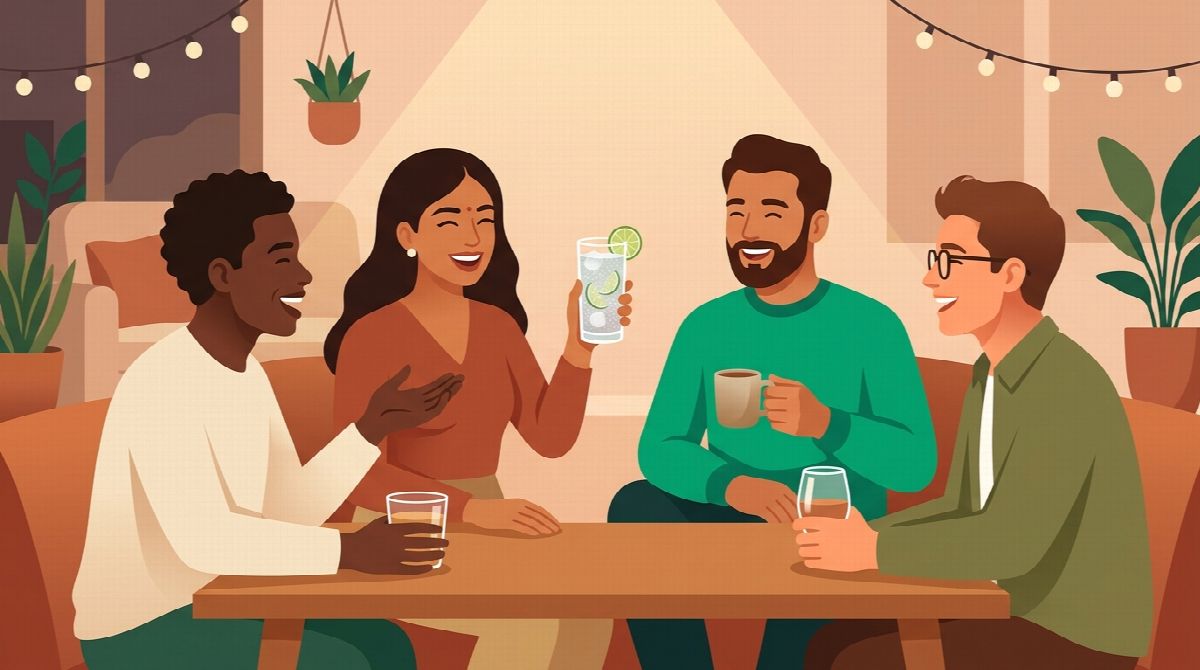
Scripts beat improvising. Pick short lines and stop talking after them: "I'm not drinking tonight." "I'm doing a 60-day break." "I'm sleeping better without it, so I'm sticking with that." And for a pusher: "I'm good, thanks."
Not every event deserves the same strategy:
| Situation | Best move |
|---|---|
| Dinner with close friends | Tell supportive ones beforehand |
| Work event | Arrive with a script and a nonalcoholic order ready |
| Big party | Go late, leave early, drive yourself |
| Heavy-drinking crowd | Skip it if you already know the night's script |
A useful mental shift: stop asking how to make the night feel exactly the same without alcohol. It will not, at first. Ask instead how to leave the event respecting yourself.
Do Not Run the 60 Days Alone
Support is not a soft extra. In a study of 4,232 Dry January participants, well-being and self-efficacy rose across the board, rose most in people who finished, and using the challenge's support tools independently predicted finishing. Structured support changed the completion rate, not just the mood.
The practical version of that finding is simple: put your 60 days somewhere other people can cheer it. A group chat, a challenge buddy, or a shared tracker. How you build that system matters, and our guide to habit accountability walks through the levels, from a friend with a text thread to a full group.
If you want a ready-made version, Habit Huddle lets you set "no alcohol today" as a daily habit, check in each day, and run the 60 days inside a huddle with friends where every checkin adds a link to the group's Checkin Chain. The honest trade-off: checkins are manual and the cheering comes from your people, not the app, so it works exactly as well as the group you bring. A habit tracker with friends beats a paper calendar for one reason only: someone sees you show up.
What Comes After Day 60
Day 60 does not hand you a final answer. It hands you cleaner data.
Review it deliberately. What improved enough that you refuse to give it back? Which situations stopped being hard, and which still pull? What was alcohol actually for: relief, reward, connection, escape, or just routine?
Then decide on purpose. Some people extend to 90 days or stay alcohol-free because the math is simply better. Others test moderation. If that is you, write the rules before the first drink, not after: the limit, the settings, the frequency, and what counts as a failed test. Vague plans break fast, and "moderation" decided at 7 p.m. on a Friday is usually just permission wearing a disguise.
Whatever you choose, keep the structures that got you through month two. Protect sleep, keep the evening sequence, and keep one accountability touchpoint alive. The space alcohol used to fill does not stay empty on its own, and the person who fills it on purpose is the one the next 60 days belong to.
FAQ
What happens to your body after 60 days without alcohol? Most people see steadier sleep, better energy, and improved mood by day 60. Measured effects of even a one month break in moderate to heavy drinkers include a 25.9 percent drop in insulin resistance, lower blood pressure, and modest weight loss, with benefits accumulating the longer you stay off.
Is 60 days sober a big milestone? Yes. It is roughly double the common 30-day challenge, which means you pass through both the physical reset of month one and the harder identity-and-routine work of month two. Many people find days 45 to 60 the most decisive stretch of the whole attempt.
Is it safe to quit alcohol cold turkey? Not always. For heavy or long-term daily drinkers, sudden withdrawal can cause seizures and delirium tremens, which are medical emergencies. Talk to a doctor before day one if you suspect physical dependence, or call SAMHSA's free helpline at 1-800-662-4357 for confidential guidance.
Will I lose the benefits if I drink again after 60 days? Not automatically. Research on temporary abstinence found participants drank less and refused drinks more confidently six months later, with no rebound effect, even among people who did not finish perfectly. The risk is drifting back without a written plan, so decide your rules before the first drink.
Ready to Build Habits With Friends?
Stop failing alone. Join thousands using the #1 habit tracker with friends for real accountability and lasting results.
Prefer mobile? App Store · Google Play
Related Guides
More Habit Huddle articles on building habits with accountability.
Why Can't I Stick to a Routine? 7 Real Reasons and the Fix for Each
Routines fail on design, not willpower: sized for your best day, no cue, five changes at once, one miss treated as a quit. Seven reasons, the research, and a...
Habit Contract: How to Write One That Works (Free Template)
What a habit contract is, what goes in one, what randomized trials say about signed commitments, why the stakes belong on quitting rather than a missed day,...
Family Habit Tracker App: 8 Best Picks by Age, and How to Make It Stick (2026)
Family habit tracker apps compared by age: Joon, Family Rewards, Family Checklist, Kinly, Habit+ Family, HabitShare, Habitica, and Habit Huddle. Plus the hab...