
10 Wellness Group Activities That Actually Build Habits
Discover 10 effective wellness group activities focused on accountability. From fitness to mindfulness, learn how to build lasting habits together.
You run a wellness kickoff with good intentions. The class fills up, the chat thread is active for two days, and people say they want more. By the next week, attendance drops, reminders feel awkward, and the group slips back into private, inconsistent effort.
Community leaders see this pattern all the time because the weak point is rarely the activity. The weak point is the system around it. A yoga session, walking challenge, or meditation circle can all help, but a single event does not change group behavior. Repetition does. So does visible follow-through.
What works is a structure people can return to without a lot of friction. That means a clear habit, a checkin rhythm, and a shared record of progress. I have seen groups stay engaged longer when the expectation is simple: show up, log the habit, and let the group see that the practice is still alive. The social benefits of fitness in group settings are real, but they only hold when the group has a way to keep contact after the first burst of enthusiasm.
This article uses a different standard for “wellness group activities.” The question is not which event looks appealing on a calendar. The question is which behavior your group can repeat for 30, 60, or 90 days, and how you will support people when motivation drops, schedules tighten, or life gets messy.
Technology helps here, but only if it supports accountability instead of adding admin work. A social habit tracker such as Habit Huddle gives organizers a practical way to run wellness as an ongoing group practice: set the habit, keep checkins visible, measure consistency, and spot drift early. That is what turns interest into adherence.
The 10 ideas below work best as systems, not specials.
Table of Contents
- 1. Group Fitness Challenges with Streak Tracking
- 2. Mindfulness and Mental Health Checkin Circles
- 3. Reading and Learning Cohorts
- 4. Professional Development and Skill-Building Huddles
- 5. Family Wellness and Healthy Habit Routines
- 6. Workplace Team Wellness and Productivity Challenges
- 7. Community-Based Health Challenges (Diabetes, Weight Loss, Chronic Illness)
- 8. Creator and Artist Accountability Cohorts
- 9. Academic Study and Test Preparation Groups
- 10. Recovery and Sobriety Support Communities
- 10-Item Wellness Group Activities Comparison
- From Idea to Impact Your Action Plan for Group Wellness
1. Group Fitness Challenges with Streak Tracking
Fitness groups often make one avoidable mistake. They set the challenge around ambition instead of consistency. A daily hour-long workout sounds motivating on day one, but a low minimum like a walk, mobility session, or short bodyweight circuit is what keeps people posting checkins on day twelve.
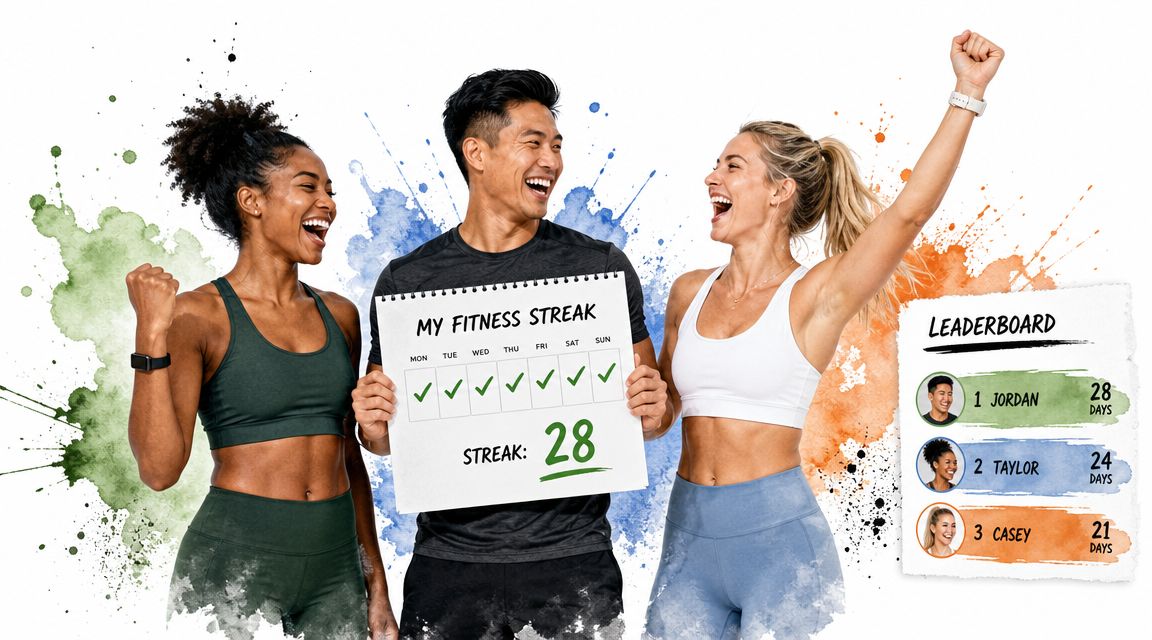
This format works well for running clubs, CrossFit boxes, Peloton communities, and workplace fitness groups. Instead of only celebrating the strongest athlete, the group tracks whether each person showed up for their own minimum. That changes the social signal. People compete less on performance and more on follow-through.
A simple setup works best. A running club can track weekly mileage streaks across seasons. A gym can run separate huddles for beginners, regulars, and advanced members. A corporate team can count any meaningful movement session, not just gym visits, so parents, commuters, and remote workers can still participate.
Set the floor low enough to keep people in
The strongest wellness group activities reduce drop-off by giving members two wins to aim for. One is the minimum. The other is the stretch goal. That's one reason social habit tools fit this format well. If you're trying to extend accountability beyond class attendance, the social benefits of fitness habits are easier to capture when the group sees progress every day, not just at the end of a challenge.
Practical rule: Reward weekly consistency, not just top output. Leaderboards alone often discourage the people who need support most.
You also need a real conversation layer. Weekly checkin calls, a Discord thread for workout wins, or post-class reflections help surface barriers early. If someone missed three days because their knee flared up or their schedule changed, the group can adjust before that person disappears entirely.
If you want a visual example of how group accountability can feel energizing, this kind of format is what many organizers are aiming for:
2. Mindfulness and Mental Health Checkin Circles
Mental wellness groups need a different kind of structure. Energy and openness matter, but safety matters more. A good checkin circle is not a debate club, not group therapy unless licensed professionals are running it, and not a place for members to fix each other.
Small circles tend to work best. Teams, campus groups, grief communities, and online support spaces can all use a recurring practice rhythm such as daily journaling, short meditations, breathwork, or quiet reflection. The habit isn't just “feel better.” It's “do one small regulating practice and share an open checkin.”
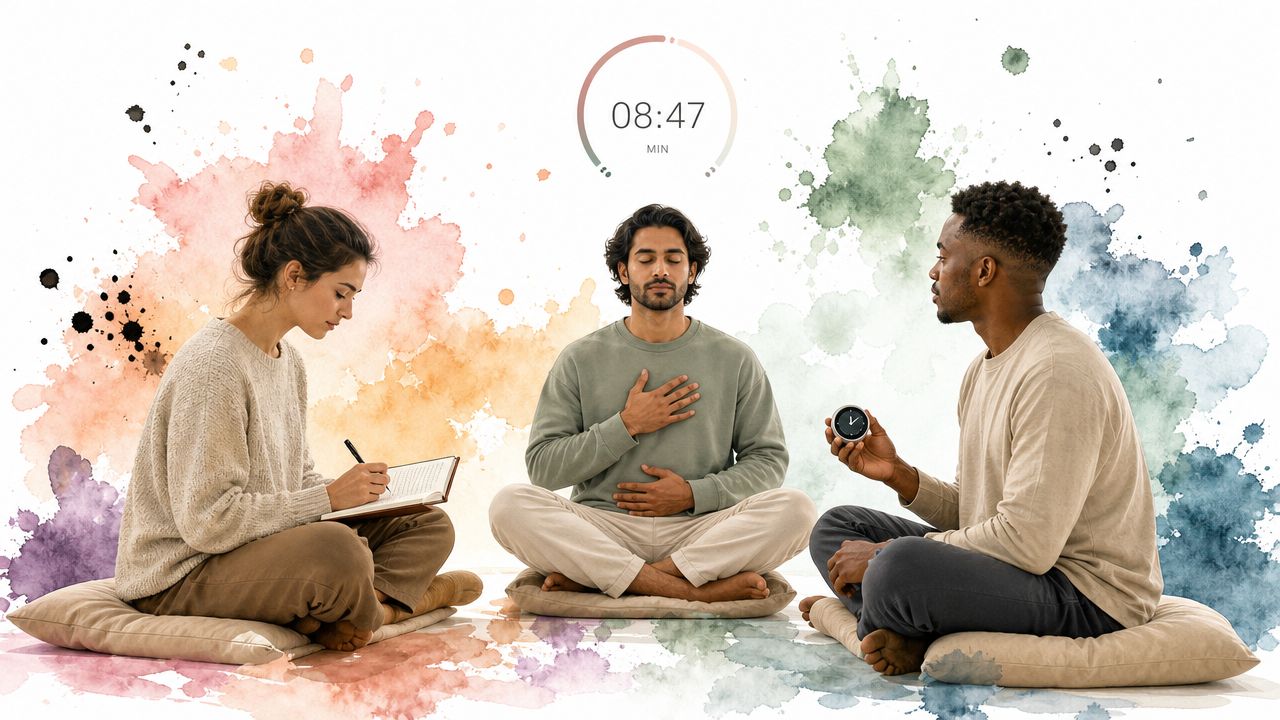
One useful shift is to offer multiple ways to participate inside the same group. Some members will meditate. Others will journal. Others will do a breathing exercise or a screen-free pause. That flexibility helps mixed-needs groups stay engaged, especially when one method doesn't fit everyone.
Protect the space before you scale it
The practical side matters here. Set confidentiality norms in writing. Make advice-giving optional or off-limits. Keep weekly group sessions short and optional so attendance doesn't become another source of stress. If your community needs daily support, use light checkins and keep the emotional load manageable.
A lot of organizers also underestimate how important accessibility is in wellness group activities. Mixed-ability groups often need seated options, low-sensory formats, and lower social pressure. The strongest inclusive programs lean toward choose-your-intensity structures rather than forcing everyone into the same practice, a gap highlighted in this discussion of accessible group self-care activities.
Some people need calm. Some need privacy. Some need a five-minute minimum because anything bigger becomes another avoided task.
For habit support, use tools that normalize small wins. A daily five-minute checkin is often better than a weekly attempt at the “perfect” hour-long reset. If you want examples of how to shape those routines, mental health habit systems are most effective when the group values consistency over intensity.
3. Reading and Learning Cohorts
Not every wellness group activity has to look like exercise or meditation. For many communities, intellectual wellness is what keeps people grounded. Reading, structured learning, and study habits can create calm, focus, and a sense of progress, especially for people who recharge through reflection rather than high-energy group events.
Book clubs usually stall because the reading burden is too high and the social format is too rigid. Members miss one meeting, fall behind, and leave. Learning cohorts work better when they track small, repeatable inputs such as reading minutes, lesson completion, or one chapter at a time.
A leadership team can read through one professional book over a month and hold short discussion calls. A certification cohort can log daily course progress. A university study circle can use a shared checkin channel during exam season. The social value comes from seeing that everyone is working steadily, even when schedules differ.
Reading groups fail when the bar is too rigid
Set flexible goals so members can choose pages, chapters, or minutes. That matters more than picking the “right” title. If someone has a demanding week, ten minutes of reading keeps them connected to the group and to the habit.
Use discussion as reinforcement, not as the whole program. A weekly voice chat, shared takeaways in Discord, or a short reflection prompt works better than long meetings that only reward the most talkative members.
- Offer choice: Run separate cohorts for different books or topics so people join what fits their interests.
- Track progress lightly: Count reading sessions, chapters, or lessons completed. Don't turn the group into homework.
- Celebrate completion: A finished chapter, course module, or week-long streak deserves recognition because it signals follow-through.
These groups often become stronger over time because the habit extends beyond one title. Members start trusting the system. They know that if they fall behind, the group still gives them a path back in.
4. Professional Development and Skill-Building Huddles
Some of the most practical wellness group activities are career-adjacent. That surprises people until they see the connection. Lack of progress at work creates stress. Clear, manageable growth habits reduce that stress because people regain a sense of traction.
This format works especially well for remote workers, freelancers, job seekers, coaches, and small teams. A writer can track daily drafting. A salesperson can track prospecting calls. A developer can track coding practice or portfolio progress. A job search cohort can track applications, outreach, and interview prep.
The key is precision. “Work on career goals” is too vague to survive a busy week. “Send two outreach messages” or “practice coding for twenty minutes” gives members something they can complete and report.
Track outputs that matter
Many professional groups overvalue time spent and undervalue real movement. Hours can be useful, but outputs are usually better anchors because they're easier to verify and discuss. A freelancer's huddle should care about pitches sent, pages drafted, and portfolios updated. A leadership group should care about difficult conversations held, coaching sessions completed, or reflection habits maintained.
Useful filter: If a member can't tell in ten seconds whether they did the habit today, the habit is too vague.
Monthly reflection calls help here. Members can discuss what stalled, what changed, and whether the habit still matches the season they're in. This keeps the group from becoming performative productivity theater. The point isn't to look busy. It's to support sustainable progress that lowers friction and burnout.
Public celebration can help, but keep it tied to action. “Shipped my portfolio update.” “Made my networking calls.” “Practiced every day this week.” Those are better group signals than generic praise.
5. Family Wellness and Healthy Habit Routines
Families don't need more wellness content. They need routines that fit real homes, real schedules, and mixed ages. That's why family-based wellness group activities work best when they are private, simple, and built around shared moments that already make sense.
A family walk after dinner is easier to repeat than a formal exercise challenge. A shared hydration habit, a weekly meal prep session, or a screen-free game night can become a strong wellness anchor because it improves the environment, not just one person's behavior.
This matters in households with kids, teens, grandparents, or caregivers under stress. If the system only works for the most energetic family member, it won't last. The group has to accommodate different attention spans, energy levels, and abilities.
Design for different ages and abilities
Give each person a version of the same habit. A toddler might join a short walk. A teen might do a longer route. A grandparent with mobility limits might participate through seated movement or a few minutes outside. The point is collective rhythm, not identical output.
Inclusive design matters. Lower-friction formats often outperform athletic ones in mixed groups because they reduce exclusion and make participation feel possible. For many organizers, that's the missing piece between a nice idea and a routine that sticks.
A few patterns tend to work:
- Let kids help design the routine: Buy-in rises when children choose part of the habit.
- Keep the scoreboard private: Family wellness should feel supportive, not surveilled.
- Tie tracking to a real ritual: Walks after dinner, cooking on Sundays, and screen-free evenings are easier to sustain than random checkins.
When families treat wellness as shared structure instead of individual self-improvement, resistance usually drops. The habit starts to feel normal.
6. Workplace Team Wellness and Productivity Challenges
Monday starts with good intentions. By Thursday, the team has skipped breaks, lunch happened at a keyboard, and the wellness initiative is reduced to a poster in the break room. That pattern is common because a single class, challenge week, or lunch-and-learn does not change how a team works under pressure.
Workplace wellness holds when it is built into team operations. The habits that last are small enough to survive busy weeks and clear enough to track without adding administrative drag. Useful examples include a real lunch break, one protected focus block, a short walk between meetings, an end-of-day shutdown routine, or a daily stretch prompt for desk-based staff.
The trade-off is straightforward. The easier a habit is to repeat, the less impressive it looks on launch day. In practice, repeatable habits outperform flashy events because teams can keep doing them during deadline cycles.
Digital delivery also matters, but the tool is not the program. A social habit tracker such as Habit Huddle works when it supports group accountability, keeps expectations visible, and shows whether the team is following through over time. Without that layer, workplace wellness often turns into vague encouragement with no rhythm, no evidence, and no shared standard.
You already know you can change.
You just need to take the first step. Habit Huddle helps you build habits around your goals, alongside friends who keep you accountable.
What works at work
Start with one team, one habit, and one review window. Four weeks is usually enough to see whether the routine fits the workday. Managers should participate under the same rules as everyone else. If leaders opt out while asking staff to post checkins, trust drops fast.
Privacy needs careful design. Track completion at the individual level inside the tool, but discuss patterns at the team level. If employees suspect the program is tied to performance surveillance, participation will fall and the data will be useless.
For structure, team goal examples that support accountability are usually practical enough to fit inside a normal workday. “Take one full break away from your desk.” “Protect one 45-minute focus block.” “Log off with a shutdown checklist.” Those goals sound modest. Repeated across a team, they reset expectations about pace, recovery, and attention.
One-off wellness events can still have a place. They work best as kickoffs or morale boosters inside a larger system. The system is what changes behavior. The event just gets attention.
7. Community-Based Health Challenges (Diabetes, Weight Loss, Chronic Illness)
A neighborhood clinic launches a six-week diabetes challenge. The kickoff is full. Two weeks later, attendance slips, checkins fade, and the people who need support most are often the first to disappear. The problem is rarely lack of motivation. The problem is weak structure.
Condition-specific groups work when they are built around repeatable behaviors, clear boundaries, and steady follow-up. They fail when organizers center the program on weigh-ins, symptom comparisons, or public pressure. Community members living with diabetes, heart disease, chronic pain, or other long-term conditions already carry enough judgment from the outside. A wellness group should reduce friction and increase follow-through.
Track habits people can complete. Medication adherence. Meal prep. Walking sessions. Therapy attendance. Sleep routines. Appointment follow-through. Those are the inputs a group can support together, even when health status varies from person to person.
A diabetes group might post daily checkins on meals, movement, and medications. A cardiac rehab group might focus on prescribed exercise, blood pressure logging, and follow-up visits. A chronic pain group usually needs a different design. Pacing, gentle mobility, hydration, and recovery practices fit better than rigid streaks that punish flare-ups.
Build accountability without turning the group into a clinic
Moderators need to state the rules early and repeat them often. The group offers support and accountability. It does not diagnose, prescribe, or replace clinical care. Unsupported claims should be removed quickly, especially in groups where people are vulnerable to miracle-cure advice or food policing.
This category also exposes the limits of one-off wellness events. A healthy cooking demo or guest speaker can help people get started, but it will not hold behavior in place through travel, fatigue, caregiving, medication changes, or symptom spikes. Sustainable progress comes from a system. Shared checkins, visible commitments, and a regular review rhythm keep people connected after the event is over.
That is where a social habit tracker such as Habit Huddle can help. The tool should track completion, missed days, and group patterns over time. Organizers can then follow up with members who go quiet, spot habits that are too ambitious, and adjust the challenge before people drop out.
Good moderation matters as much as the habit itself.
Celebrate adherence, not outcomes. Keep advice narrow. Ask members to report what they did, what got in the way, and what support they need next. That structure builds agency without turning the group into a scoreboard for weight, glucose readings, or pain levels.
8. Creator and Artist Accountability Cohorts
Creative people often need wellness support as much as anyone in a gym or office. The challenge just looks different. Instead of skipped workouts, it's abandoned drafts, half-finished songs, inconsistent studio time, and long gaps caused by perfectionism.
That's why creator cohorts work well as wellness group activities. They protect emotional steadiness through routine. Writers, musicians, podcasters, visual artists, indie game developers, and video creators all benefit from a group that values practice over performance.
A novelist might track daily writing sessions. A YouTube creator might log filming or editing blocks. A producer might track beat-making time. A podcaster might report whether they recorded, edited, or outlined. The habit should be concrete enough to survive low-energy days.
Protect the practice from perfectionism
Creators often sabotage themselves by measuring only finished output. That's useful for deadlines, but not for long-term consistency. Inputs are better daily anchors. Time spent drafting, sketching, composing, or editing gives the group something to reinforce before self-criticism takes over.
Use feedback separately from habit checkins. If every daily report becomes a critique session, members will stop sharing. Keep the accountability layer simple and the review layer optional.
- Separate by discipline: Writers need different conversations than illustrators or musicians.
- Allow recovery days: Rest is part of creative sustainability, not proof of failure.
- Celebrate shipping: Finished drafts, published posts, released tracks, and uploaded episodes deserve acknowledgment because they mark a full habit cycle.
These groups usually become stronger when experienced creators share how ordinary their routines really are. Consistency is rarely glamorous, but it's what keeps the work alive.
9. Academic Study and Test Preparation Groups
Studying alone creates two predictable problems. People lose track of time, and they lose perspective. A group doesn't remove the work, but it does make effort visible, which is often the missing ingredient during long prep seasons.
This works for high school test prep, university exams, medical admissions, graduate school entrance exams, nursing credentials, and professional certifications. A strong cohort tracks daily study sessions, practice problems, reading blocks, or full-length test completion. The habit should point to the exam without becoming so heavy that members avoid it.
The biggest advantage is emotional regulation. A student who sees others posting checkins steadily is less likely to panic after one bad day. The group acts as a stabilizer.
Turn isolated studying into visible consistency
A weekly group session helps, but the daily rhythm matters more. Students need a place to say, “I studied for an hour,” “I finished a practice section,” or “I reviewed one weak topic today.” Those small reports turn a private struggle into a shared process.
This is one area where habit-based design clearly beats event-based design. Many education communities still rely on cram sessions and occasional motivation pushes. But sustained progress usually comes from low-burden repetition, visible progress, and recurring checkins, a gap noted in this discussion of group wellness formats that support long-term adherence.
The most helpful study group isn't the one with the longest meeting. It's the one that makes tomorrow's session more likely.
Celebrate attendance and follow-through more than raw scores. Scores matter, but students already feel that pressure. The group should reinforce the process that makes improvement possible.
10. Recovery and Sobriety Support Communities
Recovery groups require more than enthusiasm and a shared app. They need sponsor or professional oversight, strong anonymity rules, moderation standards, and a clear crisis pathway. Without those elements, a group can become unsafe very quickly.
Used carefully, though, structured accountability can support recovery routines in a meaningful way. Peer-led communities can track daily sobriety checkins, meeting attendance, recovery reading, sponsor contact, journaling, or other agreed recovery actions. The point is to strengthen connection during periods when isolation is risky.
This can work in sponsor networks, recovery coaching programs, sober-curious communities, and employee assistance environments that already have proper safeguards. The format should never replace treatment, but it can reinforce daily follow-through between meetings and sessions.
Structure and safety come first
Confidentiality should be explicit. Moderators need rules for anonymity, dangerous posts, and escalation. Members should know where to go for immediate professional help. These basics aren't extra admin. They are the foundation.
Keep the habit language grounded. “Posted my checkin.” “Called my sponsor.” “Went to a meeting.” “Did my recovery reading.” These are clear, repeatable actions that support stability. Milestones matter too, but daily actions deserve equal attention because they are what create those milestones.
The strongest groups also make relapse response clear and humane. Shame drives disengagement. A well-run community makes it possible to return, reconnect, and restart support quickly.
10-Item Wellness Group Activities Comparison
| Program | Implementation Complexity ???? | Resource Requirements ⚡ | Expected Outcomes ???? | Ideal Use Cases ???? | Key Advantages ⭐ |
|---|---|---|---|---|---|
| Group Fitness Challenges with Streak Tracking | Medium, platform + scheduling, moderate moderation ???? | Low–Medium, app, leaderboard, facilitator ⚡ | ???? Increased consistency; lower dropout rates | Gyms, CrossFit boxes, running clubs, corporate wellness ???? | ⭐ Social accountability; measurable engagement |
| Mindfulness and Mental Health Checkin Circles | Medium, norms and psychological safety required ???? | Low, facilitator, app integration, private space ⚡ | ???? Improved meditation adherence; reduced stigma | Workplace EAPs, college clubs, remote wellness groups ???? | ⭐ Peer support; low-cost mental health normalization |
| Reading and Learning Cohorts | Low–Medium, pacing and moderation needed ???? | Low, books/courses, discussion facilitator ⚡ | ???? Higher completion rates; professional learning progress | Book clubs, course cohorts, study groups ???? | ⭐ Builds community; improves course completion |
| Professional Development and Skill-Building Huddles | Medium–High, goal alignment and role-specific structure ???? | Medium, mentors, resources, time investment ⚡ | ???? Accelerated skill growth; measurable outputs | Freelancers, sales teams, remote professionals ???? | ⭐ Career-focused structure; networking benefits |
| Family Wellness and Healthy Habit Routines | Low, simple setup, age-appropriate tailoring ???? | Low, household coordination, family-friendly tools ⚡ | ???? Stronger family habits; increased bonding | Families, multi-generational households, couples ???? | ⭐ Models healthy behavior for children |
| Workplace Team Wellness and Productivity Challenges | Medium–High, leadership buy-in and privacy controls ???? | Medium, integrations, HR support, incentives ⚡ | ???? Reduced burnout; higher team productivity | HR pilots, remote teams, departments seeking culture change ???? | ⭐ Team cohesion; measurable ROI on wellness |
| Community-Based Health Challenges (Diabetes, Chronic Illness) | High, clinical oversight and trauma-informed moderation ???? | Medium–High, medical partnerships, privacy safeguards ⚡ | ???? Better adherence to treatment; peer emotional support | Chronic illness groups, patient advocacy organizations ???? | ⭐ Lived-experience support; improved adherence |
| Creator and Artist Accountability Cohorts | Low–Medium, cohort-specific norms and feedback systems ???? | Low, peer groups, critique sessions, sharing tools ⚡ | ???? Increased creative output; portfolio growth | Writers, artists, musicians, creators ???? | ⭐ Beats paralysis; builds consistent practice |
| Academic Study and Test Preparation Groups | Medium, subject structure and pacing required ???? | Low–Medium, materials, moderators, scheduled sessions ⚡ | ???? Improved study consistency; better test readiness | Students, certification candidates, exam prep cohorts ???? | ⭐ Prevents procrastination; resource sharing |
| Recovery and Sobriety Support Communities | High, strict confidentiality and crisis protocols ???? | Medium–High, sponsor/professional oversight, moderation ⚡ | ???? Higher sobriety maintenance; critical peer support | Recovery groups, treatment aftercare, EAP programs ???? | ⭐ Life-saving peer accountability; milestone recognition |
From Idea to Impact Your Action Plan for Group Wellness
A group starts with energy. Twenty people join the kickoff, the chat is active for a week, and then attendance drops as schedules tighten and the novelty fades. Organizers often read that decline as lack of interest. In practice, it usually points to a weak system.
The job is not choosing a wellness activity. It is building a structure people can repeat on ordinary days, with limited time, mixed motivation, and uneven energy. The Global Wellness Institute reports that the wellness economy reached $6.8 trillion in 2024, equal to 6.12% of global GDP, and doubled in size since 2013. Interest is established. Consistency is the hard part.
As noted earlier, participation shapes outcomes. Incentives can raise involvement, but they can also train people to chase rewards instead of building durable habits. Community leaders, managers, and facilitators need a better standard than event attendance. The better question is whether the group has a repeatable rhythm, visible accountability, and a way to recover after members miss a day or a week.
The 4-Step Launch Blueprint
Start with one behavior. Keep the first version narrow enough that people can succeed without rearranging their lives.
Define Purpose
Choose one outcome and name it plainly. Increase walking consistency. Create a weekly mental health checkin habit. Help students study four days a week. Support recovery members in daily reflection. Clear goals make it easier to set realistic checkins and decide what progress means.Choose the Activity and Tool
Pick one format from the list above, then match it with a tool that supports repetition, not just communication. A social habit tracker such as Habit Huddle works well for groups that need visible checkins, streak tracking, and shared accountability without adding heavy admin work. A group chat alone rarely does this well. Messages pile up, missed days disappear, and no one can tell whether the group is stable or fading.Onboard and Set Norms
Run a short kickoff and make expectations concrete. Define what counts as a completed checkin, how often members are expected to post, what kind of encouragement is useful, and what stays private. This step matters even more in recovery, chronic illness, and mental health groups, where loose boundaries can damage trust.Launch, Review, Adjust
Treat the first month as a test period. Review participation patterns, missed-day recovery, and member feedback. If the target is too ambitious, lower it. If people are posting checkins but not engaging, tighten the format. Strong wellness systems are usually built through small adjustments, not a perfect launch.
Measuring What Matters
Track consistency before chasing big outcome claims.
For group wellness, the first useful signals are simple. Are members posting checkins regularly? How long do streaks last? How many people return after falling off? Does activity stay steady after the kickoff period? Those measures show whether the structure is supporting behavior change or producing a short burst of enthusiasm.
If you use Habit Huddle, a Group Consistency Rating can help organizers see whether participation is holding across the group instead of relying on a few highly active members. Pair that with brief pulse surveys or monthly discussion prompts. Numbers show frequency. Short qualitative feedback shows friction, morale, trust, and whether the habit still fits real life.
This is the trade-off many organizers miss. High ambition can sound motivating, but it often lowers adherence. A five-minute daily habit completed by 80 percent of the group will usually do more than an intensive plan that burns people out in ten days.
One-off wellness events still have a place. They can create visibility, mark a launch, or bring in outside expertise. They should not carry the whole strategy. Lasting group wellness comes from a repeatable system. Clear expectations, lightweight tracking, peer visibility, and regular review are what turn a good idea into a practice people can maintain.
If you want a simple way to run wellness group activities as ongoing accountability systems, Habit Huddle gives groups a way to create shared habits, post daily checkins, and keep progress visible without turning the process into a gimmick.
Ready to Build Habits With Friends?
Stop failing alone. Join thousands using the #1 habit tracker with friends for real accountability and lasting results.
Prefer mobile? App Store · Google Play
Related Guides
More Habit Huddle articles on building habits with accountability.
HabitShare Alternatives: 6 Apps for Tracking Habits With Friends (2026)
Looking for a HabitShare alternative? Six social habit trackers compared by model, price, platforms, and what happens on a missed day, plus how to switch wit...
What to Do When You Miss a Workout Day: The 5-Step Comeback Plan
Missed a workout day? What one miss does to your body and habit, according to research, plus a five-step plan for the next 24 hours, when to make it up, and...
Habit Streak App With Friends: 7 Apps Compared (2026)
Seven habit streak apps with friends compared: Habit Huddle, HabitShare, Daily Pact, Habitica, Streaks, Habit Streak duels, HabitStreak.io. What friends see,...