
How to Stop Subvocalization: Boost Reading Speed
Master how to stop subvocalization & read faster without losing comprehension. Discover actionable techniques, practice plans, & the science to succeed.

Most advice on how to stop subvocalization starts with the wrong enemy. It treats your inner voice like a defect, then hands you gimmicks meant to crush it.
That framing causes more problems than it solves. If you chase total silence, you often end up reading faster with your eyes and worse with your brain. A better target is control. You want to dial subvocalization up when comprehension matters and dial it down when speed matters.
That shift changes everything. You're not trying to become a reader with no inner voice. You're trying to become a reader who can toggle reading mode on purpose.
Table of Contents
- The Subvocalization Myth Why 'Stopping' Is the Wrong Goal
- The Science of Why You Subvocalize and Why It's Not All Bad
- Two Proven Techniques to Read Faster
- How to Build a Consistent Practice Habit
- Troubleshooting When Your Progress Stalls
- From Suppressing a Habit to Mastering a Skill
The Subvocalization Myth Why 'Stopping' Is the Wrong Goal
The biggest mistake people make with how to stop subvocalization is assuming that elimination is the win. It isn't. The useful skill is management, not eradication.

A lot of readers get pulled into an all-or-nothing mindset. If the voice is there, they think they're reading wrong. Then they try blunt-force tricks that make the page feel quieter but also make the meaning thinner.
The trade-off is clear in the research summary discussed by Superhuman's article on subvocalization. Techniques like counting aloud can nearly eliminate the habit, but they can also cost 10% to 20% of comprehension, which is exactly why total suppression is the wrong benchmark.
Strategic control beats total suppression
You don't need the same reading style for every task. Reading a contract, studying a textbook chapter, and skimming a long newsletter are different jobs.
A practical reader uses different gears:
- Deep study mode: Keep more inner speech when you need precision, retention, or verbatim recall.
- Fast extraction mode: Reduce inner speech when you only need structure, gist, or the main argument.
- Mixed mode: Start fast, then slow down and re-engage inner speech in dense sections.
Practical rule: Don't ask, "How do I kill the voice?" Ask, "When should I let it help, and when should I stop letting it lead?"
That question removes a lot of frustration. It also prevents a common trap. People think they need to read every sentence with the same intensity. Skilled readers don't. They adjust.
The better goal
If you're trying to improve reading speed, train for these outcomes instead:
| Reading goal | What to do with subvocalization |
|---|---|
| Learn difficult material | Let it stay active |
| Review familiar material | Lighten it |
| Skim for relevance | Minimize it |
| Memorize wording | Use it deliberately |
This is why the phrase "how to stop subvocalization" is slightly misleading. For many, the primary job is learning how to stop overusing subvocalization.
The inner voice isn't a flaw. Misusing it is.
The Science of Why You Subvocalize and Why It's Not All Bad
Subvocalization exists because reading isn't just visual. Your brain links written words to sound, rhythm, and language patterns. That's the primary way reading is learned, and those pathways don't disappear just because you want to move faster.
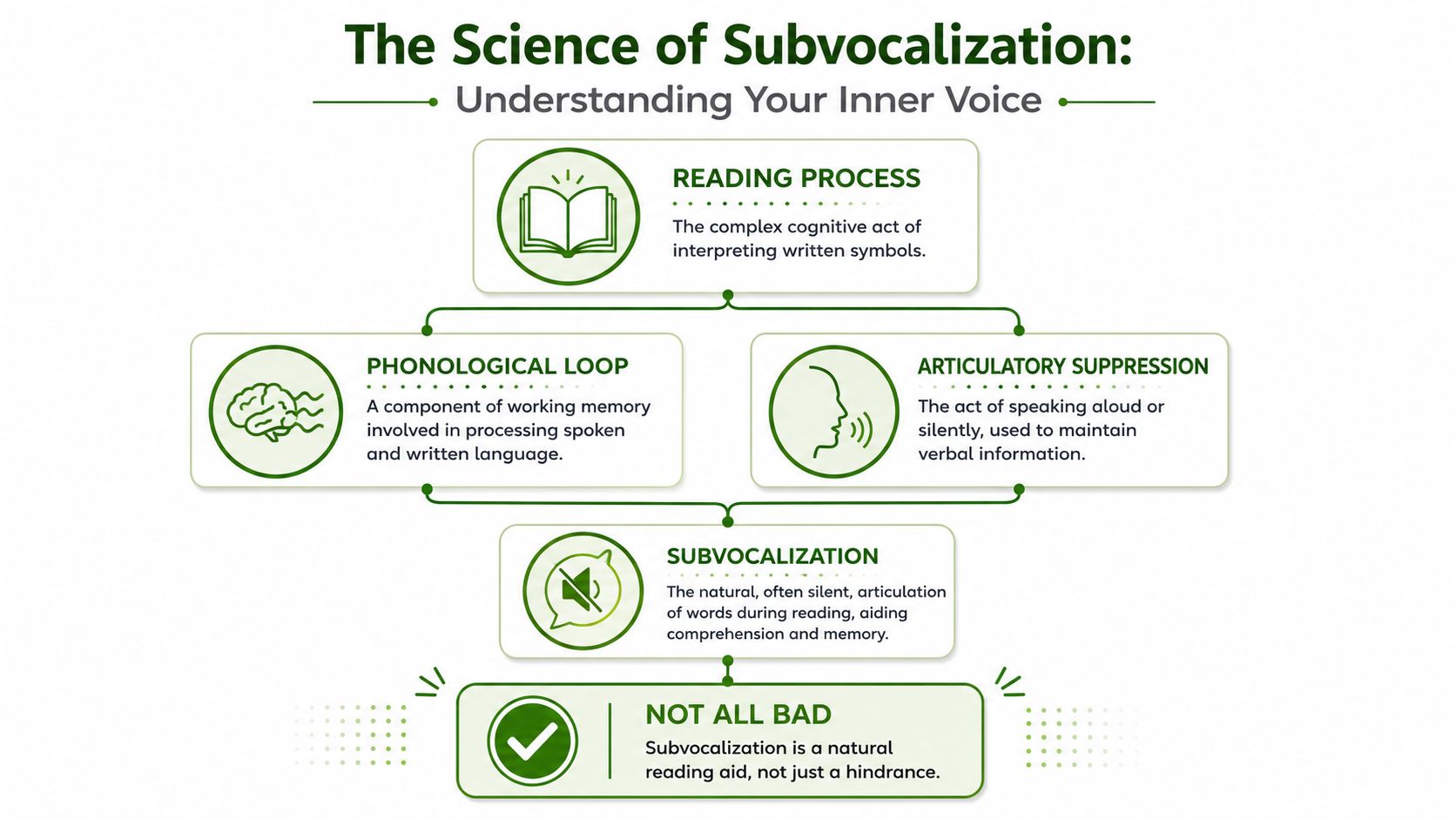
The inner voice often gets blamed for slow reading, but the biology is more stubborn than the internet makes it sound. According to the discussion summarizing reading research at LingQ's forum on subvocalization, micro-muscle electrophysiological tests indicate that fully eliminating subvocalization is scientifically impossible, and at 100 to 300 words per minute it supports comprehension.
Why the inner voice shows up at all
When you see a word, your brain doesn't only decode shape. It also activates language machinery tied to sound and meaning. That's useful because language isn't stored as pure visuals. It's connected to pronunciation, syntax, and memory.
Think of subvocalization as a support rail. On easier terrain, you don't need to lean on it much. On steep terrain, it keeps you from slipping.
That matters most when the text is:
- Abstract, such as philosophy or legal reasoning
- Unfamiliar, such as technical writing in a new field
- Exacting, where one missed word changes the meaning
- Memorable by wording, such as speeches, quotes, or test material
The real problem isn't presence. It's intensity.
Readers usually don't need to remove inner speech. They need to stop giving it full control over every sentence. That's a different problem and a much more trainable one.
Subvocalization is best treated like a dimmer switch, not an on-off switch.
At ordinary reading speeds, especially when you're learning, the voice often helps stabilize attention and hold phrases long enough for meaning to click. That's one reason why aggressive speed-reading advice can backfire. It assumes every reading task should be optimized for pace.
What this means in practice
Use this simple decision table when choosing your reading mode:
| Text type | Better approach |
|---|---|
| Dense nonfiction | Keep inner speech engaged |
| Light articles | Reduce it and move |
| Familiar material | Read in chunks |
| Material you must quote or memorize | Use fuller inner speech |
If you've been trying to force silence and wondering why your retention dropped, nothing is wrong with you. You were probably pushing against a normal reading mechanism.
The fix isn't to overpower your brain. It's to train range.
Two Proven Techniques to Read Faster
Most methods for how to stop subvocalization fail because they're passive. They tell you to "try not to hear the words." That instruction is too vague to work under real reading conditions.
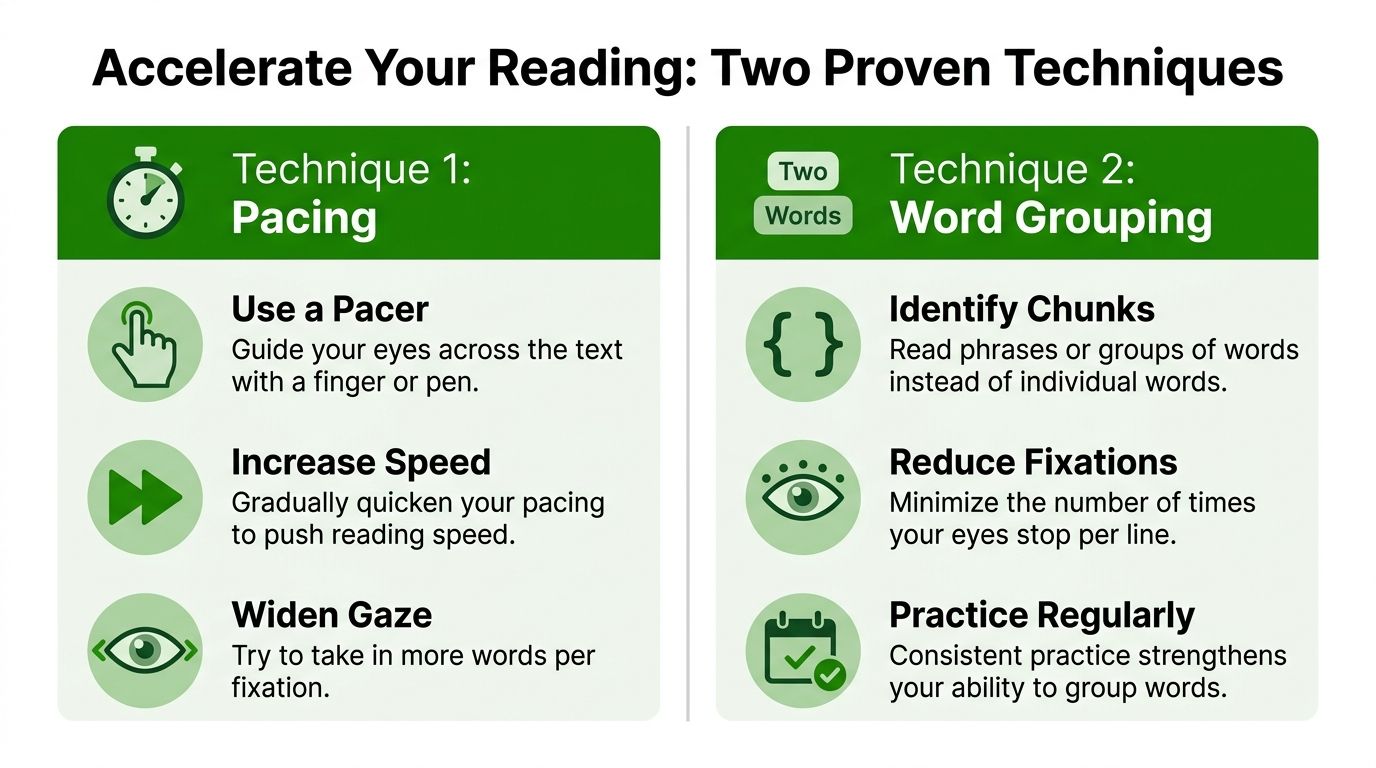
The two methods that hold up best in practice are active. One uses physical pacing. The other uses auditory pacing. Both create external structure that keeps your eyes and attention moving.
Pointer pacing for forced flow
The strongest low-tech method is to guide your eyes with your finger, a pen, or a stylus. This is often dismissed as something kids do. That's a mistake.
The pacing method summarized by Iris Reading's discussion of reading speed uses a pointer moving at about 1.2 lines per second, or roughly 500 wpm, to create a forced flow. That method was reported to reduce subvocal activity by 35% within 14 days.
Here's how to do it well:
- Pick easy material first. Use an article, blog post, or light nonfiction chapter. Don't start with dense technical writing.
- Place your finger under the line. Keep it slightly below the words so you track, not block.
- Move continuously. Don't stop at every interesting phrase.
- Stay a bit faster than comfortable. The pointer should pull your eyes forward.
- Read for short rounds. Push speed for a brief burst, then pause and summarize from memory.
What makes this work is mechanical pressure. Your eyes can track movement faster than your inner voice can fully pronounce every word, so you start taking in larger chunks.
Read the line with your eyes. Don't let your inner narrator set the pace.
A lot of readers also improve faster when they clean up the attention side of reading. If wandering focus is part of the problem, this guide on how to focus while reading pairs well with pacing drills.
A few execution notes matter:
- Use smooth movement: Jerky pacing breaks visual rhythm.
- Don't chase every word: Let peripheral vision do more work.
- Summarize after each pass: Speed without recall is just page turning.
A visual walkthrough helps. This demo shows the pacing idea in action:
Auditory pacing with fast TTS
The second method uses a Text-to-Speech app as an external metronome. Instead of fighting the verbal channel, you overload it with speed and force the eyes to process text in larger units.
The protocol described in the verified data uses RSVP training combined with TTS audio at 2.5x speed, roughly 400 wpm, which is above the commonly cited 150 to 200 wpm subvocal threshold. You read the text while the audio runs ahead fast enough that you can't comfortably pronounce each word internally.
A workable setup looks like this:
- Choose a TTS tool: Speechify is one example named in the protocol, but any solid TTS app with speed control can work.
- Set the speed high enough: Fast enough that word-by-word inner speech can't keep up.
- Read along visually: Don't just listen. The point is to retrain how you process written text.
- Use short drills: Brief daily rounds work better than long strained sessions.
- Keep material simple at first: Familiar prose gives your brain room to adapt.
This method isn't magic. It has a clear failure point. In the same verified training protocol, many novices struggle to hold the faster pace without some kind of external structure. That's why TTS works best when treated like training, not like background audio.
You already know you can change.
You just need to take the first step. Habit Huddle helps you build habits around your goals, alongside friends who keep you accountable.
What doesn't work well
Some hacks sound clever but perform badly in serious reading.
The worst offender is counting while reading. It can suppress the inner voice, but it creates direct competition for the same verbal resources your brain uses to process language. The page may feel quieter, yet comprehension often falls apart.
Chewing gum gets mentioned a lot too. Used as part of a structured drill, it may help interrupt tiny articulatory habits. By itself, though, it's not a reading system. It doesn't teach pacing, chunking, or purpose-based control.
A better filter is simple. If a tactic makes you feel busy but doesn't improve recall, it's noise.
How to Build a Consistent Practice Habit
Most readers don't fail because the techniques are weak. They fail because they practice in random bursts, then expect a permanent change from occasional effort.
That doesn't work with reading mechanics. You need repetition, but not marathon sessions. Short, repeatable drills beat heroic sessions that you abandon after a few days.
Set rules before motivation fades
Start with operating rules, not enthusiasm. Decide when you'll practice, what material you'll use, and how you'll know the session was good enough.
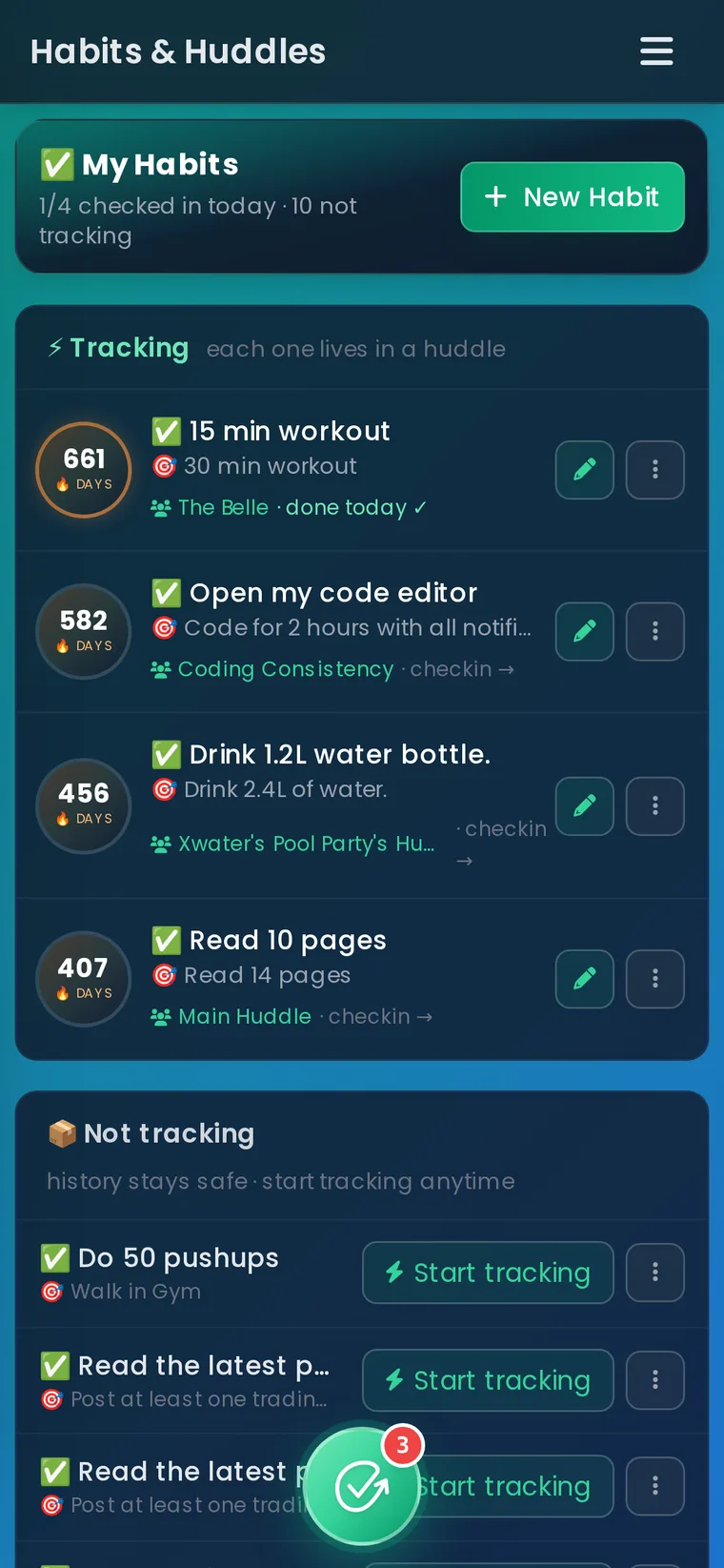
Habit design matters more than willpower. The framework in Recurrr's habit design approach is useful because it pushes you to make the habit small, visible, and hard to misinterpret. That's exactly what subvocalization training needs.
Use rules like these:
- Tie practice to an existing cue: After coffee, after lunch, or before your evening reading block.
- Keep the minimum tiny: A short drill still counts.
- Separate training from normal reading: Don't test a new method only when the material is important.
- Log one line after each session: Write what you practiced and whether recall held up.
A simple four-week training rhythm
You don't need a complex schedule. You need a progression that protects comprehension while building control.
Week one: establish a baseline. Read normally for a few sessions and notice when subvocalization is helpful versus excessive. Then add short pointer-paced rounds on easy material.
Week two: keep the pointer work and add brief TTS-assisted sessions. Focus on comfort with faster visual intake, not perfect retention.
Week three: alternate modes on purpose. Use reduced subvocalization for skimming, then switch back to fuller inner speech for the dense parts. At this point, the toggle starts becoming a skill instead of a theory.
Week four: blend the methods into real reading. Articles, reports, or book chapters should now include deliberate speed changes rather than one fixed pace.
Coach's note: If a drill leaves you feeling rushed but unable to summarize, the session was too aggressive.
Two things will protect your progress. First, read a manageable daily amount instead of making every session a speed test. This guide on how many pages a day you should read is useful for setting a volume you can sustain.
Second, avoid the crude suppression tactics that sound disciplined but sabotage learning. Research discussed in this video summary shows that counting "one, two, three, four" while reading can reduce comprehension by 10% to 20%, which makes it a poor choice for serious practice.
Keep the habit simple enough to survive bad days
On good days, do the full drill. On busy days, do a short round and stop. That matters more than people think.
Consistency turns these methods from awkward tricks into automatic responses. After enough repetitions, you stop asking how to stop subvocalization and start choosing reading mode without effort.
Troubleshooting When Your Progress Stalls
Progress rarely breaks because the technique suddenly stopped working. More often, the wrong mode got applied to the wrong material, or your attention slipped and you blamed subvocalization.
When you finish a page and remember nothing
This usually happens after pushing speed on text that deserved slower processing. You moved the eyes. You didn't build meaning.
The fix is immediate. Reread the same passage in a different mode. Slow down, allow more inner speech, and summarize each paragraph in plain language. If the summary becomes easy, the issue wasn't inability. It was mismatch.
A related issue shows up in fast visual training. This research note on RSVP training reports that 75% of novices fail to maintain the target 400+ wpm pace without an external pacer, because once speed drops, the brain tends to revert to subvocalization. That's why unsupported speed drills often collapse midway.
When the old inner voice rushes back
Does this sound familiar? You start strong with a pointer or TTS. A few minutes later, you get tired, slow down, and suddenly you're hearing every word again.
That's not failure. That's drift.
Try this reset sequence:
- Shorten the drill: Stop before fatigue wrecks form.
- Switch material: Use easier text for speed work.
- Bring back an external pacer: Finger, pen, or audio.
- Test recall quickly: One sentence on the main idea is enough.
When subvocalization returns hard, don't fight harder. Change the conditions.
When focus is the real problem
Sometimes the reading system is fine and your attention is the weak link. You sit down already scattered, then misdiagnose the whole session as a subvocalization issue.
In those moments, it helps to use separate concentration tools before you touch reading speed. These practical tips to regain focus are useful when distraction, not reading mechanics, is the bottleneck.
Behavior also matters here. If you always practice when tired, in a noisy environment, or with your phone in reach, your setup is teaching inconsistency. This overview of behavior change psychology is a good reminder that context often drives the habit more than intention does.
A stall doesn't mean you've hit your ceiling. It usually means one of three things: the text got harder, the pacing support disappeared, or your focus fell apart. Diagnose that correctly, and progress starts moving again.
From Suppressing a Habit to Mastering a Skill
The useful answer to how to stop subvocalization isn't "eliminate it." It's "learn to control it."
That's a better standard because it matches how reading works. Some material rewards speed and chunking. Other material rewards careful internal phrasing. If you use one mode for everything, you'll either move too slowly or understand too little.
The toggleable reader
A strong reader develops at least three gears:
| Reading situation | Best mode |
|---|---|
| Skimming for relevance | Low inner speech |
| Reading for understanding | Moderate inner speech |
| Studying for precision | Fuller inner speech |
That flexibility is what most people are really after. Not silence. Not theatrics. Control.
You don't need to become someone who never hears words in their head. You need to become someone who can reduce that voice when speed is useful and re-engage it when accuracy matters.
The win is not a silent mind. The win is choosing the right reading mode on purpose.
Once you train that toggle, your reading changes in a practical way. Articles become faster to sort through. Dense chapters become easier to respect instead of rush. You stop treating every page as the same kind of task.
That's the significant upgrade. You aren't suppressing a bad habit anymore. You're building a reading skill.
If you want your practice to become consistent instead of occasional, Habit Huddle gives you a simple way to track daily reading drills with accountability. Its small-group habit structure works well for short subvocalization sessions because you can set a minimum check-in, protect consistency on busy days, and build momentum without overcomplicating the process.
Ready to Build Habits With Friends?
Stop failing alone. Join thousands using the #1 habit tracker with friends for real accountability and lasting results.
Prefer mobile? App Store · Google Play
Related Guides
More Habit Huddle articles on building habits with accountability.

Family Habit Tracker App: 8 Best Picks by Age, and How to Make It Stick (2026)
Family habit tracker apps compared by age: Joon, Family Rewards, Family Checklist, Kinly, Habit+ Family, HabitShare, Habitica, and Habit Huddle. Plus the hab...

Gamified Habit Tracker: 7 Apps Compared by What the Game Rewards (2026)
Gamified habit trackers compared: Habitica, Finch, Forest, Streaks, Habits Garden, HabitForge, and Habit Huddle, by what the game rewards, what free gets you...

Running Accountability App: 8 Picks Compared (Stakes, Streaks, and Friends)
Eight running accountability apps compared: Strava, Nike Run Club, Runkeeper, Oath, RunMatch, RunHawk, StickK, and Habit Huddle, with prices, how runs are ve...