
Online Meditation Timer: A Guide to Consistent Practice
Find the best online meditation timer and learn to configure it for a consistent practice. Get templates, tips, and build a routine that sticks.
You sit down meaning to meditate for ten minutes. Then the small negotiations start. Which app should you use? Should you just run your phone's stopwatch? Will the alarm be too sharp? What if a text lands halfway through? By the time you begin, the session already feels crowded.
That's why an online meditation timer matters. Not because it's magical, and not because bells make you enlightened. It matters because the right timer removes decisions at the exact moment your mind wants excuses. Used well, it creates a clean container for practice.
Still, a timer is only a container. Plenty of people find a decent tool and still drift off the habit within days. A meaningful shift occurs when the timer becomes one part of a larger accountability system. First make the session easy to start. Then make showing up harder to skip.
Table of Contents
- Why Your Phone's Stopwatch Is Sabotaging Your Meditation
- How to Choose a Timer That Disappears
- Session Templates for Every Type of Practice
- Troubleshooting Your Focus and Your Tech
- Beyond the Bell How to Build a Lasting Habit
- Your First Consistent Week Starts Now
Why Your Phone's Stopwatch Is Sabotaging Your Meditation
A stopwatch looks simple. In practice, it brings the whole phone with it.
The problem isn't just the timer itself. It's the environment around it. The same device that holds your bell also holds notifications, unread messages, news alerts, and the reflex to check one more thing. Even if none of that appears during the sit, your mind knows it's there.
A meditation session works best when the setup is almost boring. If getting started requires fiddling with alarms, choosing a harsh default tone, or keeping an eye on a visible countdown, you've already added friction. That friction matters because meditation habits are fragile at the beginning.
Research on digital health engagement is blunt. Most users abandon digital meditation tools within the first month, and only about 4.7% of initial app users continue after 30 days according to this digital health engagement analysis. The same analysis also notes that simple meditation timers do better when setup is reduced to two or three clicks and open-to-start latency drops below 10 seconds, which correlates with higher repeat usage in the first week.
Friction changes behavior
People often assume discipline is the issue. Usually, design is the issue first.
If your current setup asks you to:
- Open a general-purpose app: your brain gets exposed to distractions before practice starts.
- Use a visible countdown: you're tempted to monitor progress instead of settle into attention.
- Rely on a loud alarm: the end of the sit feels abrupt, sometimes irritating enough to make you avoid the next session.
Practical rule: If your timer makes you manage the session, it isn't supporting meditation. It's adding another task.
There's a reason utility-style tools work better than feature-heavy wellness products for some people. A stripped-down online meditation timer behaves more like a browser stopwatch than a lifestyle platform. That's often an advantage, especially if you've already bounced off streaks, onboarding flows, and self-improvement dashboards.
If you've struggled with consistency before, it's worth looking beyond apps marketed as motivation systems and toward simpler tools, plus a separate accountability layer. A good starting point is this list of free internet accountability apps, because the timer should handle timing and something else should handle follow-through.
What actually helps
A useful timer does three things. It starts fast. It gives you a gentle end point. It doesn't invite extra decisions once the session begins.
That sounds small. It isn't. Meditation gets easier to repeat when the tool stops competing for attention.
How to Choose a Timer That Disappears
The best online meditation timer is the one you stop noticing once the bell sounds.
That doesn't mean every minimalist timer is good. Some are too bare and fail when your screen locks. Others look calm but hide a messy setup flow. You want something quiet, reliable, and forgettable in the best sense.

Non negotiable criteria
Start with these filters when you test any timer:
- Minimal first screen: You should see duration, sound choice, and start. If the interface asks you to browse themes, create an account, or compare modes before you sit, skip it.
- Gentle bells: Look for gongs, bowls, or soft chimes. A meditation timer should close a session cleanly, not shock you out of it.
- Optional interval bells: Intervals help for longer sits, loving-kindness practice, and walking meditation. They shouldn't be mandatory.
- Background reliability: Many tools perform unreliably in the background.
A major gap in online meditation timer content is background behavior. As noted by Meditation Timer Online's discussion of platform reliability gaps, many pages talk about bells and simplicity but don't explain what happens when your phone locks, your browser suspends the tab, or autoplay restrictions block sound. That matters more than decorative features.
Test a timer before you trust it
Don't judge a timer by its landing page. Run a quick stress test instead.
- Start a short session and lock your phone.
- Switch tabs or open another app.
- Lower and raise volume once to confirm the bell is still audible.
- Return after a minute and see whether the session is still active.
- Repeat on the device you use for meditation, not just your laptop at work.
A timer that fails once at the end of a sit creates doubt in the next sit.
That loss of trust matters. If you're wondering whether the bell will ring, part of your attention stays on the device.
Small details that matter more than branding
I'd choose a plain browser timer with reliable lock-screen behavior over a polished app that keeps asking me to optimize the session. The same goes for presets. If a timer remembers your usual configuration or lets you bookmark it, you remove one more decision from the start of practice.
Good tools disappear because they reduce cognitive load. Bad tools keep reminding you that you're using a product.
Session Templates for Every Type of Practice
Many individuals don't need more meditation advice. They need a default setup they can use tonight without thinking.
That's where templates help. A vague plan like “I should meditate later” tends to dissolve. Converting that intention into a concrete practice setup matters because research on implementation intentions shows completion rates roughly triple when a vague goal becomes a specific plan, as described in this practitioner-focused explanation of why timer structure works.
Use count up, not countdown
For self-guided practice, count-up mode is usually better than countdown.
A visible countdown gives restless thinking something to cling to. You start checking how much remains, then you start negotiating with the remaining time. Count-up mode reduces that endpoint pressure. You begin, you practice, and the closing bell handles the end.
If you're trying to make meditation automatic, pair the timer with a stable cue. These habit stacking examples are useful because meditation sticks better when it follows something fixed, like making coffee, shutting your laptop at lunch, or brushing your teeth at night.
Don't ask, “How long do I feel like meditating today?” Decide that before the session starts.
Meditation Session Blueprints
| Session Type | Total Duration | Warm-up Time | Interval Bells | Recommended Sound |
|---|---|---|---|---|
| Beginner reset | 5 minutes | 1 minute | None | Soft bowl |
| Breath anchor sit | 20 minutes | 2 minutes | Every 10 minutes | Low gong |
| Metta practice | 15 minutes | 1 minute | Every 3 to 5 minutes | Gentle chime |
| Walking meditation | 10 to 15 minutes | 1 minute standing still | Every 5 minutes | Clear bell |
These aren't rigid rules. They're stable starting points.
For a beginner reset, skip intervals. Let the whole session be one simple block. Sit down, feel the body, notice the breath, and finish before resistance grows into avoidance.
For a breath anchor sit, a midpoint bell works well. It reminds you to soften and return without turning the session into a sequence of constant prompts.
For Metta, shorter intervals can support the natural movement between phrases, people, or categories of attention. The bell acts like a quiet marker, not narration.
For walking meditation, the timer should be even simpler than seated practice. One opening bell, one midpoint check, one ending bell. Too many sounds break the rhythm of the walk.
You already know you can change.
You just need to take the first step. Habit Huddle helps you build habits around your goals, alongside friends who keep you accountable.
Keep one template for two weeks
Many people sabotage themselves by changing the settings every day. New sound. New duration. New interval pattern. That feels thoughtful, but it weakens habit formation.
Pick one template and repeat it long enough for the start of practice to feel automatic. The timer should answer the “how long” question before you sit down.
Troubleshooting Your Focus and Your Tech
Even a good timer can fail in ordinary ways. Sometimes your attention slips because the phone is too close. Sometimes the bell never rings because your browser muted autoplay or your device put the tab to sleep.
Start by fixing the environment before you blame your mind.

Protect attention before you press start
Meditation doesn't require a perfect room. It does benefit from a clean digital boundary.
Use this pre-session checklist:
- Turn on Do Not Disturb: Don't trust willpower against banners and vibrations.
- Place the device out of reach: Arm's length is often enough to reduce checking.
- Use full-screen mode when possible: Extra tabs and browser clutter keep the mind in work mode.
- Test the bell once: One quick sound check prevents low-grade worry during the sit.
A lot of “bad meditation” is just preventable interference. If your device sits in your lap with messages active, your attention isn't only working with thoughts and sensations. It's also bracing for interruption.
Fix the failures that break trust
Technical problems matter because they train you not to rely on the tool.
If your timer keeps failing, look at the likely cause:
| Problem | Likely cause | What to try |
|---|---|---|
| No bell at the end | Browser sound blocked or tab muted | Unmute the tab, confirm site audio permissions, test once before practice |
| Timer stops when screen locks | Device battery optimization or browser suspension | Keep the app or browser active, adjust battery settings if needed, test on your usual device |
| Sound is too quiet | Media volume and ringer settings differ | Raise media volume specifically, not just ringtone volume |
| Session restarts after tab switch | Browser memory management | Use a simpler browser setup and avoid heavy multitasking during the sit |
Reliability is part of the practice. If the bell is unpredictable, the mind keeps one eye on the clock.
This walkthrough is useful if you want a visual reset on keeping sessions simple and steady:
Focus problems and tech problems overlap
When someone says, “I can't settle,” I usually ask two questions first. Was the setup calm? Did the device behave the way you expected?
If the answer is no, solve that first. Meditation already asks you to work with wandering attention. You don't need to add preventable friction on top of that.
Beyond the Bell How to Build a Lasting Habit
A timer helps you start. It does not make you return tomorrow.
That distinction matters more than most meditation advice admits. Many people assume the right bell sound, the right duration, or the right minimalist app will finally make them consistent. Sometimes it helps for a few days. Then real life reappears and the practice slips.
Why the tool isn't the system
There's a real gap in meditation content here. As noted in Headspace's timer-related content area, there isn't much evidence-based guidance comparing whether a timer alone drives consistency or whether reminders, accountability, and social reinforcement matter more. That gap matters because a timer is not automatically the best tool for beginners, and the most minimal option can be less effective for habit formation than a socially reinforced routine.
That matches what practitioners see constantly. Solitary habits are easy to postpone. Quiet tools are easy to ignore. You can fully intend to meditate and still skip because nobody else knows you planned to do it.
The timer protects the session. Accountability protects the habit.
A simple accountability structure
If you want a meditation practice that survives busy weeks, build around two commitments instead of one.
Try this:
- Minimum practice: a short session you can complete even on chaotic days. For many people, that means a brief sit that keeps the habit alive.
- Daily goal: your fuller session when time and energy are available.
This structure works because it removes the all-or-nothing trap. On a rough day, you still show up. On a better day, you go deeper. The timer serves both versions of the habit.
Social reinforcement strengthens this further. A checkin group, a practice partner, or a shared daily log changes meditation from a private intention into a visible commitment. If that's what you need, a tool built for accountability can do more for long-term consistency than another timer comparison list. A good place to explore that category is this guide to a habit-building app.
What lasts in real life
The people who stay consistent usually don't have stronger feelings about meditation every morning. They have cleaner systems.
They know when they practice. They know what counts on a low-energy day. They know someone will notice whether they showed up.
That's the progression. First choose an online meditation timer that gets out of your way. Then surround it with enough structure that practice keeps happening when motivation fades.
Your First Consistent Week Starts Now
You don't need a grand meditation identity to get traction. You need one week of clean repetition.
Keep it simple. Pick one online meditation timer that starts fast and behaves reliably on your actual device. Choose one session template instead of inventing a new one each day. Remove the predictable distractions before you sit.
Then add the missing piece. Decide how you'll stay accountable for seven days. That could be one friend, one group, or one shared checkin rhythm. The point isn't pressure. The point is visibility.
A practical one week experiment
Use this structure for the next seven days:
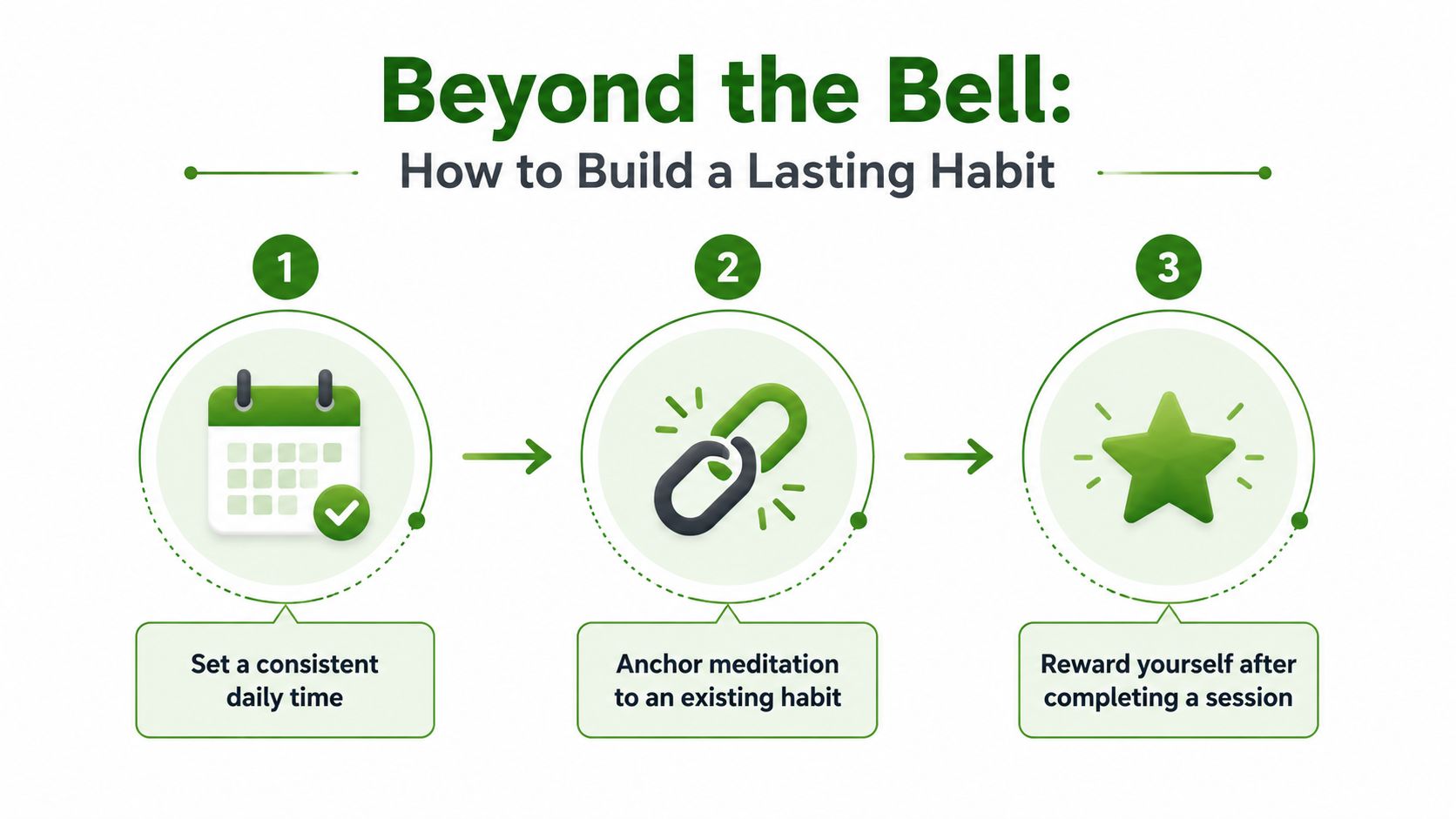
- Anchor the session to an existing moment such as after coffee, after lunch, or before bed.
- Use the same timer preset daily so the session starts with almost no thought.
- Set a minimum version of the habit for busy days.
- Record whether you showed up somewhere another person can see.
That last step is where many meditation plans collapse. Private intentions feel noble, but they're easy to renegotiate. A visible commitment creates just enough friction against skipping.
What to watch for
Don't judge the week by how calm you feel. Judge it by whether the setup was repeatable.
Ask yourself:
- Did the timer disappear once the session began?
- Did the session feel easy to start?
- Did accountability make it harder to skip?
If the answer is yes, keep going with the same structure. If the answer is no, don't redesign your whole practice. Tighten the weak point. Usually that means fewer decisions, a more reliable timer, or stronger follow-through outside the session itself.
Consistency doesn't come from finding the perfect bell. It comes from making the practice easy to begin and visible enough to repeat.
If you want a simple way to turn meditation from a solo intention into a shared daily commitment, Habit Huddle gives you that accountability layer. You can set a Minimum for busy days, a Daily Goal for stronger days, and share your checkin with a small group that helps you keep showing up. That combination of flexible targets and visible follow-through is what helps a timer become a real habit.
Ready to Build Habits With Friends?
Stop failing alone. Join thousands using the #1 habit tracker with friends for real accountability and lasting results.
Prefer mobile? App Store · Google Play
Related Guides
More Habit Huddle articles on building habits with accountability.

HabitShare Alternatives: 6 Apps for Tracking Habits With Friends (2026)
Looking for a HabitShare alternative? Six social habit trackers compared by model, price, platforms, and what happens on a missed day, plus how to switch wit...

What to Do When You Miss a Workout Day: The 5-Step Comeback Plan
Missed a workout day? What one miss does to your body and habit, according to research, plus a five-step plan for the next 24 hours, when to make it up, and...

Habit Streak App With Friends: 7 Apps Compared (2026)
Seven habit streak apps with friends compared: Habit Huddle, HabitShare, Daily Pact, Habitica, Streaks, Habit Streak duels, HabitStreak.io. What friends see,...