
What Is an Accountability Partner? Definition, Models, and Scripts
What an accountability partner is, why the arrangement works, the four models compared, where to find a partner, and the setup conversation and weekly checki...
📺 Related Video: Simon Sinek on How Accountability Partners Keep You Committed
Video by: Capture Your Flag · Watch on YouTube
An accountability partner is a person who agrees to check on your progress toward a goal on a regular schedule, so that your commitment exists somewhere outside your own head. The definition sounds simple, but the difference between partnerships that change behavior and ones that fizzle by week three is structure: what you report, how often, and what happens when someone misses.
This guide covers what an accountability partner actually does, why the arrangement works psychologically, the four common models and how to pick one, where to find a partner, and the setup conversation and weekly checkin script that keep the whole thing alive past the honeymoon.
What an accountability partner is, and what it is not
An accountability partner is not a cheerleader. A cheerleader says "you've got this." An accountability partner says "you said you would do this by Thursday, did you do it?" Both are useful, but only the second one protects follow-through, and mixing them up is the most common reason partnerships drift.
The confusion is natural because both roles often come from the same person. Your friend can encourage you and hold you to a commitment. But if the relationship stays casual, the accountability half usually disappears first, because friendship pushes toward comfort and progress sometimes needs friction.
A working partnership has three ingredients a supportive friendship does not:
- A defined commitment. A specific action with a yes-or-no completion test, not a vibe like "doing better this week."
- A schedule. Checkins happen at agreed times whether or not anyone feels like it.
- Permission to challenge. Both people have explicitly agreed that "did you do it?" is a welcome question, not an attack.
Accountability fails less from bad intentions than from fuzzy agreements. Two people who never define what counts as success, when they report, and what happens after a miss are running on mood, and mood runs out.
Why an accountability partner works
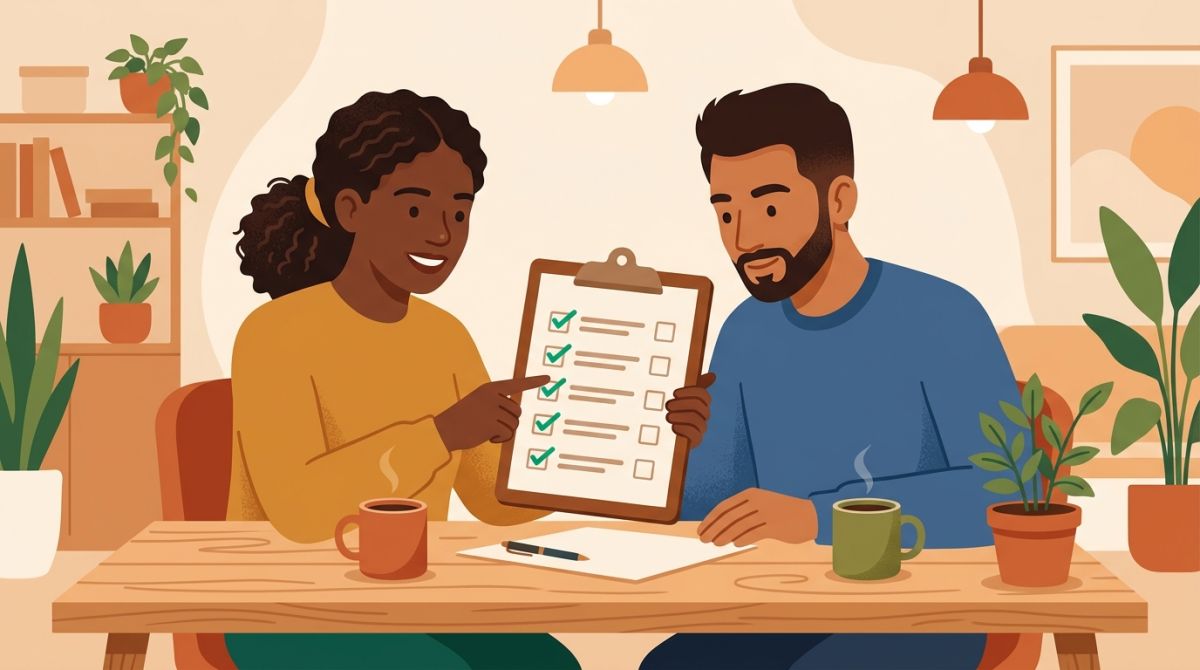
A goal you keep private is easy to renegotiate, and that is the exact leak an accountability partner plugs. At 10pm, alone, "I'll start tomorrow" costs nothing. Once another person expects your report, the same sentence has a witness, and you are no longer just managing a task. You are managing your word.
The best-known research on this is a goal-setting study by psychologist Gail Matthews at Dominican University of California. Participants who wrote down their goals, shared commitments with a friend, and sent weekly progress reports achieved significantly more of their goals than those who merely thought about them. The active ingredients were exactly the ones a good partnership automates: written commitment, a witness, and a reporting rhythm.
Three mechanisms do the work:
| Mechanism | What it does | Why it helps |
|---|---|---|
| Commitment | You state the goal out loud to someone | Quietly abandoning it now has a cost |
| Visibility | Progress gets reported on a schedule | Avoidance is harder to hide from yourself |
| Cadence | Review happens at fixed times | You do not wait for motivation to return |
Notice what is not on the list: pressure about failures. The partnerships that last celebrate the days you show up rather than prosecuting the days you did not, because a checkin you dread is a checkin you eventually stop sending.
The four accountability models
Not every goal needs the same kind of accountability, and picking the wrong intensity is a common quiet failure. The four working models:
A peer partner. One other person, mutual accountability, usually free. Best when you both have goals of similar weight and can commit to a fixed checkin schedule. The risk is symmetrical flaking: when one person's life gets busy, both accountabilities die.
A small group. Three to eight people sharing daily or weekly checkins. More resilient than a pair, because the rhythm survives any one person's bad week, and seeing several people show up daily normalizes showing up. This is the model most habit apps and challenge communities are built on.
A coach or mentor. Paid, asymmetrical, high accountability. Best for high-stakes goals with technique involved. The cost is the point: paying makes the appointment real.
A system or app. Trackers, streaks, and checkin tools provide the cadence and visibility automatically. Weakest on its own, because software cannot be disappointed in you, but it makes every other model stronger by handling the bookkeeping. We compared the dedicated tools in our accountability partner app guide.
A fast self-test for choosing: if you have failed this goal alone more than twice, skip the solo tracker. If your last partnership died of mutual flaking, choose a group. If the goal has a deadline and real stakes, consider paying.
Where to find an accountability partner
The best partner is usually someone who wants accountability, not someone who owes you a favor. Friends and family can work, but the highest-success pairings tend to come from people who showed up looking for the same structure:
- Communities built for it. Subreddits like r/GetMotivatedBuddies exist specifically for matching, and accountability Discord communities run daily checkin channels where partnerships form naturally. Our guide to finding a Discord accountability server covers how to vet those.
- People already pursuing your goal. A gym friend, a fellow writer, a classmate. Shared context means less explaining and better challenge questions.
- Existing groups you trust. A group chat of friends can become an accountability group the day you add structure to it, and group accountability tends to outlast pairs.
Whoever you choose, screen for reliability over enthusiasm. The ideal partner is boringly consistent, slightly direct, and interested in your goal without being invested in flattering you.
The setup conversation
One thirty-minute conversation prevents most partnership failures, because almost every collapse traces back to something the pair never agreed on. Cover five things:
- The commitments. Each person states their goal as a specific, checkable action. "Write 300 words on weekdays" works; "make progress on the book" does not.
- The cadence. Daily one-line checkins, a weekly call, or both. Put the weekly one on the calendar as a recurring appointment.
- The format. What a checkin contains: done or not done, one line of context, what is next.
- The miss policy. Agree now: a missed day gets acknowledged and dropped, and the only job is showing up the next day. No interrogations, no makeup work. What deserves a real conversation is a missed week.
- The exit clause. Agree on a review date four to six weeks out where either person can adjust or end the arrangement guilt-free. Partnerships with exit ramps last longer because nobody feels trapped.
A weekly checkin script that creates honesty
The difference between a checkin and a chat is a script. This one takes fifteen minutes for a pair:
- The number: how many days did you do the thing? Said first, before context, so results lead.
- The story: one honest sentence about what made the good days work and the missed days hard.
- The friction question: each partner asks the other one direct question. "What almost stopped you on Tuesday?" beats "how did it go?" because it assumes friction exists and asks where it lives.
- Next week's commitment: restated out loud, adjusted if the last one was set wrong. Shrinking a commitment you keep beats repeating one you do not.
Daily checkins, if you run them, should be radically smaller: done or not, one line, no obligation to reply beyond an acknowledgment. The daily loop is for momentum; the weekly loop is for honesty.

You already know you can change.
You just need to take the first step. Habit Huddle helps you build habits around your goals, alongside friends who keep you accountable.
Common pitfalls, and when to go without a partner
Most accountability partnerships fail from politeness, not conflict. The pattern: a miss gets a sympathetic "no worries!", the next miss gets silence, and within a month both people have agreed without saying so that the commitments are optional. The fix is built into the setup conversation: misses are fine, hiding is not, and the friction question keeps checkins honest without turning them into trials.
The other failure is intensity mismatch, where one partner wants daily texts and the other wants a weekly call. Surface that in the setup conversation and pick the lighter cadence, because the heavier one will not survive the busy weeks anyway.
Going without a partner makes sense when your goal is private, when your schedule genuinely cannot hold appointments, or when external pressure of any kind makes you rebel against your own goals. In those cases a tracker plus a public commitment to yourself, like a visible streak, delivers a useful fraction of the benefit with none of the coordination.
Accountability without the admin
The reason most accountability partnerships die is logistics, not willpower, and that is the part software can carry. Habit Huddle is our product, so weigh this recommendation accordingly: it turns the partner arrangement into a huddle, a group around one habit where everyone checks in daily. The checkin is the report, applause replaces the reply, streaks stay personal, and the group grows a Checkin Chain that gains a link for every member who checks in that day. Nobody's missed day is announced, which bakes the healthy miss policy in.
It replaces the daily loop, not the weekly one: no app asks the friction question, so the best setup we know is a huddle for daily momentum plus a short weekly conversation for honesty. Starting a huddle is free, and if you are still choosing your structure, our roundup of the best accountability apps compares the options honestly.
Frequently asked questions
What does an accountability partner do?
An accountability partner receives your specific commitment, checks whether you followed through on a fixed schedule, and asks direct questions when you did not. The role is distinct from encouragement: a cheerleader supports how you feel, while an accountability partner protects what you said you would do. Good ones do both, in that order of priority.
How is an accountability partner different from a coach?
A coach is paid, brings expertise, and the accountability flows one way. An accountability partner is usually free, mutual, and peer-level: you hold each other to commitments without teaching technique. Coaches fit high-stakes goals with skill involved; partners fit habits and consistency goals where the missing piece is follow-through, not knowledge.
Where can I find an accountability partner online?
Communities built for matching work best: r/GetMotivatedBuddies on Reddit pairs people daily, accountability Discord servers run checkin channels where partnerships form, and habit apps with group features let an existing friend group become the structure. Screen for consistency over enthusiasm, and agree on cadence and a miss policy before you start.
How often should accountability partners check in?
A daily one-line checkin plus a weekly fifteen-minute review is the strongest combination: the daily loop maintains momentum and the weekly loop creates honesty. If you can only sustain one, keep the weekly review and make it an unmovable calendar appointment. Cadences heavier than your busiest week can hold will collapse exactly when you need them.
Ready to Build Habits With Friends?
Stop failing alone. Join thousands using the #1 habit tracker with friends for real accountability and lasting results.
Prefer mobile? App Store · Google Play
Related Guides
More Habit Huddle articles on building habits with accountability.
What to Do When You Miss a Workout Day: The 5-Step Comeback Plan
Missed a workout day? What one miss does to your body and habit, according to research, plus a five-step plan for the next 24 hours, when to make it up, and...
Habit Streak App With Friends: 7 Apps Compared (2026)
Seven habit streak apps with friends compared: Habit Huddle, HabitShare, Daily Pact, Habitica, Streaks, Habit Streak duels, HabitStreak.io. What friends see,...

Reading Challenge App With Friends: 8 Apps Compared (2026)
Eight reading challenge apps for friends compared: Goodreads, StoryGraph, Fable, Bookclubs, ReadRats, Reading Rivals, BookBuds, Habit Huddle. What friends se...