
How to Help My Depressed Teenage Daughter Build Good Habits
Discover the Micro-Win framework to help my depressed teenage daughter build good habits. Practical scripts, research-backed steps, and tools for recovery.
📺 Related Video: Tackling Teenage Depression | Kay Reeve | TEDxNorwichED
Video by: TEDx Talks · Watch on YouTube
When your daughter’s bedroom becomes a fortress of discarded laundry and closed blinds, your parental instinct is likely to kick down the door with a chore chart and a lecture on "discipline." However, research into the adolescent brain suggests that for a teen struggling with clinical depression, a traditional "just do it" approach isn't just ineffective—it can actually deepen her sense of failure.
If you are looking for ways to help my depressed teenage daughter build good habits, you have to realize that you aren't fighting laziness; you are fighting a physiological breakdown of the brain's reward system. Depression physically alters the prefrontal cortex and the ventral striatum, making the "effort-to-reward" calculation feel impossible.
This guide moves beyond generic parenting advice. We are going to explore a specific framework called Micro-Win Momentum, designed to bypass the "Wall of Awful" and rebuild her executive function through small, socially-supported victories.
Why Standard Habit Advice Fails for Depressed Teens
Most habit-building books (like Atomic Habits) assume a baseline level of motivation. They suggest "stacking" habits or "finding your why." But for a teenager with depression, the "why" is often buried under a thick layer of apathy, and the "stack" feels like a mountain.
The common misconception is that she needs more willpower. In reality, willpower is a finite resource that depression drains before she even opens her eyes in the morning. When you try to help my depressed teenage daughter build good habits using standard methods, you often run into "Learned Helplessness." This is a psychological state where a person feels that no matter what they do, the outcome will be negative.
To break this, we must shift from a Compliance Model (do it because I said so) to a Collaboration Model (let’s find the smallest possible win).
| Feature | Traditional Habit Building | Depression-Responsive Habit Building |
|---|---|---|
| Goal Setting | "Run 3 miles a day" | "Put on sneakers and stand outside" |
| Motivation | Future rewards/Success | Immediate sensory relief/Social connection |
| Parental Role | The Taskmaster/Enforcer | The Scaffold/Body Double |
| Frequency | Consistency is king | Compassion is king (restarting is the habit) |
| Focus | Efficiency and output | Energy management and mood regulation |
Key Takeaway: You cannot "discipline" a child out of a chemical imbalance. Habit building in this context is a form of Behavioral Activation—a clinical treatment that uses small actions to jumpstart the brain’s reward system.
The Micro-Win Momentum Framework: 4 Steps to Success
To effectively help my depressed teenage daughter build good habits, you need a framework that accounts for low energy and high emotional sensitivity. This four-step process is designed to lower the "activation energy" required to start any task.
1. Identify the "Minimum Viable Habit" (MVH)
An MVH is a version of a habit so small it is physically impossible to fail. If the goal is "better hygiene," the MVH isn't "take a shower." It’s "wash your face with a warm cloth."
- Step 1: List the high-level goal (e.g., Sleep Hygiene).
- Step 2: Strip it down to the smallest component.
- Step 3: Ensure it takes less than 2 minutes.
2. The "Low-Friction" Environment
Depression makes every extra step feel like a mile. To help my depressed teenage daughter build good habits, you must remove every physical barrier.
- If she needs to drink more water, put a 32oz bottle on her nightstand the night before.
- If she needs to study, clear the desk for her so the "starting" isn't cleaning.
3. The Social Anchor
Isolation fuels depression. Habits built in a vacuum rarely stick for teens. A "Social Anchor" is someone who does the habit with them or provides a gentle layer of external accountability without judgment. This isn't about monitoring; it’s about "body doubling"—the simple act of being in the room while a task is performed.
4. The Dopamine Bridge
Since her brain isn't producing "victory chemicals" naturally, we have to bridge the gap. This means immediate, positive reinforcement. This isn't a "bribe"; it’s a biological necessity to help her brain associate the habit with a positive state.
Key Takeaway: Success is defined by the action, not the intensity. Putting on gym clothes is a 100% success, even if she never leaves the house.
Case Study: Maya’s "Morning Momentum"
Maya, a 16-year-old with moderate depression, hadn't opened her curtains or brushed her teeth before noon in three weeks. Her parents tried taking away her phone (the Compliance Model), which resulted in Maya retreating further.
They switched to the Micro-Win Momentum framework:
- The MVH: Maya agreed to sit on the edge of her bed for 60 seconds at 8:00 AM.
- The Environment: Her mom placed a glass of cold water and her favorite morning playlist next to her bed.
- The Social Anchor: Her best friend agreed to send a "Good morning" meme at 8:05 AM every day.
- The Dopamine Bridge: If she sat up, she earned "credits" toward a weekend trip to her favorite bookstore.
Within two weeks, the act of sitting up led to standing up. Standing up led to walking to the bathroom. The habit wasn't "getting ready"; the habit was "the 60-second sit."
How to Talk to Her: Scripts for Collaboration
When you try to help my depressed teenage daughter build good habits, your phrasing is everything. Avoid "You need to..." or "Why haven't you...?" These trigger the shame response.
Script 1: Proposing a New Habit
- Bad: "You need to start exercising because you’re always in bed."
- Good: "I’ve noticed you’ve been feeling really drained lately. I read that even 5 minutes of sunlight can help reset your sleep cycle. Would you be open to sitting on the porch with me for five minutes tomorrow morning while I have my coffee?"
Script 2: When a Habit is Missed
- Bad: "You promised you would do this. Why is it so hard to just do one thing?"
- Good: "Hey, I noticed today was a heavy day and the habit didn't happen. That’s okay. Recovery isn't a straight line. What’s one tiny thing we can do right now to 'reset' for tomorrow?"
Script 3: Offering Support (The Body Double)
- Good: "I’m going to be folding laundry in the living room. If you want to bring your homework out here and just sit near me while you do it, I’d love the company. No pressure to talk."
Key Takeaway: Use "we" instead of "you." Frame the habit as a tool for her to feel better, not a chore for you to be satisfied.
5 Common Mistakes Parents Make (And How to Avoid Them)
Even with the best intentions, it’s easy to slip into patterns that derail progress. Here are the pitfalls to avoid when you want to help my depressed teenage daughter build good habits.
- The "All-or-Nothing" Fallacy: Thinking that if she doesn't do the habit perfectly, it doesn't count.
- The Fix: Celebrate "partial" completions. If she brushed her teeth but didn't floss, that is a win.
- Using Guilt as a Motivator: Saying things like "It hurts me to see you like this."
- The Fix: Focus on her internal experience. "It must be really frustrating to feel so tired."
- Adding Too Many Habits at Once: Trying to overhaul her whole life in a week.
- The Fix: One habit at a time. Do not add a second one until the first is "automatic" for at least 10 days.
- Mistaking "Functional" for "Healed": Assuming that because she is doing her habits, she is no longer depressed.
- The Fix: Continue therapy and medical support. Habits are a support for recovery, not a replacement for clinical care.
- Becoming the "Habit Police": Constantly checking in and asking "Did you do it yet?"
- The Fix: Use external tools or apps for tracking so you can remain the "Mom" and not the "Manager."
Key Takeaway: Your relationship with your daughter is more important than the habit. If the habit is destroying your connection, pause and recalibrate.
You already know you can change.
You just need to take the first step. Habit Huddle helps you build habits around your goals, alongside friends who keep you accountable.
Troubleshooting: When She Refuses to Start
What happens when you’ve tried the MVH, you’ve set the environment, and she still says "No"? This is the most difficult part of trying to help my depressed teenage daughter build good habits.
The "Five-Minute Rule"
Ask her to commit to only five minutes. Tell her, "If you want to stop after five minutes, you can, and I won't say a word." Most of the time, the hardest part is the transition from "not doing" to "doing."
Check for Sensory Issues
Sometimes a "habit" is avoided because of sensory overwhelm. A depressed brain is often hypersensitive. Is the shower too loud? Is the toothpaste too "spicy"? Is the gym too bright?
- Solution: Adjust the environment. Use dry shampoo, buy unflavored toothpaste, or exercise in a dim room.
The "Shutdown" Protocol
If she is in a full depressive shutdown, habit building is off the table.
- Solution: Pivot to "Passive Habits." This might just be listening to an audiobook or using a weighted blanket. The goal here is "Regulation," not "Action."
The Power of Social Accountability
Research shows that teenagers are uniquely wired to prioritize social connection. Their brains release more dopamine during social interactions than adult brains do. You can leverage this to help my depressed teenage daughter build good habits.
When she feels like she is part of a "squad" or a "huddle," the habit stops being a lonely chore and starts being a shared mission. This is why peer-to-peer accountability is often more effective than parent-to-child instruction.
If you want to put this into practice, Habit Huddle can help. By connecting her with a small group of friends (or even family members) in a low-pressure, social environment, the app turns habit-building into a series of supportive "nudges" rather than a list of demands.
Frequently Asked Questions
How do I know if it's depression or just teenage laziness?
Laziness is usually a choice to prioritize pleasure over work; depression is an inability to feel pleasure or find the energy to function. If she seems distressed by her lack of productivity or has lost interest in things she used to love, it is likely depression.
What are the best "starter" habits for a depressed teen?
Focus on biological basics: hydration (one glass of water), light exposure (opening blinds), and "movement" (stretching for 1 minute). These provide the highest physiological ROI with the lowest effort.
Should I reward her for doing basic things like showering?
Yes. In a depressed state, "basic" things are equivalent to running a marathon. Positive reinforcement helps rebuild the neural pathways that associate effort with reward.
How long does it take for a habit to stick when someone is depressed?
While the "21 days" myth is common, for someone with depression, it may take 60 to 90 days. Consistency will fluctuate based on her "low" days, so focus on the "never miss twice" rule rather than a perfect streak.
What if she says she doesn't care about habits?
Validate that feeling. Say, "I know it feels pointless right now. We aren't doing this to 'be productive'; we're doing this to help your brain feel a little less heavy."
Final Checklist for Parents
Use this checklist to ensure you are approaching this with the right mindset:
- [ ] Is the habit "Micro" enough? (Can it be done in < 2 mins?)
- [ ] Have I removed the friction? (Are the supplies ready and visible?)
- [ ] Am I acting as a "Body Double"? (Am I present without being overbearing?)
- [ ] Is the "Dopamine Bridge" ready? (Is there an immediate positive result?)
- [ ] Have I checked my tone? (Am I collaborating or commanding?)
Building habits while struggling with mental health is one of the hardest things a person can do. By focusing on micro-wins and social support, you are giving your daughter the tools she needs to slowly climb out of the fog. Remember: the goal isn't a perfect daughter; it's a daughter who knows how to get back up after a hard day.
Ready to Build Habits With Friends?
Stop failing alone. Join thousands using the #1 habit tracker with friends for real accountability and lasting results.
Prefer mobile? App Store · Google Play
Related Guides
More Habit Huddle articles on building habits with accountability.

HabitShare Alternatives: 6 Apps for Tracking Habits With Friends (2026)
Looking for a HabitShare alternative? Six social habit trackers compared by model, price, platforms, and what happens on a missed day, plus how to switch wit...
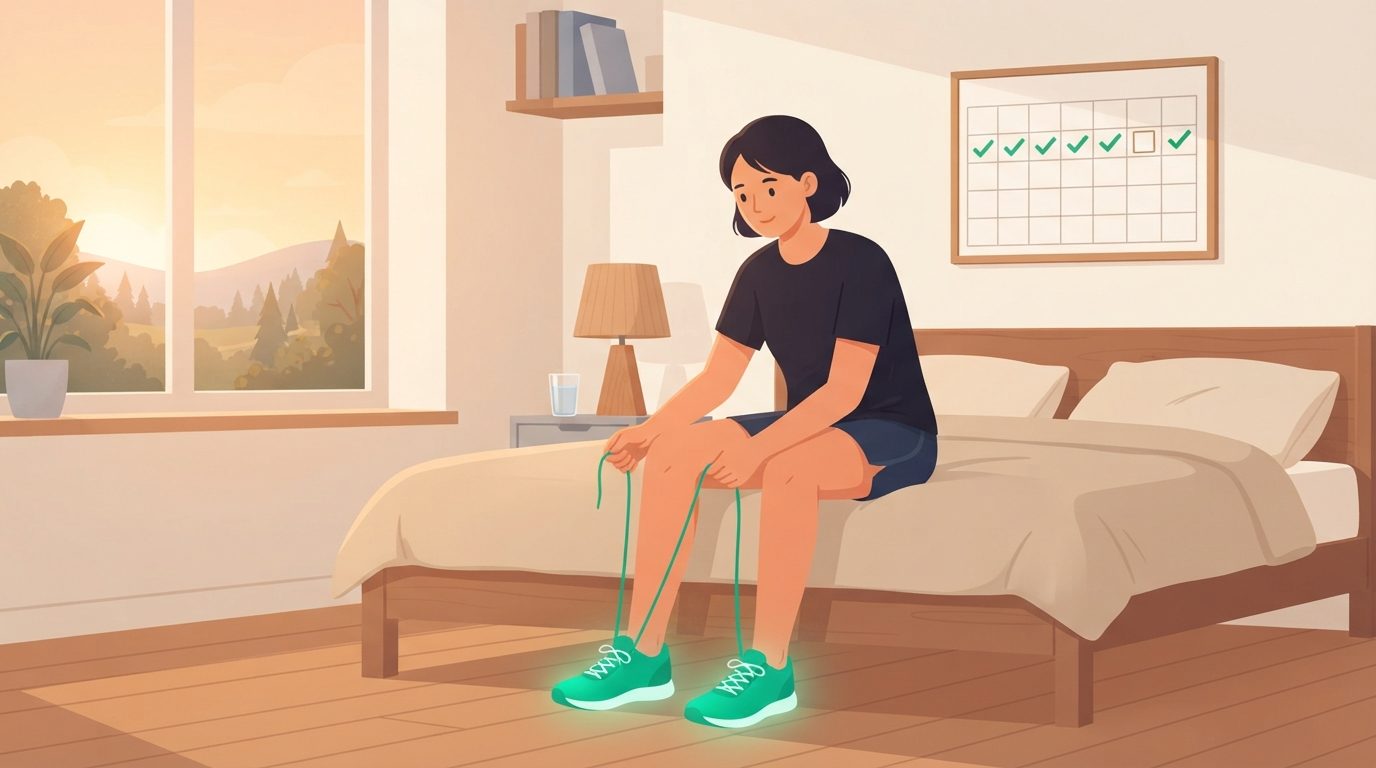
What to Do When You Miss a Workout Day: The 5-Step Comeback Plan
Missed a workout day? What one miss does to your body and habit, according to research, plus a five-step plan for the next 24 hours, when to make it up, and...
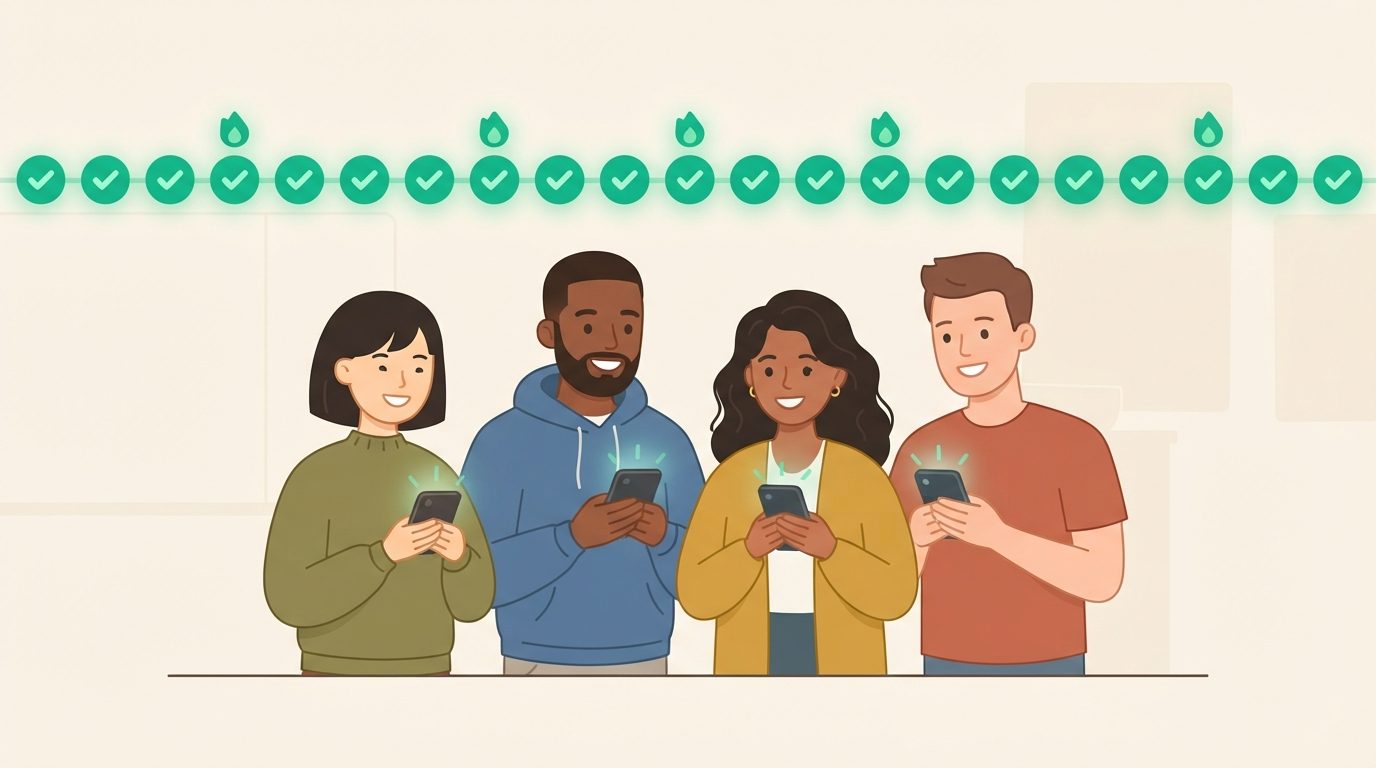
Habit Streak App With Friends: 7 Apps Compared (2026)
Seven habit streak apps with friends compared: Habit Huddle, HabitShare, Daily Pact, Habitica, Streaks, Habit Streak duels, HabitStreak.io. What friends see,...